






Pipeline Equipment
Pipeline Equipment
Products and services include major projects such as the West-East Gas Pipeline and the China-Russia/China-Kazakhstan pipelines, exported to over 30 countries including Russia, India, and Saudi Arabia.


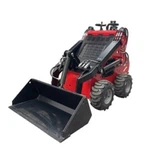
The municipal pipeline burying machine is an integrated engineering mechanical equipment specially designed for the construction of underground pipelines such as urban road pipelines, community pipe networks, municipal water supply and drainage systems, gas pipelines, power and communication cables, and rain sewage diversion projects. Mostly self propelled crawler type models, it enables continuous one stop operations including ditching, pipe laying, backfilling and compaction, suitable for complex municipal construction environments such as narrow urban road sections, sidewalks, green belts and minor arterial roads.
Main Structures
Travel Chassis
Adopting a crawler type structure with low ground pressure, it adapts to asphalt roads, cement pavements, soil and sand gravel surfaces, featuring stable movement and minimal pavement damage.
Power System
Equipped with a high power diesel engine and full hydraulic drive, it delivers strong power to cope with complex geological conditions such as hard soil layers, gravel and bricks.
Ditching Device
High strength chain cutter ditching mechanism enables precise narrow trench excavation with controllable trench width, reducing pavement damage.
Pipe-laying Mechanism
Fitted with a pipe conveyor frame and guiding devices, compatible with common municipal pipes including PE pipes, corrugated pipes, steel pipes and cable protection pipes.
ackfilling & Compacting Device
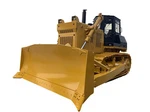
Built in dozer blade and small compaction wheel quickly backfill and slightly compact soil after pipe laying, minimizing secondary construction work.
Control System
Equipped with depth adjustment, gradient control and laser leveling devices to ensure pipeline burying depth and gradient comply with municipal specifications.
Tracked Pipe Laying Machine (DGY series, 10–90 tons)
Positioning: Core lifting equipment for pipeline construction, used for pipe laying, alignment, and lifting operations.
Tracked Crane (QUY series, 12–75 tons)
Positioning: Pipeline construction and general lifting, full rotation, fully hydraulic, adaptable to complex terrain.
Backfill Machine (Fine Soil Backfill Machine / Pipeline Laying Machine)
Positioning: Fine soil backfilling of pipe trenches, pipeline laying, protecting pipelines, and improving backfill quality.
Product Type:
Fine Soil Backfill Machine: Specialized backfilling, ensuring uniform and dense soil cover over pipes.
• Pipeline Laying Machine: Integrates excavation, soil transportation, and backfilling, suitable for long-distance trench construction. Core advantages: Tracked walking, hydraulic drive, precise movement, high efficiency, replacing manual labor and multi-machine joint operations.
Tracked Pipe Transport Machine
Positioning: Long-distance, large-diameter pipe transportation at pipeline construction sites, replacing trucks, adaptable to muddy and mountainous terrain. Core features:
• Tracked chassis, strong passability, safe pipe transportation in complex terrain.
• Hydraulic clamping device, reliable pipe fixing, preventing rolling and damage.
• Can be equipped with different length load-bearing platforms, adaptable to various pipe diameters.
Pipe Bending Machine (40"~50" series, etc.)
• It backfills pipe trenches with fine soil, evenly covering and compacting the surface, protecting the pipes from being squeezed by hard objects.
• Its efficiency is far higher than manual backfilling and excavator backfilling, resulting in more standardized construction.
Mobile Power Station (Fully Hydraulic Welding Workstation)
Positioning: Mobile power source for on-site pipeline welding, cutting, and grinding, single/dual engine configuration. Product Types:
Single-engine mobile power station (ZHG80–200): Compact and economical, suitable for small to medium-sized projects and field repairs.
Dual-engine fully hydraulic welding workstation (ZHG-SF80–200): Mainstay model, dual-engine redundancy; if one engine fails, the other can continue operation, ensuring continuous construction. Core configuration: Weichai/Cummins engine, multiple hydraulic interfaces, capable of simultaneously driving welding machines, beveling machines, and welding tools, etc., with its own hydraulic oil tank, cooling system, and operating platform. Advantages: Flexible mobility, stable power, multi-purpose, reducing equipment investment and transportation costs.
Application Scenarios
Long-distance oil and gas pipelines
Urban gas pipelines, water supply and drainage networks.
Chemical industrial parks, oilfield gathering and transportation, mining pipelines.
Overseas projects (Russia, India, Saudi Arabia, Brazil, and more than 30 other countries).
FAQ
Q: 1. What types of projects are these devices mainly used in? • Suitable for: long-distance oil and gas pipelines, urban gas supply, water supply and drainage, heating networks, oilfield gathering and transportation, chemical industrial park pipelines, etc.
A: • Suitable for: complex working conditions such as plains, mountains, deserts, swamps, and areas without electricity.
Q: 2. What is the difference between a pipe-laying machine and a crawler crane?
A: • Pipe-laying machine: Specifically designed for pipeline alignment, pipe laying, and hoisting; highly stable, with good micro-motion characteristics, and equipped with an anti-tipping structure.
• Crawler crane: Full-rotation, universal hoisting capability; can lift heavy objects, steel structures, and install equipment; has a wider range of applications.
Q: 3. Why are crawler cranes more commonly used in pipeline construction than wheeled cranes?
A: • Crawlers have a large ground contact area, are less prone to getting stuck, and have strong mobility, making them suitable for muddy, soft ground, mountainous areas, and deserts.
• Wheeled cranes are only suitable for flat, paved roads and are rarely used in pipeline field projects.
Q: 4. What is a pipe transport machine used for? How is it different from a regular truck? • Specifically designed for transporting steel pipes within construction sites, it clamps and stabilizes pipes to prevent rolling and collision damage.
A: • Tracked, it can travel on dirt roads, mud, and slopes, traversing areas inaccessible to trucks.
Q: 5. What is the use of a backfilling machine/laying machine?
A: • It backfills pipe trenches with fine soil, evenly covering and compacting the surface, protecting the pipes from being squeezed by hard objects.
• Its efficiency is far higher than manual backfilling and excavator backfilling, resulting in more standardized construction.
Q: 6. What does a mobile power station/welding workstation do?
A: • It provides stable hydraulic/electric power for welding, beveling, cutting, and grinding pipelines in the field.
• Dual-engine model: if one engine fails, the other continues working, ensuring uninterrupted operation.
Q: 7. Is it difficult to operate? How many people are needed?
A: • Fully hydraulic/pilot-controlled, single-person operation is sufficient.
• The cab is equipped with air conditioning and a shock-absorbing seat, suitable for long-term operation.
Q: 8. What are the equipment's safety features? • Torque limiter, anti-tipping frame, height limiter, emergency stop, hydraulic lock, and alarm device.
A: • All crane equipment complies with lifting safety standards.