

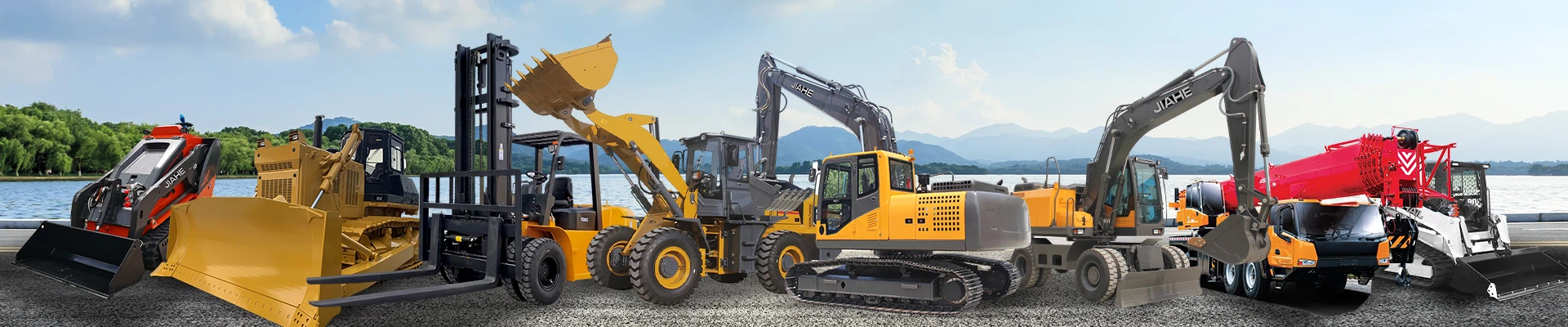
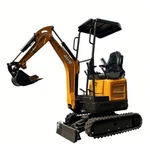
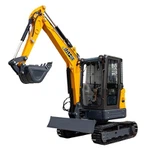


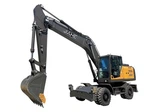
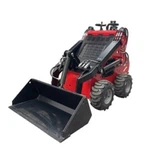

Wheel Excavator
Your Professional Wheel Excavator Supplier
The company covers an area of more than 200 acres and has a plant of 100,000 square meters.Taian Golden Century Import and Export Co.,Ltd is the subsidiary of Tai'an Jiahe Heavy Industry Machinery Co., Ltd. Jiahe is a national high-tech enterprise that develops and produces various types of engineering machinery, forging equipment, and environmental protection equipment.


why choose us
Our Certificate
The company has successively passed ISO9001 quality management system, ISO14001 environmental management system, ISO45001 occupational health and safety management system and product CE certification.
Production Market
The products are sold to 30 provinces, municipalities and autonomous regions across the country, and exported to more than 50 countries and regions including Europe, North America, Central Asia, Southeast Asia, Africa, and South America.
OEM and ODM Customized
100% customized - tailored to your needs to meet the diverse needs of different customers and provide high-quality packaging solutions.
Best Services
We work directly for our clients and put client's interests first. Innovation Guides Us As Always24-hour online service, timely and fast quotation for you.

The 7.5 ton wheel excavator stands as a versatile and powerful machinery option for construction and industrial applications. Combining the agility of a wheel-based system with the robust functionality of an excavator, this equipment is designed to tackle a variety of tasks including digging, loading, and site preparation. As the demand for efficient and mobile construction machines rises, the 7.5 ton wheel excavator emerges as a go-to choice, offering unparalleled performance on urban and rural job sites alike.
|
Bucket Capacity |
0.3 |
m³ |
|
Swing Speed |
0-12 |
rmp |
|
Gradeability |
25 |
° |
|
Max Bucket Digging Force |
45 |
KN |
|
Max Arm Digging Force |
36 |
KN |
|
Engine Model |
YC4DK85 |
|
|
Power/Rotate Speed |
62.5/2200 |
KW/rmp |
|
Tire Model |
8.25-16 |
|
|
System Pressure |
24 |
Mpa |
Powerful Engine: Equipped with a high-torque engine that ensures robust performance even in demanding conditions.
Hydraulic System: Advanced hydraulic control for precise movement, allowing for simultaneous operation of multiple hydraulic functions.
High Manueverability: The wheeled design grants the excavator superior agility, reducing the need for heavy lifting equipment on site.
Ergonomic Cab Design: A thoughtfully designed operator cab features excellent visibility and comfort, enhancing productivity and reducing fatigue.

Advantages of Mini Digger 6.5 Ton
Multifunctionality
Small excavators can complete various tasks such as excavation, movement, removal, backfilling, etc., and can install different tools and equipment for use.
Flexibility
Small excavators have small volume and high flexibility, and can operate in any terrain.
Save labor costs
Small excavators can replace a lot of manpower, saving labor in large fields and orchards, while also improving construction efficiency and quality.
Easy to operate
The operation of small excavators is very simple, and operators only need to receive short-term training to master the operation, saving costs in recruitment, training, and management.
Standard Model: The most common type, designed for general excavation and earthmoving tasks.
Extended Arm Model: Features a longer arm for deeper digging capabilities, ideal for trenching.
High-Speed Model: Engineered for rapid movement and efficiency, perfect for urban construction sites.
Compact Model: Smaller in stature to operate in tight spaces while maintaining the powerful performance of larger models.
Applications of Excavator with Multiple Attachments 7.5 Ton
Road Construction
Efficiently excavates and prepares roads, ensuring smooth and quick installation of infrastructure.
Urban Development
Perfect for site preparation in crowded environments, minimizing disruption to surrounding areas.
Landscaping
Ideal for terrain shaping, garden digging, and backfilling due to its compact nature.
Utility Installation
Facilitates digging for pipelines, cables, and other utilities, crucial for modern utility management.
maintain of Mini Digger 6.5 Ton
Engine Oil and Filter: Change engine oil and replace the filter every 100-500 hours based on usage. Use manufacturer-approved oil. Proper disposal of old oil is important.
Fuel Filter: Replace fuel filters every 500 hours or annually. Clogged filters decrease engine power.
Air Filter: Clean air filters weekly and replace them as needed or every 500 hours. Dirty filters allow particle ingestion.
Hydraulic Fluids: Drain and refill hydraulic oil every 1000-2000 hours. More frequent changes are needed for contaminated oil. Replace hydraulic filters, too.
Proper fluid and filter maintenance minimizes breakdown risks and extends component life. Log hours to track service needs.
Checking Levels: Check sight glasses or dipsticks daily to ensure proper hydraulic fluid level. Top up approved oil as needed. The low fluid causes failures.
Changing Fluid: Drain old hydraulic fluid completely and refill the system with new oil every 1000-2000 hours based on usage. Proper disposal of used fluid is essential.
Inspecting Hoses: Check hydraulic hoses and tubes daily for leaks, cracks, kinks, or damage. Identify and replace deteriorated hoses immediately to prevent failures.
Testing Pressure: Annually test system and relief valve pressures. Confirm specification match. Install new seals/gaskets if deviations are noted.
Sag Check: Stationary tracks should have ~15 mm sag. More indicates looseness. No sag means overtightening.
Adjusting: Use a grease gun on the tensioner to increase/decrease the tension of loose/tight tracks per manual. Avoid over-correction.
Batteries: Check electrolyte levels and terminals. Clean corroded connections. Recharge/replace as needed. Discharged batteries prevent starting.
Wiring: Inspect insulation. Repair frayed wires and loose connections, which can shorten systems.
Lights: Test illumination of all safety/work lights. Replace burnt-out bulbs promptly.
Gauges: Confirm that the fuel level, temperature, and pressure gauges are read accurately. Faulty gauges give false equipment health data.
FAQ