




Motor Grader
Motor Grader
The grader features an articulated, fully hydraulic design and multi-condition operation, covering the mainstream 165–220 horsepower range, suitable for highways, airports, municipal projects, farmland, and other scenarios.
Hydraulics and Working Devices: Imported multi-way valves ensure precise operation and rapid response. A swing arm linkage + rotating disc allows for 360° blade rotation and multi-dimensional adjustment, adapting to complex terrain. The blade's wear-resistant layer is thickened, increasing its lifespan by approximately 10%.
Steering and Braking: Central articulation + front wheel deflection enables a crab-like driving mode, facilitating flexible operation in confined spaces. Four-wheel disc brakes + internal expanding shoe parking brake ensure reliable braking and high safety.
Comfort and Reliability: Sealed cab, air conditioning, suspended seat, and low-noise design. Key hydraulic components are imported, with a hydraulic pump failure rate of <0.3% and maintenance intervals up to 1000 hours.
Standard Configuration: Main blade, rotating disc mechanism, hydraulic control system. Optional features: front bulldozer blade, rear ripper, automatic leveling device, snow sweeping device, rake.
Applicable scenarios: highway/railway subgrade, airport/port sites, municipal roads, embankments, mines, farmland leveling, ditch digging, slope scraping, snow removal.


FAQ

1. What is a grader used for?
· Mainly used for site leveling, slope scraping, roadbed construction, ditching, snow removal, and road sweeping.
· Applicable to: highways, airports, farmland, mines, municipal works, dams, etc.
2. How to choose horsepower/model?
· 165 hp: Municipal, rural roads, farmland, small projects; flexible and fuel-efficient.
· 180 hp: General-purpose mainstay; most commonly used in infrastructure, highways, and construction sites.
· 200/220 hp: Heavy-duty, high-speed, airport, mine, large-scale fill projects.
3. What is the difference between a grader and a bulldozer?
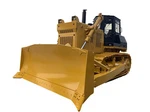
· Bulldozer: Pushing soil, backfilling, clearing obstacles; powerful.
· Grader: Fine leveling, slope repair, surface scraping, edge trimming; high precision.
4. What is crab steering? What is its use?
· The four wheels can move diagonally, like a crab.
• Functions: Facilitates edge trimming, slope repair, and narrow road construction.
5. How does the blade move?
• Lifting, tilting, rotating, and lateral movement—multi-dimensional adjustments for high-precision leveling.
6. Hydraulic transmission vs. mechanical transmission?
• Graders are generally hydraulically driven with power shifting.
• Advantages: Easy operation, smooth shifting, durable, suitable for extended operation.
7. What attachments can a grader be equipped with?
• Front bulldozer blade, rear ripper, snowplow, de-icing device, milling head, etc.
8. Is it difficult to operate?
• Fully hydraulic control lever, single-person operation, simple and easy to learn.
• Equipped with an air-conditioned cab for comfort and low noise.
9. What are the key maintenance points?
• Change engine oil, filter, and hydraulic oil on time.
• Check blade wear, tire pressure, hydraulic lines, and braking system.