

In the modern era, environmental protection has become a global priority, and the construction machinery industry is no exception. As a wheel excavator supplier, we are committed to not only providing high - performance equipment but also ensuring that our products are as environmentally friendly as possible. In this blog, I will share some effective ways to make a wheel excavator more environmentally friendly.
1. Optimize the Engine System
The engine is the heart of a wheel excavator, and optimizing its performance is crucial for reducing environmental impact.
Upgrade to Cleaner - Burning Engines
Modern engines are designed to meet strict emission standards. For example, engines with advanced fuel injection systems can precisely control the amount of fuel injected into the combustion chamber, resulting in more complete combustion. This not only improves fuel efficiency but also reduces the emission of pollutants such as particulate matter (PM), nitrogen oxides (NOx), and carbon monoxide (CO). We offer wheel excavators equipped with state - of - the - art engines that comply with the latest environmental regulations. Our 12 Ton Wheel Excavator features an advanced engine that significantly reduces harmful emissions while maintaining high power output.
Use Alternative Fuels
In addition to traditional diesel, alternative fuels can be used to power wheel excavators. Biofuels, such as biodiesel, are made from renewable sources like vegetable oils and animal fats. Biodiesel can be blended with diesel fuel in various ratios, and using it can reduce greenhouse gas emissions. Another option is natural gas, which burns cleaner than diesel and produces fewer pollutants. Some of our wheel excavators can be modified to run on natural gas, providing a more environmentally friendly operation option.
Engine Management Systems
Advanced engine management systems can monitor and adjust engine performance in real - time. These systems can optimize fuel consumption based on the load and operating conditions of the excavator. For instance, when the excavator is idling, the engine management system can reduce the engine speed to save fuel. Our 18 Ton Wheel Excavator Agricultural Use is equipped with a sophisticated engine management system that helps operators achieve better fuel efficiency and lower emissions.
2. Improve Hydraulic System Efficiency
The hydraulic system is another important component of a wheel excavator, and improving its efficiency can have a significant impact on environmental performance.
High - Efficiency Hydraulic Pumps
Using high - efficiency hydraulic pumps can reduce energy losses in the hydraulic system. These pumps are designed to deliver the required hydraulic power with less input energy. For example, variable - displacement pumps can adjust the flow rate according to the load, which helps to save energy. By upgrading the hydraulic pumps in our wheel excavators, we can reduce the overall energy consumption of the machine, leading to lower fuel consumption and emissions.
Hydraulic System Leakage Prevention
Hydraulic fluid leaks not only waste resources but also cause environmental pollution. Regular maintenance and inspection of the hydraulic system can help detect and repair leaks in a timely manner. We provide our customers with detailed maintenance guidelines to ensure that the hydraulic systems of our wheel excavators are in good condition. Additionally, we use high - quality seals and hoses in our hydraulic systems to minimize the risk of leakage.
Energy - Recovery Systems
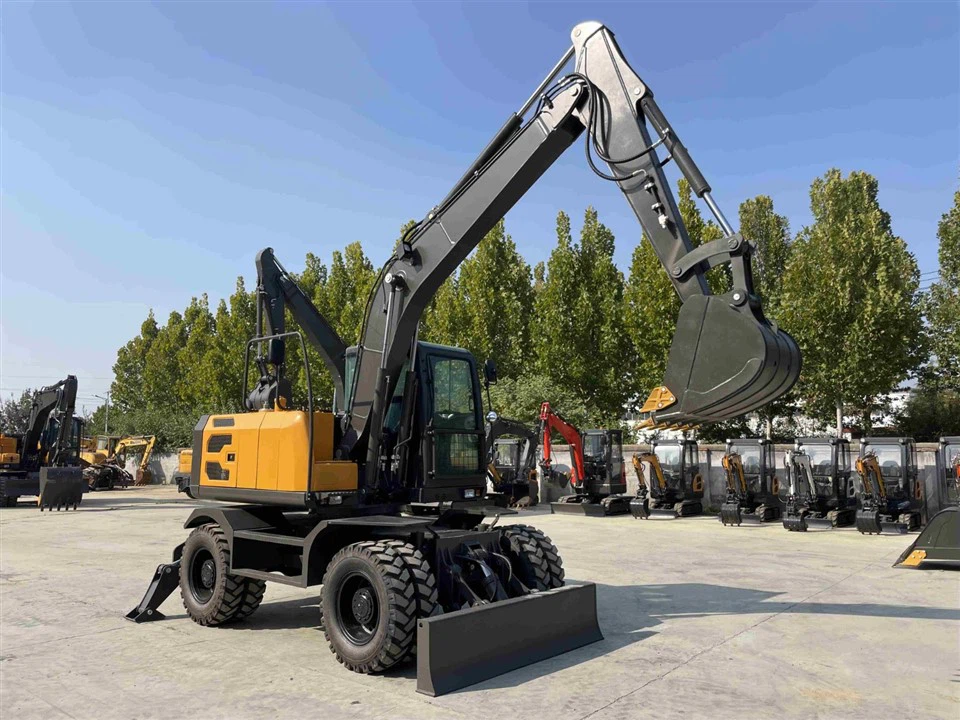
Some modern wheel excavators are equipped with energy - recovery systems in the hydraulic system. These systems can capture and reuse the energy that is normally wasted during the operation of the excavator, such as the energy generated when the boom is lowered. By recovering and reusing this energy, the overall energy efficiency of the excavator can be improved, reducing fuel consumption and environmental impact. Our Wheel Excavator 20 Ton 21.5 Ton is available with an optional energy - recovery system to enhance its environmental performance.

3. Reduce Noise Pollution
Noise pollution is a significant environmental concern, especially in urban and residential areas. Reducing the noise level of wheel excavators can improve the working environment and minimize the impact on the surrounding community.
Noise - Reducing Enclosures
Installing noise - reducing enclosures around the engine and other noise - generating components can effectively reduce the noise emitted by the excavator. These enclosures are made of sound - absorbing materials that can dampen the noise. We design our wheel excavators with noise - reducing enclosures as standard or optional features, depending on the model. This helps to ensure that our machines meet the noise regulations in different regions.
Optimized Design
The design of the excavator can also affect its noise level. For example, using aerodynamic shapes for the body and components can reduce air - flow noise. Additionally, proper alignment and balancing of moving parts can minimize vibration - induced noise. Our engineering team continuously works on optimizing the design of our wheel excavators to reduce noise emissions.
4. Material Selection and Recycling
The choice of materials in the manufacturing process and the ability to recycle these materials at the end of the excavator's life cycle are important aspects of environmental protection.
Use of Sustainable Materials
We strive to use sustainable materials in the production of our wheel excavators. For example, some components can be made from recycled metals, which reduces the demand for virgin materials and the energy consumption associated with mining and refining. Additionally, using materials that are easy to recycle at the end of the product's life can help to close the material loop and reduce waste.
Recycling Programs
We have established recycling programs for our wheel excavators. When an excavator reaches the end of its useful life, we can recycle a large proportion of its components and materials. This not only reduces waste but also conserves natural resources. Our recycling programs ensure that the environmental impact of our products is minimized throughout their entire life cycle.
5. Operator Training
Proper operator training is essential for ensuring that wheel excavators are operated in an environmentally friendly manner.
Fuel - Efficient Operation
Training operators on fuel - efficient operation techniques can significantly reduce fuel consumption. For example, teaching operators to avoid unnecessary idling, use the appropriate gear and speed, and plan their work routes more efficiently can all contribute to lower fuel usage. We provide comprehensive operator training programs that cover fuel - efficient operation as well as other aspects of excavator operation and maintenance.
Environmental Awareness
Raising operators' environmental awareness is also important. By educating operators about the environmental impact of their actions and the importance of environmental protection, they are more likely to take proactive measures to reduce the environmental footprint of the excavator. Our training programs include modules on environmental awareness to help operators understand their role in protecting the environment.
In conclusion, making a wheel excavator more environmentally friendly requires a comprehensive approach that involves optimizing the engine system, improving hydraulic system efficiency, reducing noise pollution, using sustainable materials, and providing operator training. As a wheel excavator supplier, we are dedicated to developing and promoting environmentally friendly products. If you are interested in our wheel excavators or have any questions about our environmental initiatives, please feel free to contact us for more information and to discuss your procurement needs.
References
- International Council on Clean Transportation. (2023). Emission Standards for Construction Machinery.
- Society of Automotive Engineers. (2022). Best Practices for Energy - Efficient Hydraulic Systems in Construction Equipment.
- Environmental Protection Agency. (2021). Guidelines for Noise Reduction in Industrial Equipment.


