

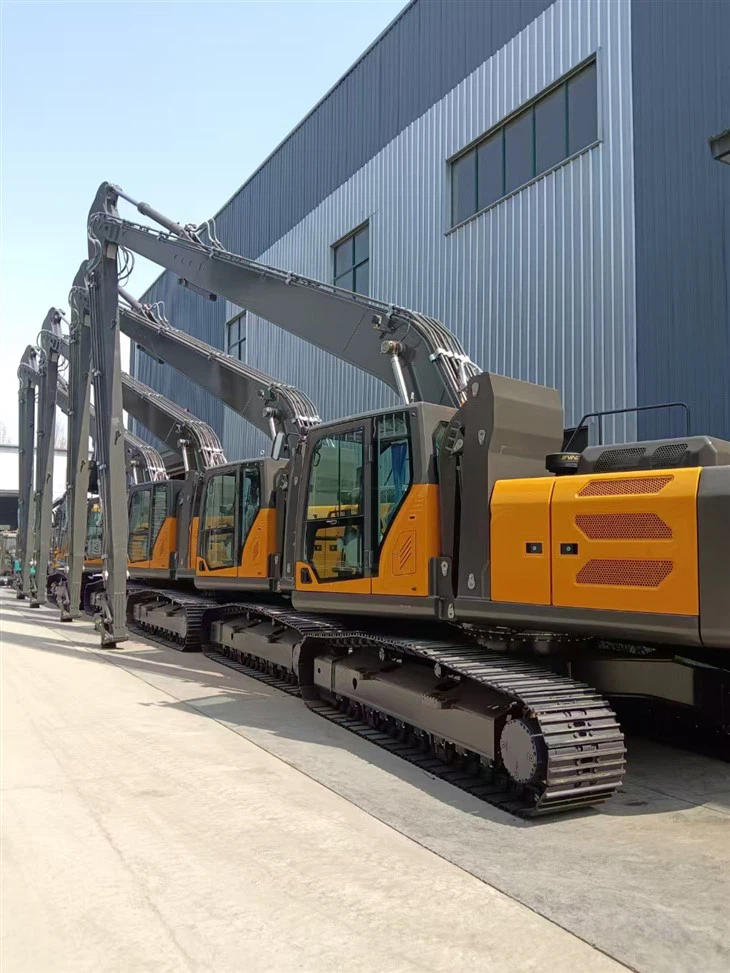
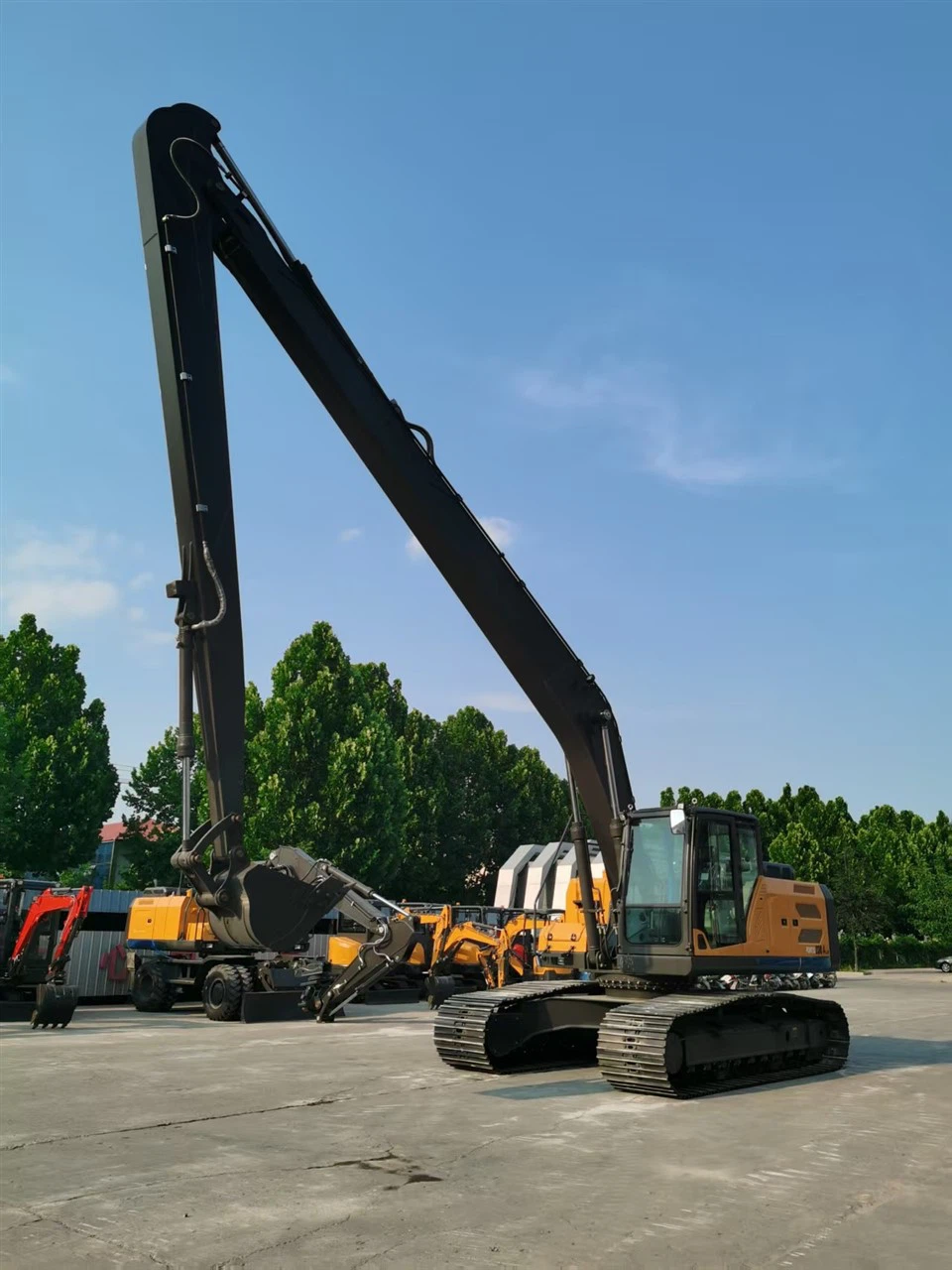
As a long - arm excavator supplier, I am delighted to share with you the fascinating world of the lighting systems that are used in these powerful machines. Long - arm excavators, like Long Arm Excavator, are essential in various construction, mining, and earth - moving projects. Their lighting systems play a crucial role in ensuring safe and efficient operation, especially in low - light conditions.
1. Importance of Lighting Systems in Long - Arm Excavators
The lighting systems of long - arm excavators are not just a luxury but a necessity. These machines often operate in environments where natural light is limited, such as at night, in deep mines, or in areas with heavy overcast. Adequate lighting helps the operator to clearly see the work area, the position of the excavator's arm, and any potential hazards. This reduces the risk of accidents and improves the overall productivity of the project.
For example, in a construction site near a busy urban area, a long - arm excavator needs to work during the night to minimize disruption to traffic. The lighting system allows the operator to precisely control the long arm, dig trenches, and move materials without causing damage to nearby structures or endangering pedestrians.
2. Types of Lighting Systems
2.1 Headlights
Headlights are the most prominent part of the lighting system in a long - arm excavator. They are typically located at the front of the machine, near the cab. These lights are designed to provide a wide and long - range illumination of the work area in front of the excavator.
Modern headlights use advanced technologies such as LED (Light - Emitting Diode) or HID (High - Intensity Discharge) bulbs. LED headlights are becoming increasingly popular due to their energy efficiency, long lifespan, and high brightness. They can produce a sharp and focused beam of light, which is ideal for illuminating the ground and objects at a distance.
HID headlights, on the other hand, are known for their intense brightness. They can cover a large area with a high - intensity light, making them suitable for large - scale projects where a wide field of view is required.
2.2 Work Lights
Work lights are installed on different parts of the long - arm excavator, including the boom, the bucket, and the cab. These lights are used to illuminate specific areas of the work, such as the digging point or the loading area.
Work lights are often adjustable, allowing the operator to direct the light where it is needed most. For instance, when the excavator is digging a deep hole, the work lights on the boom can be adjusted to shine into the hole, providing clear visibility of the bottom and the sides.
Similar to headlights, work lights can also use LED or HID technology. LED work lights are preferred for their durability and low power consumption, which is especially important in a machine that operates for long hours.
2.3 Cab Lights
Cab lights are installed inside the cab of the long - arm excavator. They are used to provide illumination for the operator, allowing them to read controls, maps, and other important information.
Cab lights are usually soft - white in color to reduce eye strain. They can be turned on and off easily, and some models even have adjustable brightness settings. This allows the operator to customize the lighting according to their needs and the ambient light conditions.
2.4 Signal Lights
Signal lights are an important safety feature of long - arm excavators. They are used to indicate the position, movement, and status of the machine to other workers on the site.
There are different types of signal lights, including strobe lights, turn signals, and hazard lights. Strobe lights are often used to make the excavator more visible in low - light conditions or in areas with a lot of traffic. Turn signals are used to indicate the direction of the excavator's movement, while hazard lights are used to warn other workers of potential dangers.
3. Lighting System Design and Installation
3.1 Design Considerations
When designing the lighting system for a long - arm excavator, several factors need to be considered. First, the type of work that the excavator will be used for plays a crucial role. For example, if the excavator is mainly used for night - time construction in a city, the lighting system needs to be designed to provide a high - intensity, focused beam that can cut through the urban glow.
Second, the size and shape of the excavator also affect the lighting design. A larger long - arm excavator may require more lights or more powerful lights to ensure adequate illumination of the entire work area.
Finally, the durability of the lighting system is an important consideration. Long - arm excavators operate in harsh environments, and the lights need to be able to withstand vibrations, dust, and moisture.
3.2 Installation
The installation of the lighting system in a long - arm excavator is a complex process that requires professional expertise. The lights need to be installed in the correct positions to ensure optimal illumination. For example, the headlights need to be installed at the right height and angle to provide a clear view of the work area.
The wiring of the lighting system also needs to be carefully installed to ensure safety and reliability. The wires need to be protected from damage, and proper grounding needs to be established to prevent electrical hazards.
4. Maintenance of Lighting Systems
Proper maintenance of the lighting system is essential to ensure its long - term performance. Regular inspections should be carried out to check for any signs of damage, such as cracked lenses, loose connections, or burnt - out bulbs.
If a bulb needs to be replaced, it is important to use the correct type of bulb recommended by the manufacturer. Using the wrong type of bulb can not only affect the performance of the lighting system but also pose a safety risk.
In addition, the lenses of the lights should be cleaned regularly to remove dirt, dust, and debris. This will ensure that the lights provide maximum brightness and visibility.
5. Future Trends in Long - Arm Excavator Lighting Systems
The future of long - arm excavator lighting systems is promising. With the continuous development of technology, we can expect to see more advanced lighting solutions.
One trend is the integration of smart lighting systems. These systems can automatically adjust the brightness and direction of the lights based on the ambient light conditions and the position of the excavator's arm. For example, if the excavator is moving into a shaded area, the smart lighting system can increase the brightness of the work lights.
Another trend is the use of more energy - efficient lighting technologies. As environmental concerns become more important, manufacturers are looking for ways to reduce the energy consumption of long - arm excavators. LED lights, with their low power consumption and long lifespan, are likely to become even more widely used in the future.
Conclusion
In conclusion, the lighting systems of long - arm excavators are an essential component that ensures safe and efficient operation. From headlights to signal lights, each type of light plays a specific role in providing illumination and safety. As a long - arm excavator supplier, we are committed to providing high - quality lighting systems that meet the needs of our customers.
If you are interested in our long - arm excavators and their lighting systems, we invite you to contact us for further discussions and potential procurement. We look forward to working with you to meet your project requirements.
References
- Construction Equipment Handbook, various editions
- Journal of Heavy Machinery Technology
- Manufacturer's technical manuals for long - arm excavators


