

Hey there! As a wheel loader supplier, I've had my fair share of customers asking about the differences between wheel loaders and backhoe loaders. It's a common question, and I'm here to break it down for you in a way that's easy to understand.
Let's start with the basics. A wheel loader, as the name suggests, is a heavy - duty machine mounted on wheels. It's designed mainly for moving large amounts of materials like sand, gravel, and dirt. You'll often see them at construction sites, mines, and agricultural areas. On the other hand, a backhoe loader is a bit of a jack - of - all - trades. It combines the functions of a loader at the front and a backhoe at the rear. This makes it more versatile for different types of jobs.
Physical Appearance and Structure
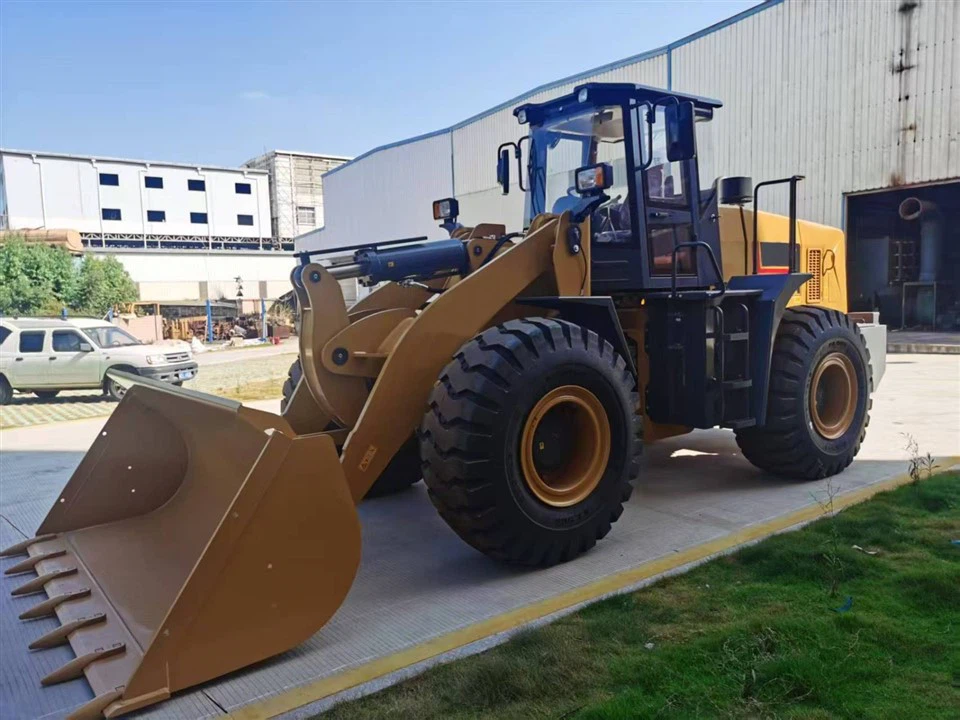
Wheel loaders are typically large and bulky. They have a wide bucket at the front, attached to a strong arm mechanism. The cab is usually located in the middle of the machine, giving the operator a good view of the bucket and the working area. The wheels are large and sturdy, designed to handle heavy loads and rough terrains.
Backhoe loaders, however, have a more compact design. The front loader part is similar to that of a wheel loader, but it's usually smaller. At the rear, there's a backhoe, which consists of a boom, stick, and bucket. The cab is often positioned to allow the operator to easily switch between controlling the front loader and the backhoe.
Functionality
When it comes to functionality, wheel loaders are all about moving large volumes of material quickly. They're great for loading materials into trucks or moving them around a site. For example, if you're working on a large construction project and need to move tons of gravel from one place to another, a wheel loader is your best bet. You can check out our Front Loader 4x4 Diesel Wheel Loader 5 Ton for a high - capacity option.
Backhoe loaders, on the other hand, are more about precision work. The backhoe at the rear can be used for digging trenches, holes, and foundations. This makes them ideal for small - to - medium - sized construction projects, utility work, and landscaping. For instance, if you're building a small house and need to dig a basement or install a sewer line, a backhoe loader can do the job efficiently.
Maneuverability
Wheel loaders are powerful, but they're not the most maneuverable machines. Due to their large size, they need more space to turn and operate. They're better suited for open areas where there's plenty of room to move around. However, modern wheel loaders are becoming more agile, with improved steering systems.
Backhoe loaders are much more maneuverable. Their compact size allows them to work in tight spaces, like narrow alleys or small construction sites. They can easily turn around and switch between the front loader and the backhoe functions, making them very efficient for jobs that require quick changes in operation.
Power and Performance
Wheel loaders are known for their high power and performance. They're equipped with large engines that can generate a lot of torque, allowing them to handle heavy loads with ease. The bucket capacity of a wheel loader can range from a few cubic meters to over 10 cubic meters, depending on the model.
Backhoe loaders have less power compared to wheel loaders, but they're still very capable. The engine is designed to balance the power requirements of both the front loader and the backhoe. The bucket capacity of the front loader on a backhoe is usually smaller, but the backhoe can provide precise digging power.
Cost
In general, wheel loaders are more expensive than backhoe loaders. This is because of their larger size, higher power, and greater capacity. However, the cost also depends on the brand, model, and features. If you're on a budget and need a machine for smaller jobs, a backhoe loader might be a more cost - effective option. But if you have large - scale projects that require moving a lot of material, investing in a wheel loader like our Wheel Loader Diesel Loader 3 Ton could be worth it in the long run.
Maintenance
Both wheel loaders and backhoe loaders require regular maintenance to keep them in good working condition. Wheel loaders have more complex hydraulic systems and larger engines, which means they might need more frequent maintenance. The large wheels also need to be inspected regularly for wear and tear.
Backhoe loaders, while having a simpler design in some aspects, still need proper maintenance. The backhoe part has additional components like the boom and stick, which need to be lubricated and checked for damage.

Operator Skill Requirements
Operating a wheel loader requires a certain level of skill. The operator needs to be able to handle the large machine, control the bucket accurately, and maneuver it in different terrains. Training is usually required to ensure safe and efficient operation.
Backhoe loaders are a bit more challenging to operate because the operator needs to switch between two different functions. They need to be proficient in both loading and digging operations. Specialized training is also recommended for backhoe loader operators.
So, which one should you choose? Well, it depends on your specific needs. If you're dealing with large - scale material handling, a wheel loader is the way to go. But if you need a machine that can do multiple tasks, especially digging, a backhoe loader is a better choice.
If you're interested in purchasing a wheel loader, I'd love to have a chat with you. We can discuss your project requirements, budget, and the best model for you. Don't hesitate to reach out and start the conversation about getting the right equipment for your job.
References
- Construction Equipment Handbook
- Heavy Machinery Magazine


