

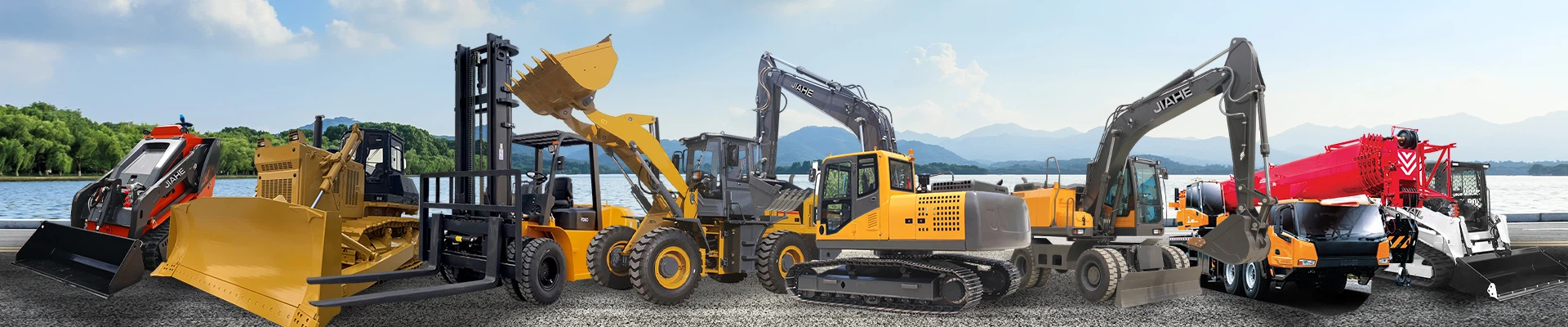
As an indispensable heavy machinery in modern engineering construction, the structural design of the excavator directly affects the operating efficiency and stability. Understanding the core structure of the excavator will help users better select and maintain equipment and improve construction efficiency.
The main structure of the excavator can be divided into three parts: working device, upper turntable and walking device.
The working device is the part of the excavator that directly performs the excavation task, including the boom, dipper and bucket. The boom connects the upper turntable and the dipper, and is responsible for providing the excavation height and range; the dipper connects the boom and the bucket, which is used to adjust the excavation depth and angle; the bucket is the part that directly contacts the material, and its shape and material directly affect the excavation efficiency and wear resistance. Modern excavators often use high-strength alloy steel to manufacture these parts to meet the needs of high-intensity operations.
The upper turntable is the core control area of the excavator, carrying key components such as the cab, engine, and hydraulic system. The cab provides the operator with a field of vision and a control interface. Modern models are generally equipped with an intelligent operating system to improve operating accuracy and safety. The engine provides power for the whole machine, while the hydraulic system realizes the precise movement of the working device through the oil pump, control valve and hydraulic cylinder. The efficiency of the hydraulic system directly affects the response speed and energy consumption performance of the excavator.
The walking device is responsible for the movement and stability of the excavator, and is divided into crawler type and tire type. Crawler excavators have a large ground contact area, suitable for soft or rugged terrain, and strong stability; tire excavators have high mobility and are suitable for flat roads and fast transitions. The design of the walking device must take into account traction, steering flexibility and durability.
In addition, the structural design of the excavator must also consider balance, heat dissipation and maintenance convenience. Reasonable structural layout can reduce energy consumption, extend the life of the equipment, and facilitate daily inspection and maintenance.
With the advancement of technology, the structure of the excavator is constantly optimized, and intelligence and environmental protection have become development trends. Understanding these core structures will help users choose the right model according to engineering needs and improve equipment performance through standardized maintenance.


