

I'm a supplier of 4 - ton diesel forklifts, and I often get asked about the maximum working load of these machines. It's a question that's super important for anyone looking to use a forklift in their business operations. So, let's dig into it and break it down.
Understanding the Basics of a 4 - Ton Diesel Forklift
First off, what exactly do we mean when we say a "4 - ton diesel forklift"? Well, the "4 - ton" part refers to its rated capacity under ideal conditions. The rated capacity is the maximum weight that the forklift is designed to lift when the load is centered at a specific load center distance. Usually, for forklifts, the standard load center distance is 24 inches (600 mm).
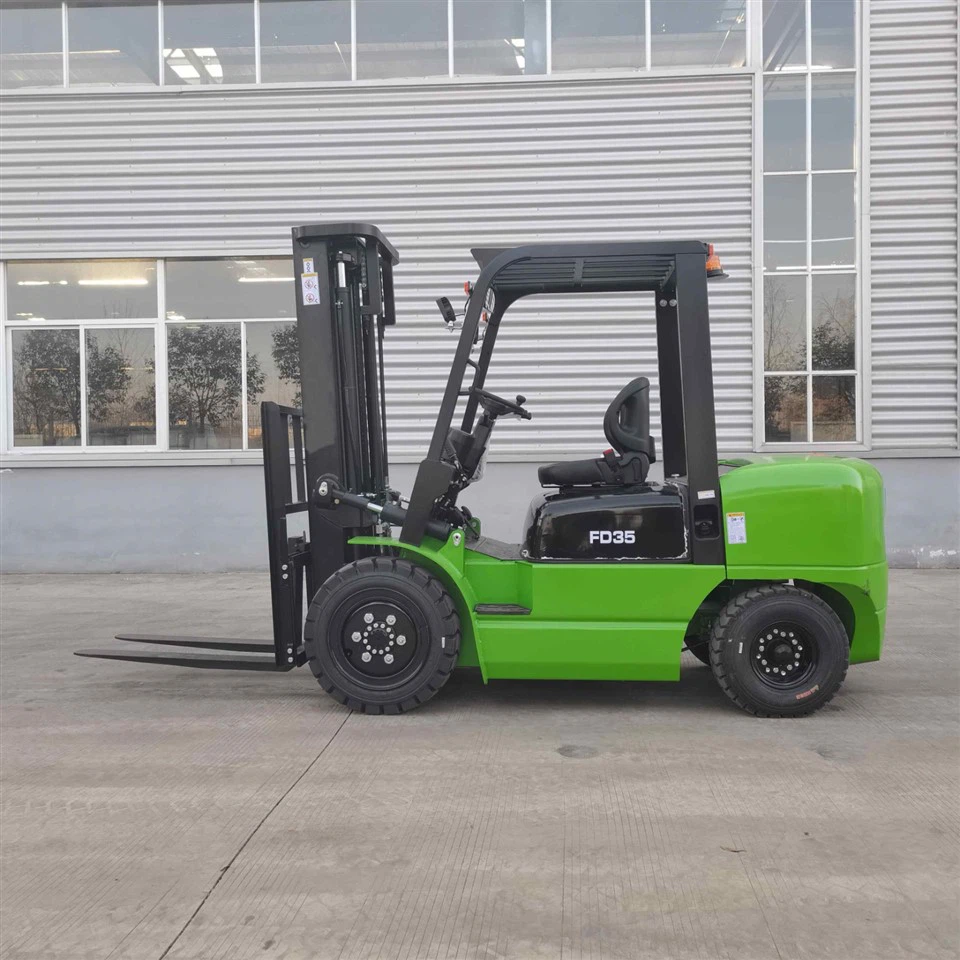
A diesel forklift, on the other hand, is powered by a diesel engine. Diesel engines are known for their high torque, which makes them great for heavy - lifting jobs. They're also more fuel - efficient and durable compared to some other types of forklift engines, like electric ones. This is why 4 - ton diesel forklifts are popular in industries such as manufacturing, warehousing, and construction sites.
What Affects the Maximum Working Load?
Now, the rated capacity of 4 tons is just a starting point. There are several factors that can affect the actual maximum working load that a 4 - ton diesel forklift can handle.
- Load Center Distance: As I mentioned earlier, the standard load center distance is 24 inches. If the load's center of gravity is farther out than this, the forklift's capacity will decrease. For example, if you're lifting a really long and heavy object, the weight distribution changes, and the forklift can't lift as much as it would with a properly centered load. Think of it like trying to hold a heavy barbell; if you grip it at the ends, it's a lot harder to lift than if you hold it in the middle.
- Lift Height: The higher you lift the load, the more the forklift's capacity is reduced. This is because as the mast extends, the forklift's stability decreases. When you're working at a lower height, the forklift is more stable, and you can get closer to its rated capacity. But if you need to lift the load up to a high shelf in a warehouse, you'll have to reduce the weight you're lifting to keep the forklift balanced.
- Forklift Condition: The state of the forklift itself matters a lot. If the tires are worn out, the hydraulics aren't working properly, or the mast is damaged, the forklift won't be able to handle as much weight. Regular maintenance is crucial to ensure that the forklift is always operating at its best. A well - maintained forklift is more likely to reach its maximum working capacity safely.
- Terrain and Surface: The surface on which the forklift is operating also affects its working load. If the ground is uneven, slippery, or soft, the forklift's stability is compromised. For instance, on a gravel surface or a wet floor, the forklift may not be able to lift as much as it would on a flat, dry concrete floor.
How to Determine the Safe Working Load
So, how do you figure out the safe working load for your 4 - ton diesel forklift in a real - world scenario?
- Check the Load Capacity Chart: Every forklift comes with a load capacity chart. This chart shows how the forklift's capacity changes based on different factors like lift height and load center distance. You need to refer to this chart every time you're going to lift a load. It's like a map that tells you what weight you can safely lift under different conditions.
- Calculate the Load's Center of Gravity: You need to know where the center of gravity of the load is. If it's not centered, you'll have to adjust the weight you're lifting accordingly. You can do this by measuring the dimensions of the load and estimating its weight distribution. Sometimes, you might need to use special equipment to move the center of gravity to a safer position.
- Consider the Working Environment: As I mentioned earlier, the terrain and surface play a big role. If you're working in a challenging environment, it's better to err on the side of caution and reduce the load weight. For example, if you're working on a slope, you'll need to reduce the load significantly to maintain stability.
Comparing with Other Diesel Forklifts
If you're still not sure if a 4 - ton diesel forklift is the right choice for your needs, it might be helpful to compare it with other models. We also offer a 2.5 Ton Diesel Forklift and a 3.5 Ton Diesel Forklift. The 2.5 - ton model is more suitable for lighter jobs, like small - scale warehousing or handling smaller loads. It's also more maneuverable in tight spaces.
The 3.5 - ton forklift is a bit more versatile. It can handle a wider range of loads than the 2.5 - ton one, but it's not as heavy - duty as the 4 - ton model. If you're not sure if you need the full 4 - ton capacity all the time, the 3.5 - ton forklift could be a good middle - ground option. And if you only have very light loads, our Forklift Diesel 2 Tons might be the perfect fit.
Why Choose Our 4 - Ton Diesel Forklifts?
Our 4 - ton diesel forklifts are top - notch. They're built with high - quality materials, and we use the latest technology to ensure that they're efficient, reliable, and safe. We've got a great team of technicians who can provide you with maintenance and support services. They'll make sure that your forklift is always in excellent working condition, so you can get the most out of it.
When it comes to the maximum working load, you can trust our forklifts to perform as advertised. We've done a lot of testing to make sure that the rated capacity is accurate, and we'll always be there to help you understand how to operate the forklift safely within its limits.
Let's Talk Business
If you're in the market for a 4 - ton diesel forklift or any of our other models, I'd love to have a chat with you. Whether you need to know more about the maximum working load, the price, or the after - sales service, I'm here to answer all your questions.
Just drop me a line, and we can start discussing how our forklifts can meet your business needs. I'm confident that once you see our products in action, you'll be impressed. So, don't hesitate to reach out and let's start this exciting journey together!

References
- OSHA (Occupational Safety and Health Administration) guidelines on forklift operation and safety.
- Technical manuals provided by manufacturers of diesel forklifts.


