

When it comes to material handling in various industrial and commercial settings, diesel forklifts are a staple due to their robustness, power, and ability to operate for extended periods without the need for frequent recharging. As a supplier of Forklift Diesel 2 Tons, I often receive inquiries about the maximum load capacity at a specific height for these machines. Understanding this aspect is crucial for ensuring safe and efficient operations in warehouses, construction sites, and other facilities where forklifts are used.
Understanding the Basics of Forklift Load Capacity
Before delving into the maximum load capacity at a specific height for a 2 - ton diesel forklift, it's essential to understand the concept of load capacity itself. The rated capacity of a forklift, in this case, 2 tons, refers to the maximum weight the forklift can safely lift at a specific load center. The load center is the distance from the face of the forks to the center of gravity of the load. For most standard forklifts, the load center is typically 24 inches (600 mm).
However, the load capacity of a forklift is not a fixed value. It varies depending on several factors, including the height to which the load is lifted, the angle of the mast, the condition of the tires, and the stability of the forklift. As the height of the load increases, the forklift's center of gravity shifts, reducing its stability and, consequently, its load - carrying capacity.
Factors Affecting Load Capacity at a Specific Height
Height of Lift
One of the most significant factors affecting the load capacity of a 2 - ton diesel forklift is the height to which the load is lifted. As the forks rise, the mast extends, and the center of gravity of the combined forklift and load moves upward and forward. This shift in the center of gravity reduces the forklift's stability, making it more prone to tipping over. As a result, the maximum load capacity decreases as the lift height increases.
For example, a 2 - ton diesel forklift may be able to lift a full 2 - ton load at a low height, say, just a few inches off the ground. However, as the lift height reaches 10 feet (3 meters), the load capacity may be reduced to 1.5 tons or even less, depending on the design and specifications of the forklift.
Mast Configuration
The configuration of the mast also plays a crucial role in determining the load capacity at a specific height. Forklifts can have different mast types, such as single - stage, two - stage, or three - stage masts. A single - stage mast provides the lowest lift height but offers the highest stability and load capacity. In contrast, a three - stage mast can lift loads to a much greater height but sacrifices some stability and load - carrying capacity.
For instance, a 2 - ton diesel forklift with a two - stage mast may have a different load capacity curve compared to one with a three - stage mast. The three - stage mast forklift may have a lower load capacity at higher lift heights due to its more complex mast structure and the increased distance the load is lifted.
Load Center Variation
As mentioned earlier, the load center is a critical factor in determining the load capacity of a forklift. If the load is not centered properly on the forks or if the load has an irregular shape, the effective load center may change. A load with a longer load center than the standard 24 inches will reduce the forklift's load capacity.
For example, if a long and narrow load is placed on the forks with its center of gravity farther from the face of the forks, the forklift will be more likely to tip forward. To compensate for this, the operator must reduce the load weight to maintain stability.
Determining the Maximum Load Capacity at a Specific Height
To determine the maximum load capacity at a specific height for a 2 - ton diesel forklift, operators and warehouse managers should refer to the forklift's load capacity chart. This chart, provided by the manufacturer, shows the relationship between the lift height, load center, and maximum load capacity.

The load capacity chart is typically displayed on a plate attached to the forklift. It provides a clear visual representation of how the load capacity changes with different lift heights and load centers. By referring to this chart, operators can ensure that they are not overloading the forklift and that they are operating it within its safe limits.
In addition to referring to the load capacity chart, operators should also consider the condition of the forklift and the working environment. A forklift with worn - out tires or a damaged mast may have a reduced load capacity. Similarly, operating on uneven or slippery surfaces can also affect the forklift's stability and load - carrying ability.
Importance of Adhering to Load Capacity Limits
Adhering to the maximum load capacity at a specific height is of utmost importance for several reasons. Firstly, overloading a forklift can lead to accidents, including tipping over, which can cause serious injuries to the operator and damage to the forklift and the surrounding property. Secondly, overloading can also cause excessive wear and tear on the forklift's components, leading to costly repairs and downtime.
By following the load capacity limits, operators can ensure the safety of themselves and their colleagues, protect the investment in the forklift, and maintain efficient operations in the workplace.
Our Offerings and Related Products
As a supplier of Forklift Diesel 2 Tons, we understand the importance of providing high - quality and reliable forklifts. Our 2 - ton diesel forklifts are designed to meet the diverse needs of our customers, offering excellent performance, durability, and safety features.
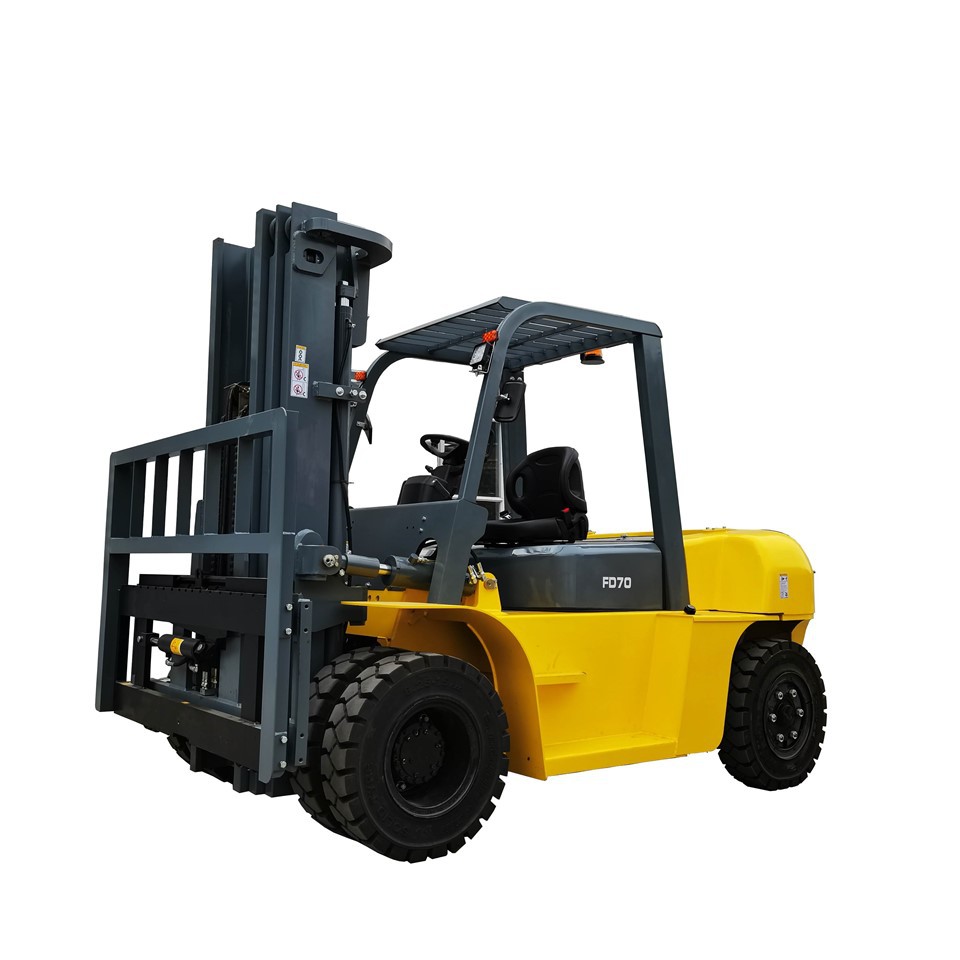
In addition to our 2 - ton diesel forklifts, we also offer a range of other forklift models to suit different applications. If you require a more powerful forklift, we have Forklift 4 Ton Diesel and Forklift Diesel 7 Tons available. These larger forklifts are suitable for handling heavier loads and are commonly used in industries such as construction and heavy manufacturing.
For those who need a forklift with a slightly different load capacity, we also offer 2.5 Ton Diesel Forklift. This model provides a good balance between load - carrying capacity and maneuverability, making it suitable for a wide range of applications.
Contact Us for Purchase and Consultation
If you are in the market for a 2 - ton diesel forklift or any of our other forklift models, we encourage you to contact us for purchase and consultation. Our team of experts is ready to assist you in selecting the right forklift for your specific needs, answering any questions you may have about load capacity and operation, and providing you with a competitive quote.
We understand that every business has unique requirements, and we are committed to providing customized solutions to meet those needs. Whether you are a small warehouse or a large industrial facility, we have the right forklift for you.
References
- "Forklift Operator's Manual" - Various manufacturers
- "Industrial Truck Association (ITA) Guidelines for Forklift Safety"
- "OSHA Regulations for Forklift Operations"


