

When it comes to heavy - duty construction and excavation work, long arm excavators play an indispensable role. As a reputable supplier of Long Arm Excavator, I often encounter inquiries about various technical aspects of these machines. One of the most frequently asked questions is: What is the maximum angle of the long arm of an excavator?
Understanding the Anatomy of a Long Arm Excavator
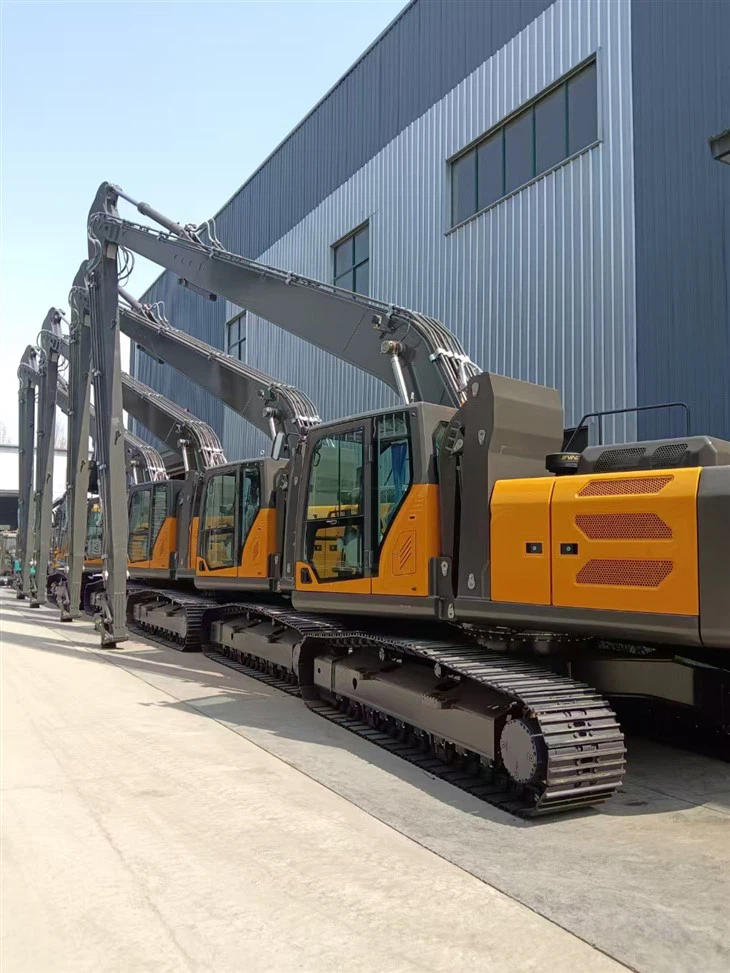
Before delving into the maximum angle, it's essential to understand the basic components of a long - arm excavator. A typical long - arm excavator consists of a base unit, which includes the cab, engine, and tracks. The long arm is attached to the base unit and is usually made up of multiple sections. These sections are connected by hydraulic cylinders that allow for movement and articulation.
The long arm is further divided into the boom, the stick, and the bucket. The boom is the first section connected to the base unit, the stick is attached to the boom, and the bucket is at the end of the stick. Each of these components has a specific range of motion, which is determined by the design of the machine and the capabilities of its hydraulic system.
Factors Affecting the Maximum Angle
Several factors influence the maximum angle that the long arm of an excavator can achieve.
1. Hydraulic System
The hydraulic system is the heart of the excavator's movement. It consists of hydraulic pumps, cylinders, and valves that work together to generate the force needed to move the long arm. The capacity and design of the hydraulic system determine how far the cylinders can extend and retract, which in turn affects the maximum angle. For example, a high - pressure hydraulic system can provide more force, allowing the long arm to reach greater angles.
2. Structural Design
The physical structure of the long arm also plays a crucial role. The length and thickness of the boom and stick, as well as the way they are connected, can limit the range of motion. A longer arm may have a more restricted maximum angle due to its increased weight and the need to maintain stability. Additionally, the design of the joints between the sections of the long arm can affect the angle at which they can bend.
3. Load Capacity
The weight of the load being carried by the bucket also impacts the maximum angle. When the bucket is filled with heavy materials, the excavator needs to maintain its balance. As a result, the maximum angle may be reduced to prevent the machine from tipping over. Operators need to be aware of the load capacity and adjust the angle of the long arm accordingly.
Typical Maximum Angles
In general, the maximum angle of the boom of a long - arm excavator can range from 70 to 90 degrees from the horizontal position. This allows the boom to lift the stick and bucket to a significant height, which is useful for tasks such as loading materials onto trucks or reaching high - elevation areas.
The stick, which is attached to the boom, can typically achieve an angle of around 130 to 150 degrees relative to the boom. This range of motion enables the bucket to reach different distances and depths, making it suitable for various excavation tasks, such as digging trenches or excavating foundations.
The bucket itself can rotate 180 degrees or more, depending on the design of the excavator. This rotation allows for precise placement of materials and efficient digging in different directions.
Importance of Knowing the Maximum Angle
Understanding the maximum angle of the long arm of an excavator is crucial for several reasons.
1. Safety
Safety is the top priority in any construction site. Knowing the maximum angle helps operators avoid overextending the long arm, which can lead to instability and potential accidents. By operating within the recommended angle limits, operators can ensure the safety of themselves and others on the site.
2. Efficiency
Operating the long - arm excavator at the optimal angle can significantly improve efficiency. For example, when digging a trench, using the correct angle of the stick and bucket can reduce the number of passes needed, saving time and fuel. Additionally, reaching the maximum angle when loading materials can increase the amount of material that can be loaded in each cycle.
3. Equipment Longevity
Overextending the long arm beyond its maximum angle can cause excessive stress on the hydraulic system and the structural components of the excavator. This can lead to premature wear and tear, resulting in costly repairs and downtime. By operating within the recommended angle range, the lifespan of the equipment can be extended.

Applications Based on the Maximum Angle
The maximum angle of the long arm of an excavator makes it suitable for a wide range of applications.
1. Demolition
In demolition work, the long arm can reach high - rise buildings or structures. The ability to achieve a large angle allows the bucket to break down walls and structures from different positions, increasing the efficiency of the demolition process.
2. Deep Excavation
For deep excavation projects, such as digging basements or large - scale foundations, the long arm's maximum angle enables the bucket to reach greater depths. The boom can be raised to a high angle, and the stick can be extended to access the bottom of the excavation site.
3. River and Canal Maintenance
When maintaining rivers and canals, the long arm can reach into the water from the banks. The maximum angle allows the bucket to clean sediment and debris from the waterway, improving water flow and preventing flooding.
Our Long Arm Excavators
As a supplier of Long Arm Excavator, we offer a wide range of models with different maximum angles to meet the diverse needs of our customers. Our long - arm excavators are designed with advanced hydraulic systems and robust structural components to ensure reliable performance.
We understand that each project has unique requirements, and our team of experts can provide personalized advice on choosing the right excavator based on the maximum angle and other technical specifications. Whether you are working on a small - scale construction project or a large - scale infrastructure development, we have the solution for you.
Contact Us for Purchase and Consultation
If you are in the market for a long - arm excavator or have any questions about the maximum angle or other technical aspects, we encourage you to contact us. Our sales team is ready to assist you in making an informed decision. We offer competitive prices, excellent after - sales service, and a commitment to providing high - quality equipment. Don't hesitate to reach out and start a conversation about your excavation needs.
References
- Construction Equipment Handbook, 5th Edition
- Hydraulic Systems in Heavy Machinery: Principles and Applications
- Excavator Operator's Manuals from Leading Manufacturers


