

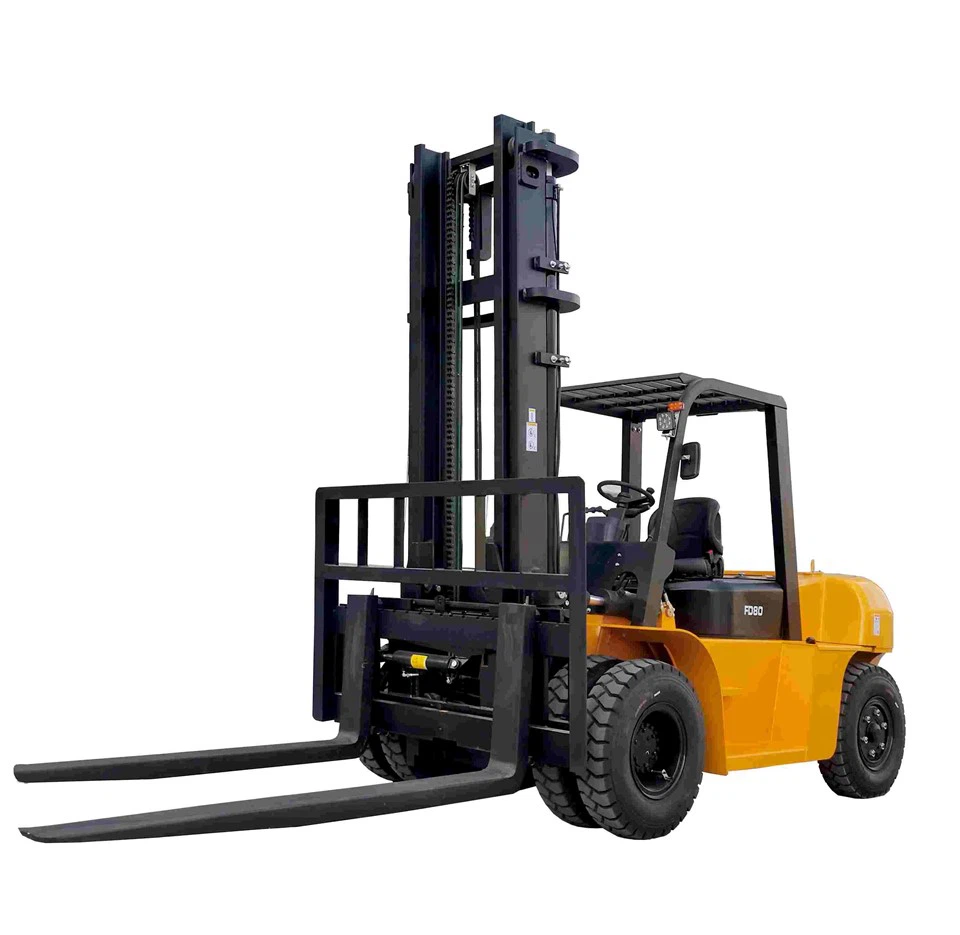
When it comes to industrial operations, a 7 - ton diesel forklift is a workhorse that plays a crucial role in handling heavy loads efficiently. One of the key performance indicators of a forklift is its lift speed, which can significantly impact productivity and operational efficiency. As a supplier of Forklift Diesel 7 Tons, I'm here to delve into the details of what the lift speed of such a forklift entails.
Understanding Lift Speed
Lift speed refers to the rate at which a forklift can raise or lower its forks. It is typically measured in inches or millimeters per second. The lift speed of a 7 - ton diesel forklift is influenced by several factors, including the design of the hydraulic system, the power of the engine, and the load capacity.
Hydraulic System
The hydraulic system is the heart of a forklift's lifting mechanism. It consists of a hydraulic pump, cylinders, and valves that work together to generate the force needed to lift heavy loads. A well - designed hydraulic system can provide a smooth and efficient lift. For a 7 - ton diesel forklift, a high - quality hydraulic pump is essential to ensure sufficient pressure to lift the heavy loads. The size and number of hydraulic cylinders also play a role. Larger cylinders can displace more fluid, resulting in a faster lift speed. However, the trade - off is that larger cylinders may require more power from the engine.
Engine Power
The engine of a 7 - ton diesel forklift provides the power needed to operate the hydraulic system. A more powerful engine can drive the hydraulic pump at a higher speed, which in turn can increase the lift speed. Diesel engines are known for their high torque output, which is ideal for lifting heavy loads. When the engine has enough power, it can quickly respond to the demands of the hydraulic system, allowing for rapid lifting and lowering of the forks.
Load Capacity
The load capacity of a forklift has a direct impact on its lift speed. As the load on the forks increases, the forklift has to work harder to lift it. A 7 - ton diesel forklift is designed to handle loads up to 7 tons. When the forklift is carrying a full - capacity load, the lift speed will be slower compared to when it is carrying a lighter load. This is because the hydraulic system has to generate more force to lift the heavier load, and the engine has to provide more power to drive the hydraulic pump.
Typical Lift Speeds
The lift speed of a 7 - ton diesel forklift can vary depending on the specific model and manufacturer. On average, the lift speed of a 7 - ton diesel forklift when carrying a full - capacity load can range from 12 to 18 inches per second (305 to 457 millimeters per second). When the forklift is carrying a lighter load, say around 3 - 4 tons, the lift speed can increase to 20 - 25 inches per second (508 to 635 millimeters per second).
Some advanced models of 7 - ton diesel forklifts may have even faster lift speeds. These models often incorporate advanced hydraulic technologies and more powerful engines. For example, some forklifts use variable - displacement hydraulic pumps, which can adjust the flow rate of the hydraulic fluid based on the load and the required lift speed. This allows for more efficient operation and can result in faster lift speeds, especially when handling lighter loads.
Importance of Lift Speed in Industrial Operations
In industrial settings, the lift speed of a forklift can have a significant impact on productivity. Faster lift speeds mean that the forklift can move more loads in a shorter period of time. This is particularly important in high - volume warehouses and distribution centers where time is of the essence. For example, in a busy shipping and receiving area, a 7 - ton diesel forklift with a fast lift speed can quickly unload and load trucks, reducing the turnaround time and increasing the overall efficiency of the operation.
Moreover, a fast lift speed can also improve the safety of the operation. When the forklift can lift and lower the loads quickly, it spends less time in a potentially unstable position. This reduces the risk of the load shifting or the forklift tipping over. Additionally, faster lift speeds can reduce operator fatigue. Operators can complete their tasks more quickly, which means they have to spend less time sitting in the forklift cab, operating the controls.
Comparison with Other Forklift Sizes
When comparing the lift speed of a 7 - ton diesel forklift with other forklift sizes, it's important to consider the differences in their design and intended use.
A 5 Ton Diesel Forklift is smaller and lighter compared to a 7 - ton diesel forklift. It is designed to handle loads up to 5 tons. Generally, a 5 - ton diesel forklift will have a faster lift speed when carrying a full - capacity load compared to a 7 - ton diesel forklift. This is because it has a lighter load to lift, and the hydraulic system and engine do not have to work as hard.
On the other hand, an 8 Ton Forklift Heavy Duty is designed to handle even heavier loads. It has a more robust hydraulic system and a more powerful engine. However, when carrying a full - capacity load, its lift speed may be slower than that of a 7 - ton diesel forklift. This is because it has to lift a heavier load, and the additional weight requires more power and time to lift.
A Forklift Diesel 2 Tons is much smaller and is used for lighter - duty applications. It has a very fast lift speed when carrying a full - capacity load because it has a relatively light load to handle. However, it is not suitable for handling the heavy loads that a 7 - ton diesel forklift can handle.
Factors to Consider When Choosing a 7 - Ton Diesel Forklift Based on Lift Speed
When choosing a 7 - ton diesel forklift, lift speed is an important factor to consider, but it should not be the only one. Here are some other factors to keep in mind:
Reliability
A reliable forklift is essential for continuous operation. Look for a forklift from a reputable manufacturer with a proven track record of reliability. Check for features such as high - quality components, robust construction, and easy maintenance.
Maneuverability
In many industrial settings, space is limited. A forklift that is easy to maneuver can increase efficiency and reduce the risk of accidents. Consider the turning radius, aisle width requirements, and the overall size of the forklift.
Operator Comfort
An operator who is comfortable is more likely to be productive and safe. Look for features such as an adjustable seat, ergonomic controls, and good visibility from the operator's cab.

Cost
The cost of a 7 - ton diesel forklift includes the purchase price, operating costs, and maintenance costs. Compare the prices of different models and consider the long - term costs. A more expensive forklift may have a faster lift speed and better features, but it may also have higher maintenance costs.
Conclusion
The lift speed of a 7 - ton diesel forklift is a complex parameter that is influenced by the hydraulic system, engine power, and load capacity. It plays a crucial role in industrial operations, affecting productivity, safety, and operator fatigue. As a supplier of Forklift Diesel 7 Tons, we understand the importance of lift speed and offer a range of forklifts with different lift speeds to meet the diverse needs of our customers.
If you are in the market for a 7 - ton diesel forklift or have any questions about lift speed and other performance indicators, we encourage you to contact us for a detailed discussion. Our team of experts is ready to assist you in choosing the right forklift for your specific requirements. We can provide you with in - depth information, product demonstrations, and competitive pricing. Let's work together to find the perfect forklift solution for your industrial operations.
References
- Industrial Forklift Handbook, 3rd Edition
- Diesel Engine Technology for Forklifts, published by Forklift Engineering Press
- Hydraulic Systems in Heavy Equipment, by John Smith


