

Can a long arm excavator be used for underwater pipeline laying? This question often arises in the infrastructure and construction industry, especially when considering efficient and cost - effective ways to install pipelines underwater. As a supplier of Long Arm Excavator, I have in - depth knowledge of this equipment and its applications. In this blog, we will explore the feasibility, advantages, limitations, and key considerations of using long arm excavators for underwater pipeline laying.
Feasibility of Using Long Arm Excavators for Underwater Pipeline Laying
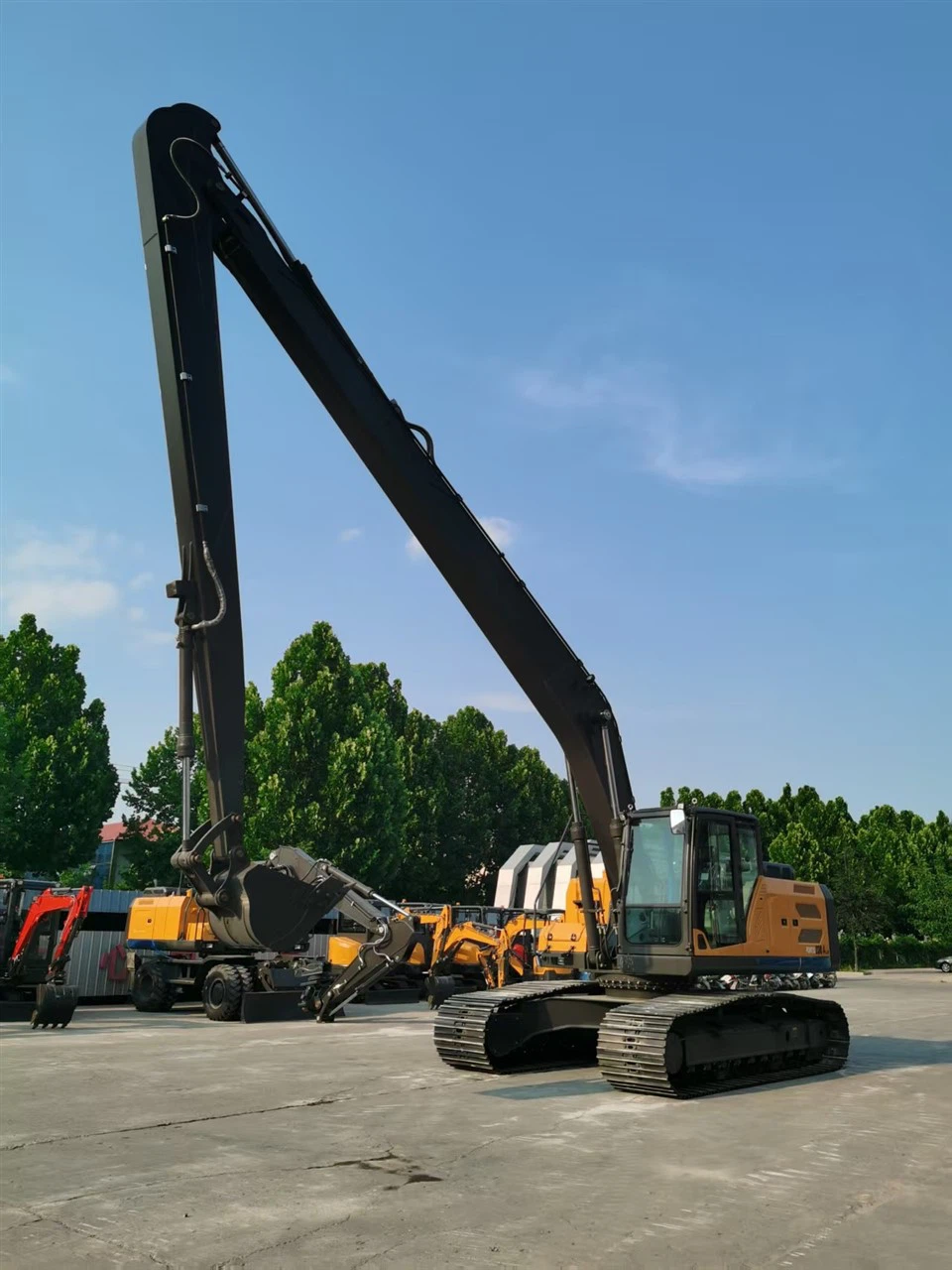
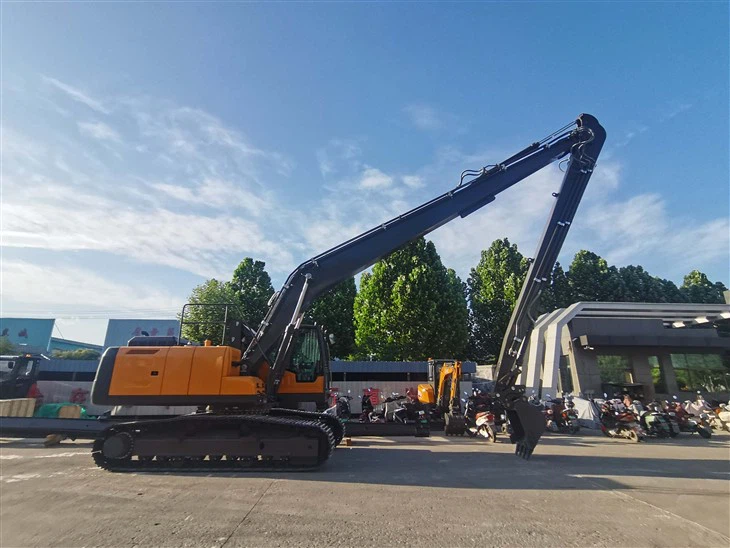
Long arm excavators are designed to reach greater distances than standard excavators. Their extended booms and arms provide the reach necessary to access areas that are difficult to reach with traditional equipment. In the context of underwater pipeline laying, this reach is highly valuable, especially in shallow to moderately deep water environments.
The design of long arm excavators allows them to operate from the shore or from a barge near the water's edge. This means that the equipment can be stationed in a relatively stable position while still being able to manipulate and place pipelines underwater. The hydraulic systems of modern long arm excavators provide precise control over the movement of the bucket or the specific attachment used for pipeline handling. This precision is crucial when laying pipelines, as it ensures that the pipes are placed at the correct depth, angle, and alignment.
Advantages of Using Long Arm Excavators for Underwater Pipeline Laying
Cost - effectiveness
One of the most significant advantages of using long arm excavators for underwater pipeline laying is cost - effectiveness. Compared to specialized underwater pipelaying vessels, long arm excavators are relatively inexpensive to purchase and operate. They do not require large crews or extensive support vessels, which can significantly reduce project costs. Additionally, long arm excavators can be transported easily to different project sites, making them a more flexible option for smaller - scale or remote pipeline projects.
Flexibility
Long arm excavators offer a high degree of flexibility. They can be equipped with different types of attachments, such as pipeline - lifting hooks, grippers, or dredging buckets. This versatility allows them to perform multiple tasks during the pipeline laying process, including trench digging, pipe lowering, and backfilling. Moreover, they can adapt to various seabed or riverbed conditions, from soft mud to hard rock, with the appropriate choice of attachments.
Accessibility
In areas where access is limited, such as narrow rivers or shallow coastal waters, long arm excavators can be a practical solution. Their ability to operate from the shore or a small barge means that they can reach areas that may be inaccessible to large pipelaying vessels. This makes them suitable for projects in inland waterways, small harbors, or areas with restricted water depth.
Limitations of Using Long Arm Excavators for Underwater Pipeline Laying
Depth Limitations
One of the main limitations of long arm excavators is their relatively limited working depth. Most long arm excavators are designed for shallow to moderately deep water applications, typically up to around 20 - 30 meters. In deeper waters, the reach and strength of the long arm may not be sufficient to handle the pipeline installation effectively. The pressure and water currents at greater depths can also pose challenges to the stability and control of the excavator's arm.
Weather and Environmental Conditions
Long arm excavators are sensitive to weather and environmental conditions. High winds, strong waves, or rapid water level changes can affect the stability of the equipment and the accuracy of pipeline laying operations. In extreme weather conditions, such as storms or heavy seas, work may need to be halted for safety reasons. Moreover, the presence of underwater obstacles, such as large rocks or debris, can impede the progress of the excavation and pipeline laying process.
Pipeline Size and Weight
Another limitation is the size and weight of the pipelines that long arm excavators can handle. They are generally more suitable for smaller - diameter and lighter - weight pipelines. Larger and heavier pipelines may require more powerful and specialized equipment to ensure their safe and accurate installation underwater. The lifting capacity of the long arm excavator's attachment must be carefully considered when selecting pipelines for a project.
Key Considerations When Using Long Arm Excavators for Underwater Pipeline Laying
Site Assessment
Before using a long arm excavator for underwater pipeline laying, a thorough site assessment is essential. This includes studying the water depth, seabed or riverbed conditions, presence of obstacles, and environmental factors. Understanding these conditions will help determine whether a long arm excavator is the appropriate equipment for the project and what type of attachments may be required.
Equipment Selection and Preparation
Choosing the right long arm excavator and attachments is crucial. Factors such as reach, lifting capacity, and hydraulic power must be considered based on the project requirements. The equipment should also be properly maintained and prepared before use. This includes checking the hydraulic systems, ensuring the integrity of the boom and arm, and testing the attachments for proper functionality.
Safety Precautions
Safety is of utmost importance during underwater pipeline laying operations. Adequate safety measures should be in place, including life jackets for the operators, safety harnesses, and emergency response plans. The equipment should be operated by trained professionals who are familiar with the specific procedures and risks associated with underwater excavation and pipeline laying.
Conclusion
In conclusion, long arm excavators can be used for underwater pipeline laying in certain circumstances. They offer cost - effectiveness, flexibility, and accessibility, which make them a viable option for shallow to moderately deep water projects, especially in areas with limited access. However, they also have limitations, such as depth constraints, sensitivity to weather conditions, and restrictions on pipeline size and weight.
If you are considering a project involving underwater pipeline laying and are interested in learning more about how our Long Arm Excavator can meet your needs, please feel free to contact us. Our team of experts is ready to provide you with detailed information, technical support, and assistance in choosing the right equipment for your project. We look forward to collaborating with you and helping you achieve successful pipeline installation.
References
- Construction Equipment Handbook: Long Arm Excavators, 3rd Edition.
- Journal of Underwater Construction and Pipeline Installation, Volume 15, Issue 2.
- Best Practices in Underwater Pipeline Laying: A Manual for Project Managers.


