

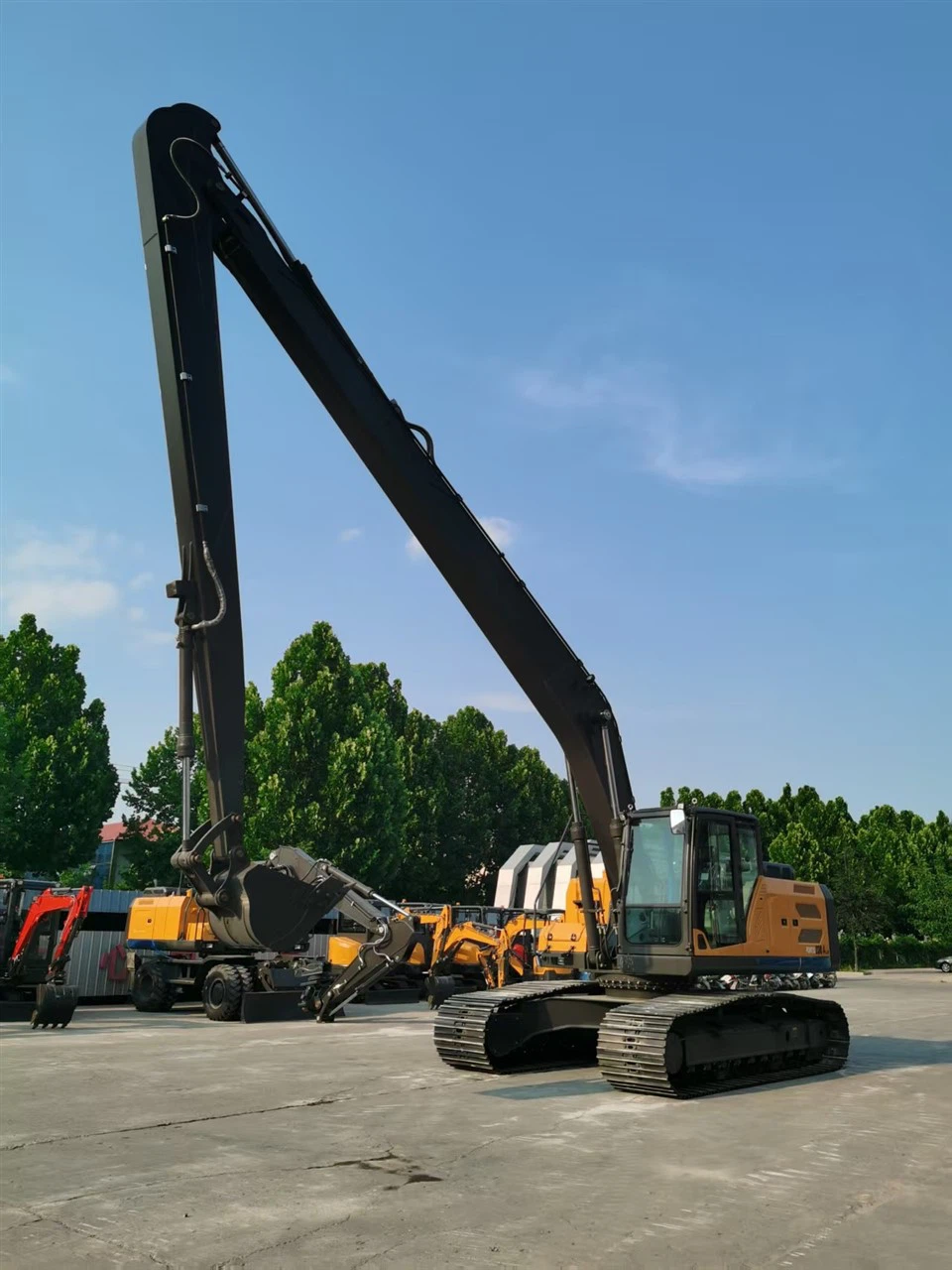
When it comes to heavy - duty construction and excavation work, a Long Arm Excavator is an indispensable piece of equipment. As a supplier of Long Arm Excavators, I've witnessed firsthand the power and versatility these machines offer. However, with great power comes great responsibility, and safety should always be the top priority when operating such equipment. In this blog, I'll share some essential safety precautions that should be taken when using a Long Arm Excavator.
Pre - operation Safety Checks
Before starting any excavation work with a Long Arm Excavator, a series of pre - operation safety checks must be carried out. First and foremost, visually inspect the entire machine. Check for any signs of damage, such as cracks in the boom, arm, or tracks. A damaged component can lead to catastrophic failures during operation. For example, a crack in the boom might cause it to break under stress, endangering the operator and those in the vicinity. You can find more detailed information about the components of a Long Arm Excavator.
Next, examine the hydraulic system. Hydraulic leaks can not only reduce the efficiency of the machine but also pose a significant safety hazard. A sudden loss of hydraulic pressure can cause the boom or other attachments to drop unexpectedly. Check all hydraulic hoses, fittings, and cylinders for leaks, and ensure that the hydraulic fluid level is within the recommended range.
Inspect the tracks or wheels, depending on the type of Long Arm Excavator. For tracked excavators, check the track tension. Loose tracks can derail during operation, while overly tight tracks can cause excessive wear on the components. For wheeled excavators, check the tire pressure and the condition of the tires for any signs of damage or excessive wear.
The operator's cab also requires a thorough inspection. Make sure all controls are in good working condition, the seatbelt is functional, and the visibility from the cab is unobstructed. Clean the windows and mirrors to ensure clear sightlines, as poor visibility can lead to accidents, especially when working in congested areas.
Operator Training and Qualifications
One of the most critical safety precautions is ensuring that the operator is properly trained and qualified. Operating a Long Arm Excavator is not a task for the inexperienced. A well - trained operator understands the machine's capabilities and limitations, and knows how to handle it safely in various working conditions.
Operators should receive comprehensive training on the specific model of the Long Arm Excavator they will be using. This training should cover everything from basic controls and operation to advanced techniques for different types of excavation work. In addition, operators should be trained in safety procedures, including emergency shutdowns, fire safety, and first - aid.
It's also important to ensure that operators hold the necessary certifications and licenses. Different regions may have different requirements, but generally, operators should have a valid license for operating heavy equipment. Regular refresher courses should be provided to keep operators updated on the latest safety standards and best practices.
Site Preparation and Safety Planning
Before bringing a Long Arm Excavator to a work site, proper site preparation and safety planning are essential. First, conduct a thorough site survey. Identify any potential hazards, such as underground utilities, unstable ground, or overhead power lines. Mark the location of these hazards clearly to prevent accidental damage or contact.
If there are underground utilities, contact the relevant utility companies to obtain accurate maps and information about the location and depth of the utilities. Take appropriate measures to protect the utilities during excavation, such as using non - destructive digging methods in the vicinity.
Overhead power lines are another significant hazard. Ensure that the Long Arm Excavator maintains a safe distance from power lines at all times. The minimum safe distance may vary depending on the voltage of the power lines, but it's generally recommended to keep at least 10 feet (3 meters) away from low - voltage lines and a greater distance for high - voltage lines.
Set up appropriate safety barriers and signage around the work area. These barriers can prevent unauthorized access to the dangerous zone, and the signage can provide clear instructions and warnings to workers and bystanders.
Safe Operating Procedures
During operation, operators should follow a set of safe operating procedures. First, start the machine in a stable position. Make sure the excavator is on level ground and the tracks or wheels are firmly planted. This helps prevent the machine from tipping over during operation.
When using the boom and arm, avoid over - extending them beyond the machine's recommended limits. Over - extension can cause the machine to become unstable and increase the risk of tipping. Also, be careful when lifting heavy loads. Ensure that the load is evenly distributed and within the machine's lifting capacity.
When digging, start with small, controlled movements. Avoid sudden or jerky movements, as these can cause the machine to lose balance or damage the attachments. Pay attention to the soil conditions. If the soil is soft or unstable, take extra precautions, such as reducing the digging depth or using additional support.
Keep a safe distance from other workers and equipment on the site. Use the machine's horn or other warning devices to alert others when moving or operating the boom. When working near the edge of a trench or embankment, be aware of the potential for soil collapse and keep the machine at a safe distance.
Maintenance and Inspection During Operation
Regular maintenance and inspection during operation are also crucial for safety. Operators should monitor the machine's performance closely. Pay attention to any unusual noises, vibrations, or warning lights. If any problems are detected, stop the machine immediately and investigate the cause.
Check the hydraulic fluid, engine oil, and coolant levels regularly during breaks. Low fluid levels can cause the machine to overheat or malfunction, leading to safety issues. Also, inspect the attachments, such as buckets and grapples, for any signs of wear or damage. Replace worn or damaged parts promptly to ensure the safe operation of the machine.
Emergency Preparedness
Despite all the precautions, emergencies can still occur. Therefore, it's essential to have an emergency preparedness plan in place. The operator should know the location of the emergency shutdown switch and be able to activate it quickly in case of an emergency.

The work site should be equipped with appropriate fire - fighting equipment, such as fire extinguishers. Operators should be trained in how to use the fire - fighting equipment effectively. In addition, first - aid kits should be readily available on the site, and operators should be trained in basic first - aid procedures.
If an accident occurs, it's important to report it immediately and follow the established emergency response procedures. This includes notifying the relevant authorities, providing first - aid to the injured, and preserving the scene for investigation.
Conclusion
In conclusion, using a Long Arm Excavator safely requires a combination of pre - operation checks, operator training, site preparation, safe operating procedures, maintenance, and emergency preparedness. By following these safety precautions, we can minimize the risk of accidents and ensure the well - being of operators and those on the work site.
As a Long Arm Excavator supplier, I'm committed to providing high - quality equipment and promoting safety in the industry. If you're interested in purchasing a Long Arm Excavator or have any questions about our products, please feel free to contact us for further discussion and negotiation. We're here to help you find the right equipment for your needs and ensure that you can use it safely and effectively.
References
- Construction Equipment Safety Manual.
- Occupational Safety and Health Administration (OSHA) Guidelines for Heavy Equipment Operation.
- Manufacturer's Manuals for Long Arm Excavators.


