

As a supplier of Forklift Diesel 7 Tons, I often get asked about the speed of these powerful machines. In this blog post, I'll delve into the factors that influence the speed of a 7 - ton diesel forklift and provide you with a comprehensive understanding of what to expect.
Understanding the Basics of Forklift Speed
Before we discuss the speed of a 7 - ton diesel forklift, it's important to understand the different types of speeds associated with forklifts. There are two main types: travel speed and lifting speed. Travel speed refers to how fast the forklift can move horizontally, while lifting speed is the rate at which it can raise or lower the forks.
Factors Affecting the Travel Speed of a 7 - Ton Diesel Forklift
Engine Power
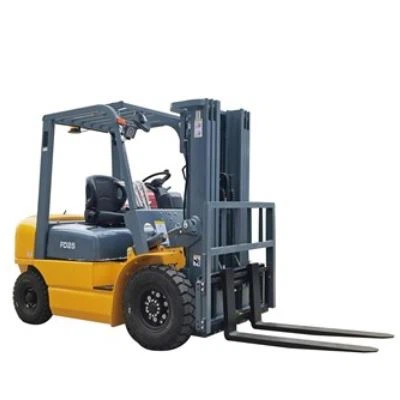
The engine is the heart of the forklift, and its power plays a crucial role in determining the travel speed. A 7 - ton diesel forklift typically has a robust engine to handle the heavy load. Diesel engines are known for their high torque output, which allows the forklift to accelerate quickly and maintain a good speed even when carrying a full load. The more powerful the engine, the higher the potential travel speed.

Load Capacity
The weight of the load being carried directly impacts the travel speed. A forklift moving with a 7 - ton load will naturally be slower than when it's unloaded. This is because the engine has to work harder to move the additional weight. As a general rule, the heavier the load, the lower the speed. Forklift manufacturers usually provide speed specifications for both loaded and unloaded conditions.
Transmission Type
There are two main types of transmissions in forklifts: manual and automatic. Manual transmissions require the operator to shift gears, which can affect the smoothness of acceleration and speed. Automatic transmissions, on the other hand, adjust the gears automatically, providing a more consistent and often faster speed. Some modern 7 - ton diesel forklifts come with advanced automatic transmissions that optimize the speed based on the load and driving conditions.
Tire Condition and Type
The tires of a forklift also play a role in its speed. Worn - out tires can reduce traction and increase rolling resistance, which in turn slows down the forklift. Different types of tires are designed for different applications. For example, pneumatic tires are suitable for outdoor use and provide good shock absorption, while cushion tires are better for indoor use. The right type of tire can help the forklift achieve its optimal speed.
Typical Travel Speeds of 7 - Ton Diesel Forklifts
On average, a 7 - ton diesel forklift can travel at a speed of around 12 - 18 miles per hour (19 - 29 kilometers per hour) when unloaded. When carrying a full 7 - ton load, the speed may drop to around 8 - 12 miles per hour (13 - 19 kilometers per hour). However, these are just general estimates, and the actual speed can vary depending on the factors mentioned above.
Lifting Speed of a 7 - Ton Diesel Forklift
The lifting speed is another important aspect of a forklift's performance. It is measured in inches or centimeters per second. A 7 - ton diesel forklift usually has a lifting speed of around 10 - 20 inches per second (25 - 50 centimeters per second) when unloaded. When loaded, the lifting speed may be slightly lower, typically around 8 - 15 inches per second (20 - 38 centimeters per second). The lifting speed is determined by the hydraulic system of the forklift, which is responsible for raising and lowering the forks.
Importance of Speed in Forklift Operations
The speed of a forklift can significantly impact the efficiency of a warehouse or industrial operation. A faster - moving forklift can complete more tasks in less time, increasing productivity. However, speed should not be the only consideration. Safety is paramount, and operators must always follow the recommended speed limits to prevent accidents.
Comparing with Other Diesel Forklifts
If you're considering different diesel forklifts, it's useful to compare the speeds of 7 - ton models with those of other capacities. For example, a 2.5 Ton Diesel Forklift is generally faster than a 7 - ton forklift due to its lighter load capacity. It can travel at speeds of up to 15 - 20 miles per hour (24 - 32 kilometers per hour) when unloaded. Similarly, a 3.5 Ton Diesel Forklift may have a travel speed of around 13 - 18 miles per hour (21 - 29 kilometers per hour) when unloaded.
Our Forklift Diesel 7 Tons Offering
At our company, we offer high - quality Forklift Diesel 7 Tons that are designed to meet the diverse needs of our customers. Our forklifts are equipped with powerful engines, advanced transmissions, and high - performance hydraulic systems to ensure optimal speed and efficiency. We also provide comprehensive after - sales service and support to keep your forklift running smoothly.
Contact Us for Purchase and Negotiation
If you're in the market for a 7 - ton diesel forklift, we'd love to hear from you. Whether you have questions about the speed, performance, or any other aspect of our forklifts, our team of experts is ready to assist you. We can provide you with detailed product information, pricing, and even arrange a demonstration so you can see the forklift in action. Contact us today to start the purchase negotiation process and find the perfect forklift for your business.
References
- Forklift Operator's Manuals from leading manufacturers
- Industry research reports on forklift performance and safety
- Technical specifications from diesel engine manufacturers


