

Hey there, fellow heavy - equipment enthusiasts! As a supplier of wheel loaders, I often get asked about all the different components that make these machines tick. One crucial part that doesn't always get as much love as it deserves is the steering system. So, let's dig into the role of the steering system in a wheel loader.
First off, what exactly is a wheel loader? It's a versatile piece of equipment used in construction, mining, and agriculture to scoop up, carry, and dump materials like sand, gravel, and dirt. And the steering system is like the brain that controls its movement and direction.
Maneuverability: The Key Game - Changer
One of the most important roles of the steering system in a wheel loader is to ensure excellent maneuverability. In job sites where space is limited, like construction sites filled with debris and other heavy equipment, a wheel loader needs to be able to turn on a dime. The steering system allows operators to quickly change the direction of the loader, getting it in and out of tight spots with ease.
For instance, imagine a construction project where a wheel loader has to navigate through a narrow alley between two buildings to pick up some building materials. Without a responsive steering system, this task would be nearly impossible. The operator can use the steering wheel or controls to smoothly turn the wheels, making the loader move precisely as needed. This kind of maneuverability not only saves time but also reduces the risk of damage to the equipment and the surrounding environment.
Precision in Loading and Unloading
Another major role of the steering system is to provide precision during the loading and unloading process. When a wheel loader is approaching a pile of materials, the operator needs to be able to position the loader exactly where it needs to be. The steering system gives the operator the control to align the bucket of the loader with the pile of dirt, gravel, or whatever material they're working with.
Once the bucket is loaded, the operator then has to drive the loader to the unloading point, such as a dump truck or a storage area. Here again, the steering system is vital. The operator can steer the loader accurately to the right spot, making sure that the materials are dumped exactly where they should be. This precision helps in increasing efficiency and minimizing material spillage.
Safety on the Job Site
Safety is always a top priority in any heavy - equipment operation, and the steering system plays a big part in ensuring it. A well - functioning steering system gives the operator better control over the loader, especially in emergency situations. If there's an unexpected obstacle in the path of the loader, the operator can quickly turn the steering wheel to avoid a collision.

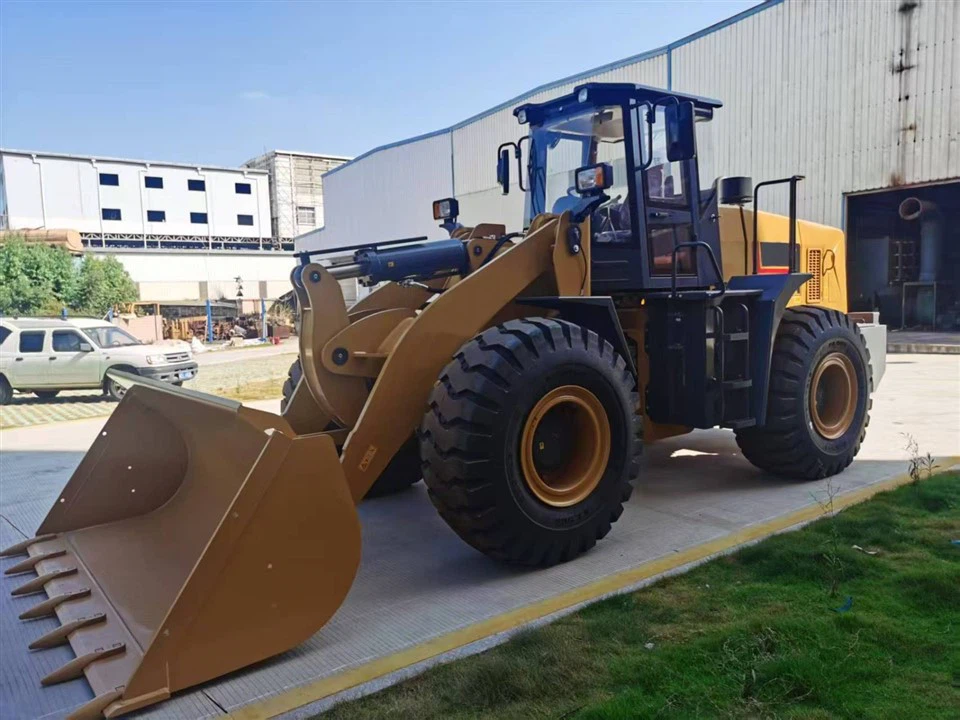
Moreover, the steering system also contributes to the stability of the wheel loader. When turning, the system distributes the weight of the loader evenly across the wheels, preventing it from tipping over. This is especially important when the loader is carrying a heavy load. A stable steering system gives the operator the confidence to operate the loader safely, even in challenging conditions.
Different Types of Steering Systems in Wheel Loaders
There are a few different types of steering systems used in wheel loaders, and each has its own advantages.
Articulated Steering
Articulated steering is one of the most common types used in wheel loaders. In this system, the loader is divided into two parts: the front and the rear. These two parts are connected by a hinge, and the steering mechanism allows the front part to pivot relative to the rear part. This gives the wheel loader extremely tight turning radii, making it highly maneuverable in confined spaces.
The advantage of articulated steering is that it allows for quick and easy changes in direction. It's like having a much smaller vehicle in terms of turning ability, even though the loader itself can be quite large. Articulated steering is also great for uneven terrain because it allows each part of the loader to adapt to the ground conditions independently.
Four - Wheel Steering
Some wheel loaders are equipped with four - wheel steering systems. In this setup, all four wheels can be steered, which provides even greater maneuverability. Four - wheel steering systems can be set up in different configurations. For example, in some cases, the front and rear wheels can turn in the same direction, which helps the loader to move sideways. This feature is extremely useful when the loader needs to get into a very tight spot or to perform precise lateral movements.
On the other hand, the front and rear wheels can also turn in opposite directions, which reduces the turning radius. This is similar to the effect of articulated steering but with a different mechanical setup. Four - wheel steering systems are often found in larger wheel loaders where additional maneuverability is required.
Our Wheel Loader Offerings
As a wheel loader supplier, we understand the importance of a reliable steering system. That's why we offer a range of high - quality wheel loaders with top - notch steering systems. For example, our Wheel Loader Diesel Loader 3 Ton is a great option for medium - sized jobs. It has an articulated steering system that provides excellent maneuverability in tight spaces. This loader is perfect for construction sites with limited room to operate.
If you need something bigger and more powerful, check out our Front Loader 4x4 Diesel Wheel Loader 5 Ton. This behemoth comes with a four - wheel steering system, allowing for precise control and amazing maneuverability, even when carrying heavy loads. It's ideal for large - scale construction projects and mining operations.
Conclusion
In conclusion, the steering system in a wheel loader is definitely more than just a way to turn the wheels. It's a crucial component that affects maneuverability, precision, and safety. Whether it's navigating through a crowded job site, accurately loading and unloading materials, or ensuring a safe work environment, the steering system is at the heart of it all.
If you're in the market for a high - quality wheel loader, don't overlook the importance of a reliable steering system. We're here to help you find the perfect wheel loader for your needs. Reach out to us to start a discussion about your project requirements, and let's work together to get you the right equipment for the job.
References
- Construction Equipment magazine articles on wheel loader technology.
- Manufacturer's manuals for wheel loaders on steering system specifications.
I hope this blog has given you a better understanding of the role of the steering system in a wheel loader. If you have any questions or need more information, feel free to contact us.


