

The smoothness of the mast during the lifting and lowering process of a 3 - ton diesel forklift is a crucial factor that significantly impacts the overall performance, efficiency, and safety of the equipment. As a supplier of Diesel Forklift 3 Ton, I have witnessed firsthand the importance of this aspect and would like to delve deeper into what it entails.
Understanding the Mast of a 3 - Ton Diesel Forklift
The mast is the vertical assembly on a forklift that is responsible for raising and lowering the load. In a 3 - ton diesel forklift, the mast is designed to handle relatively heavy loads, and its smooth operation is essential. There are different types of masts, such as simplex masts, duplex masts, and triplex masts. Simplex masts are the simplest, with a single stage that typically provides a limited lift height. Duplex and triplex masts, on the other hand, have multiple stages, allowing for greater lift heights.
Factors Affecting Mast Smoothness
Hydraulic System
The hydraulic system is the heart of the mast's lifting and lowering mechanism. In a 3 - ton diesel forklift, a well - designed hydraulic system is crucial for smooth operation. High - quality hydraulic pumps, valves, and cylinders are essential components. The hydraulic pump is responsible for generating the pressure needed to move the cylinders. If the pump is of poor quality or not properly maintained, it can lead to uneven pressure, causing jerks or sudden stops during the lifting and lowering process.
Valves play a vital role in controlling the flow of hydraulic fluid. Precision - engineered valves ensure that the fluid is directed smoothly to the cylinders, allowing for a gradual and controlled movement of the mast. For example, proportional valves can adjust the flow rate based on the load and the desired speed of the lift, contributing to a smoother operation.

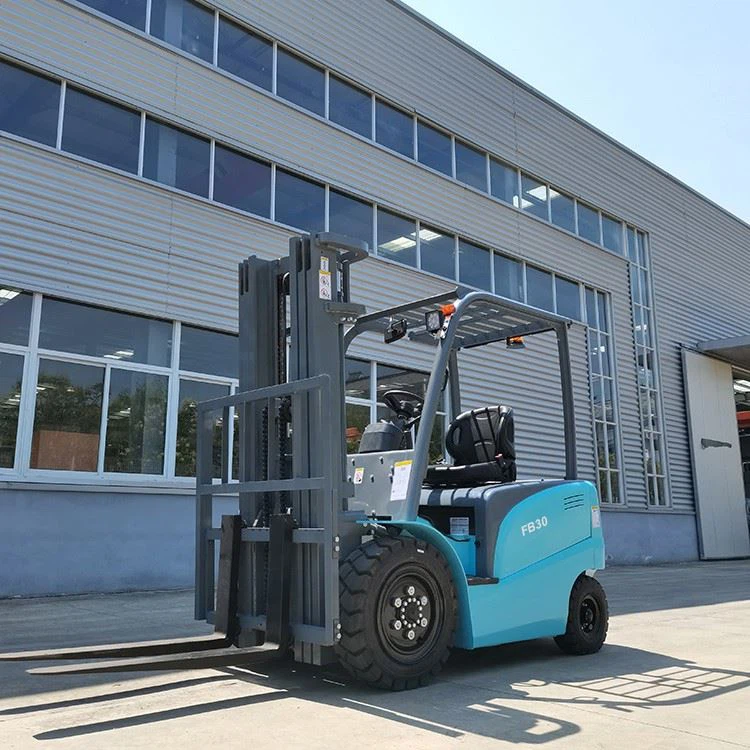
Mast Structure and Alignment
The physical structure of the mast itself also affects its smoothness. The mast should be made of high - strength materials that can withstand the stress of lifting heavy loads. Any deformation or damage to the mast structure can cause friction between the mast components, resulting in a rough operation.
Proper alignment of the mast is equally important. If the mast is not aligned correctly, the forks may not move in a straight vertical line, causing the load to sway or tilt during lifting and lowering. This not only affects the smoothness of the operation but also poses a safety risk. Regular inspections and adjustments of the mast alignment are necessary to ensure optimal performance.
Lubrication
Lubrication is another key factor in maintaining mast smoothness. All moving parts of the mast, such as the rollers, chains, and guides, need to be properly lubricated. Insufficient lubrication can lead to increased friction, which in turn can cause wear and tear on the components. This can result in a noisy and rough operation of the mast. Using the right type of lubricant and following the manufacturer's recommended lubrication schedule is essential.
Importance of Mast Smoothness
Safety
Smooth mast operation is directly related to safety in the workplace. A rough - operating mast can cause the load to shift unexpectedly, increasing the risk of the load falling off the forks. This can lead to serious injuries to the operator and other workers in the vicinity. Additionally, a smooth - moving mast allows the operator to have better control over the load, reducing the chances of collisions with other objects in the warehouse or on the job site.
Efficiency
In a busy warehouse or industrial setting, efficiency is of utmost importance. A forklift with a smooth - operating mast can perform lifting and lowering tasks more quickly and accurately. This means that more loads can be moved in a shorter period, increasing productivity. For example, if a forklift has a jerky mast, the operator may need to slow down the lifting and lowering process to ensure the stability of the load, which can significantly reduce the overall efficiency of the operation.
Equipment Longevity
Smooth mast operation also contributes to the longevity of the forklift. When the mast moves smoothly, there is less stress on the components, reducing the wear and tear. This means that the hydraulic system, mast structure, and other related parts are less likely to fail prematurely, resulting in lower maintenance costs and a longer service life for the forklift.
Our Commitment as a Supplier
As a supplier of Diesel Forklift 3 Ton, we understand the importance of mast smoothness. We source our forklifts from manufacturers that prioritize quality and performance. Our forklifts are equipped with state - of - the - art hydraulic systems, high - strength mast structures, and proper lubrication systems to ensure smooth operation.
We also offer comprehensive after - sales service, including regular maintenance and inspections. Our team of trained technicians can quickly diagnose and fix any issues related to the mast smoothness, ensuring that your forklift continues to perform at its best.
In addition to our 3 - ton diesel forklifts, we also offer other types of forklifts, such as Electric Forklift 2.5 Ton and Mini Small Forklift Electric 2ton. These forklifts also adhere to the same high standards of quality and performance, providing smooth and reliable operation for various applications.
Conclusion
The smoothness of the mast during the lifting and lowering of a 3 - ton diesel forklift is a complex but essential aspect of its operation. It is influenced by factors such as the hydraulic system, mast structure and alignment, and lubrication. Ensuring mast smoothness is crucial for safety, efficiency, and equipment longevity.
If you are in the market for a high - quality forklift, whether it's a 3 - ton diesel forklift, a 2.5 - ton electric forklift, or a 2 - ton mini electric forklift, we are here to help. Contact us to discuss your specific requirements and let us provide you with the best forklift solution for your business.
References
- Forklift Operator's Manuals from leading manufacturers
- Industry research reports on forklift performance and safety
- Technical papers on hydraulic systems and mast design


