

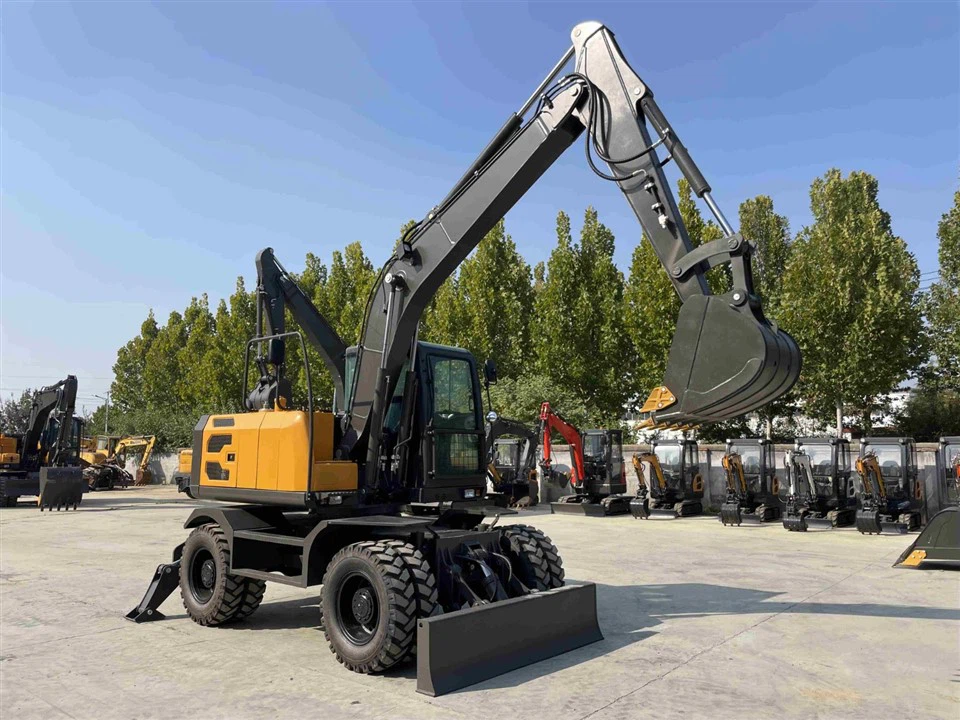
Hey there! As a wheel excavator supplier, I've seen firsthand how important it is to operate these machines safely. Wheel excavators are powerful pieces of equipment that can make construction and excavation tasks a whole lot easier, but they can also be dangerous if not handled properly. In this blog post, I'm going to share some tips on how to operate a wheel excavator safely.

Pre - operation Checks
Before you even start up the wheel excavator, there are a bunch of checks you need to do. First off, take a good look at the machine's exterior. Check for any visible damage like cracks in the body, loose parts, or leaks. Leaks can be a sign of a serious problem, whether it's hydraulic fluid, oil, or coolant. You don't want to be running a machine with a leak, as it can lead to breakdowns or even accidents.
Next, check the tires. Make sure they're properly inflated. Under - inflated tires can affect the stability and handling of the excavator. Also, look for any signs of wear or damage on the tires, like cuts or bulges. A damaged tire can blow out while you're operating the machine, which is super dangerous.
Inspect the tracks (if it's a hybrid or has track - like features) or the wheels. Ensure that the nuts and bolts are tight. Loose wheels or tracks can come off during operation, causing the excavator to lose control.
Don't forget about the controls. Test all the levers, pedals, and switches. They should move smoothly and without any resistance. If you notice any issues with the controls, don't try to operate the machine. Have it checked by a professional mechanic.
Safety Gear
Wearing the right safety gear is non - negotiable when operating a wheel excavator. First, put on a hard hat. It'll protect your head from any falling objects, which are common on construction sites. Safety glasses are also a must. They'll shield your eyes from dust, debris, and small particles that can be kicked up during excavation.
Wear high - visibility clothing. This makes you more visible to other workers on the site, reducing the risk of accidents. Steel - toed boots are essential too. They'll protect your feet from heavy objects that might fall on them. And don't forget ear protection. Wheel excavators are noisy machines, and prolonged exposure to that noise can damage your hearing.
Starting the Machine
Once you've done all the pre - operation checks and are wearing your safety gear, it's time to start the wheel excavator. Sit in the operator's seat and adjust it so that you're comfortable and have a good view of the controls and the work area. Fasten your seatbelt. It'll keep you secure in case of sudden movements or impacts.
Turn on the ignition and let the engine warm up for a few minutes. This allows the oil to circulate properly and lubricate all the moving parts. Don't rush this step. Starting to operate the machine before it's properly warmed up can cause unnecessary wear and tear on the engine.
Operating the Wheel Excavator
When you're operating the wheel excavator, always be aware of your surroundings. Know where other workers, vehicles, and obstacles are. Use your mirrors and cameras (if the machine is equipped with them) to get a full view of what's going on around you.
When digging, start with small, controlled movements. Don't try to take on too much at once. Make sure the excavator is stable before you start digging. If the ground is uneven or soft, it can cause the machine to tip over. You can use the outriggers (if available) to stabilize the excavator.
When lifting and moving materials, don't exceed the machine's lifting capacity. Overloading the excavator can lead to structural damage and loss of control. Keep the load close to the ground and move it slowly and steadily.
When driving the wheel excavator, follow the speed limits on the construction site. Don't drive too fast, especially on rough or uneven terrain. Use the brakes carefully. Sudden braking can cause the load to shift and make the machine unstable.
Maintenance
Regular maintenance is key to keeping your wheel excavator safe to operate. Follow the manufacturer's maintenance schedule. This includes things like changing the oil, filters, and checking the hydraulic system.
Keep the machine clean. Dirt and debris can build up on the machine and cause problems. Regularly clean the radiator to prevent overheating.
If you notice any strange noises, vibrations, or warning lights while operating the machine, stop immediately and have it checked by a professional. Ignoring these signs can lead to more serious problems down the road.
Training
Proper training is essential for anyone operating a wheel excavator. Make sure all operators are trained and certified. Training should cover everything from pre - operation checks to emergency procedures.
At our company, we offer a range of wheel excavators, including the 12 Ton Wheel Excavator, the 18 Ton Wheel Excavator Agricultural Use, and the Wheel Excavator 15 Ton Excavator. These machines are designed with safety in mind, but it's still crucial that operators know how to use them correctly.
If you're in the market for a wheel excavator or want to learn more about safe operation, don't hesitate to reach out. We're here to help you make the right choice and ensure that you can operate your wheel excavator safely and efficiently. Whether you're a small construction company or a large agricultural operation, we've got the right wheel excavator for you. Contact us to start the procurement process and let's have a chat about your specific needs.
References
- Construction Equipment Operator's Manuals
- Occupational Safety and Health Administration (OSHA) Guidelines for Heavy Equipment Operation
- Industry Best Practices for Wheel Excavator Safety


