

Hey there! As a supplier of Long Arm Excavators, I often get asked about the role of the counterweight in these machines. So, I thought I'd take a moment to break it down for you.
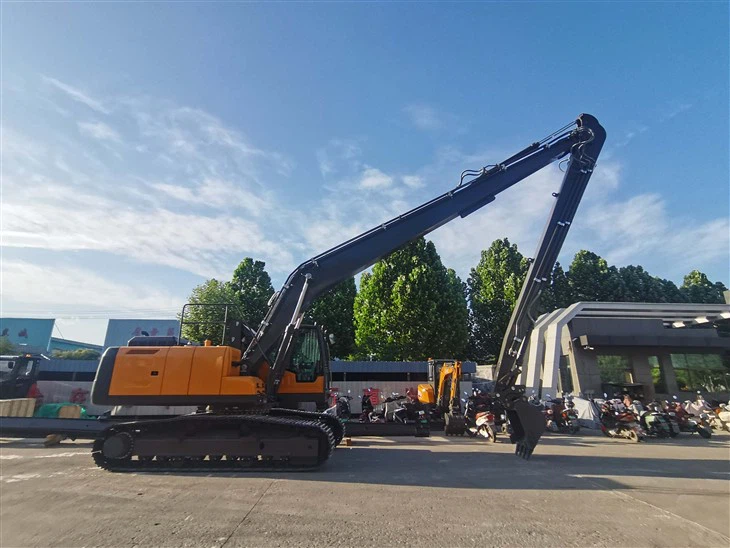
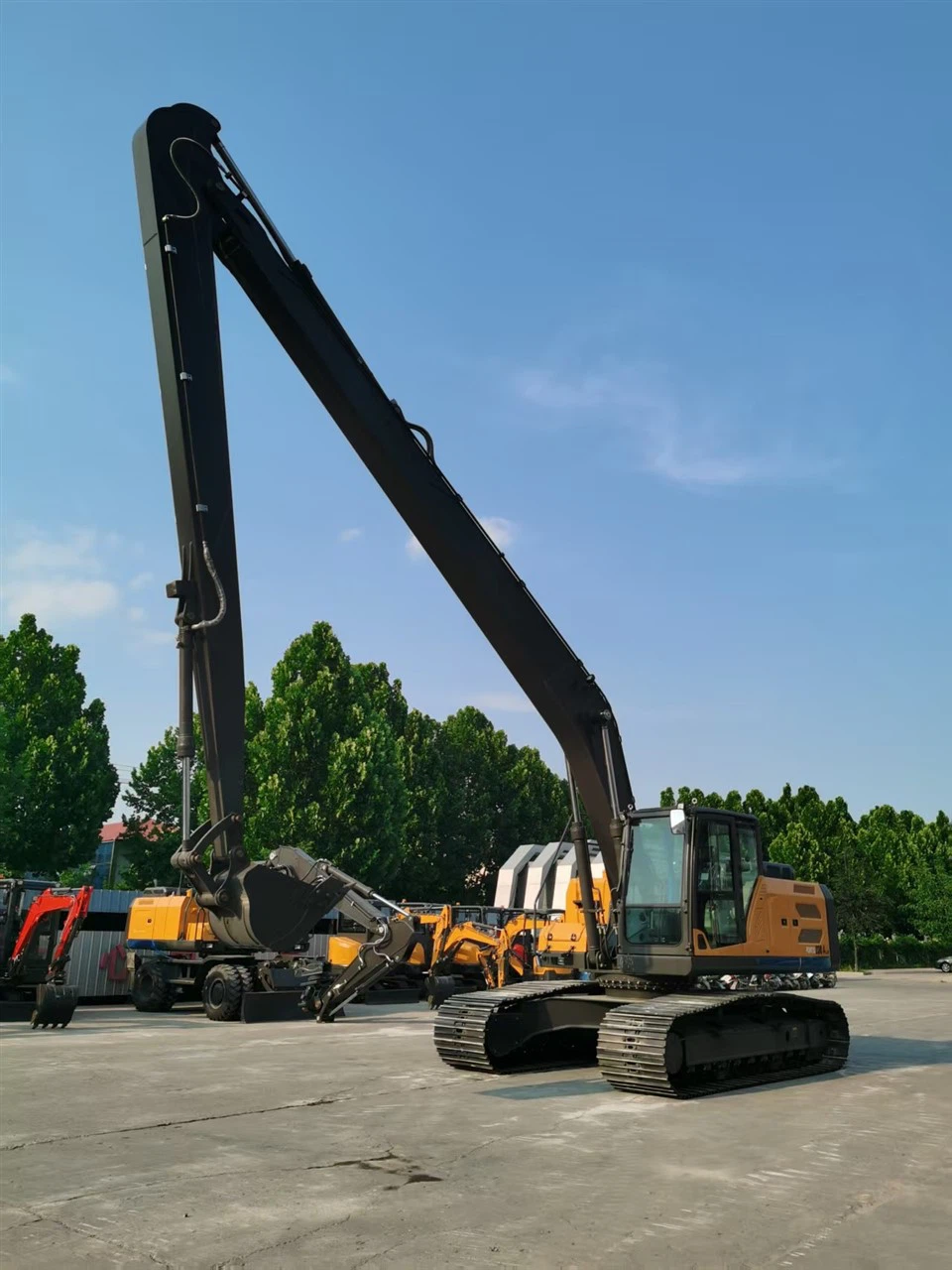
First off, let's talk about what a long arm excavator is. A Long Arm Excavator is a heavy - duty piece of machinery designed for tasks that require a greater reach than a standard excavator. They're commonly used in construction, mining, and large - scale earth - moving projects.
Now, onto the counterweight. The counterweight is a crucial component of a long arm excavator, and it plays several important roles.
1. Stability
One of the primary functions of the counterweight is to provide stability to the excavator. When the long arm extends, it creates a significant amount of leverage. This leverage can cause the excavator to tip forward if there isn't something to balance it out. The counterweight is strategically placed at the rear of the excavator to counteract the forward - leaning force generated by the extended arm.
Imagine you're trying to hold a long pole with a heavy object at the end. The farther the object is from your body, the more difficult it is to keep the pole steady. You'd probably lean back to counterbalance the weight. That's exactly what the counterweight does for the long arm excavator. It helps keep the machine stable even when the arm is fully extended and loaded with material.
2. Balance
In addition to stability, the counterweight helps maintain balance during operation. Long arm excavators are often used in uneven terrain, and the counterweight ensures that the machine remains level. This is important not only for the safety of the operator but also for the accuracy of the excavation work.
When the excavator is digging, the counterweight adjusts the center of gravity of the machine. By keeping the center of gravity within the machine's base of support, the counterweight prevents the excavator from toppling over. This is especially important when the excavator is working on slopes or in areas with soft ground.
3. Lifting Capacity
The counterweight also has a direct impact on the excavator's lifting capacity. The more weight the counterweight can provide, the more the excavator can lift with its long arm. This is because the counterweight acts as a counter - force to the load being lifted.
For example, if you're using the long arm to lift a large boulder, the counterweight helps to offset the weight of the boulder. Without an adequate counterweight, the excavator might not be able to lift the boulder at all, or it could tip over while trying to do so.
4. Operational Efficiency
A well - designed counterweight can improve the operational efficiency of the long arm excavator. When the machine is stable and balanced, the operator can work more smoothly and accurately. This means less time spent adjusting the machine's position and more time spent on the actual excavation work.
Moreover, a properly sized counterweight can reduce wear and tear on the excavator's components. Since the machine is more stable, there is less stress on the hydraulic system, the tracks, and other parts. This can lead to lower maintenance costs and a longer lifespan for the excavator.
Factors Affecting Counterweight Design
The design of the counterweight is not a one - size - fits - all solution. Several factors need to be considered when determining the appropriate counterweight for a long arm excavator.
- Length of the Arm: The longer the arm, the more counterweight is needed. As the arm extends further from the machine, the leverage increases, and a larger counterweight is required to maintain stability.
- Type of Work: Different types of excavation work require different levels of lifting capacity. For example, if the excavator is used for heavy - duty lifting, a larger counterweight will be necessary.
- Terrain: The terrain in which the excavator will be operating also affects the counterweight design. If the ground is soft or uneven, a heavier counterweight may be needed to ensure stability.
How We Ensure the Best Counterweight for Our Long Arm Excavators
At our company, we take counterweight design very seriously. We have a team of engineers who use advanced computer - aided design (CAD) software to model different counterweight configurations. This allows us to optimize the counterweight for each specific long arm excavator model.
We also conduct extensive testing on our counterweights. We simulate different operating conditions, such as full - arm extension, heavy lifting, and working on slopes. This ensures that our counterweights provide the maximum stability and performance.
In addition, we offer a range of counterweight options to our customers. Depending on their specific needs, they can choose a counterweight that is best suited for their excavation projects.
Why Choose Our Long Arm Excavators
If you're in the market for a long arm excavator, there are several reasons why you should consider our products.
- Quality: We use high - quality materials and advanced manufacturing techniques to ensure that our long arm excavators are durable and reliable. Our counterweights are designed to last, even in the most demanding working conditions.
- Performance: Our long arm excavators are known for their excellent performance. The well - designed counterweights provide stability and balance, allowing for efficient and accurate excavation work.
- Customization: We understand that every customer has different needs. That's why we offer a range of customization options, including different counterweight sizes and configurations.
If you're interested in learning more about our Long Arm Excavators or have any questions about the counterweight or other features, we'd love to hear from you. Feel free to reach out to us to start a conversation about your excavation needs. Whether you're a contractor working on a large - scale construction project or a mining company looking for a reliable long arm excavator, we're here to help you find the right solution.
References
- Construction Equipment Handbook, various editions
- Journal of Heavy Machinery Engineering, multiple issues on excavator design and operation


