

As a supplier of 2 - ton diesel forklifts, one of the most frequently asked questions I encounter from potential customers is about the minimum turning space required for these machines. Understanding this requirement is crucial for businesses planning their warehouse layouts, logistics operations, and overall material handling processes. In this blog, I'll delve into the factors that determine the minimum turning space for a 2 - ton diesel forklift and provide some practical insights.
Factors Affecting the Minimum Turning Space
Forklift Design and Dimensions
The physical design and dimensions of the 2 - ton diesel forklift play a significant role in determining the turning space. Forklifts come in various shapes and sizes, with different mast configurations, wheelbases, and overall lengths. A forklift with a shorter wheelbase generally requires less turning space compared to one with a longer wheelbase. For example, a compact 2 - ton diesel forklift designed for narrow aisle operations will have a smaller turning radius than a standard - sized model.
The mast of the forklift also affects the turning space. If the mast is fully extended, it can increase the overall length of the forklift and require more space to turn. When the mast is in a lowered position, the forklift's turning radius is typically smaller.
Load Size and Position
The size and position of the load being carried by the forklift are important factors. A large or irregularly shaped load can significantly increase the effective width and length of the forklift, requiring more space to turn safely. For instance, if a 2 - ton diesel forklift is carrying a wide pallet or a long piece of lumber, the operator needs to account for the additional space occupied by the load when making a turn.
The position of the load on the forks also matters. If the load is centered properly on the forks, it helps maintain the forklift's stability and can reduce the turning space requirements. However, an off - center load can cause the forklift to be unbalanced, increasing the risk of tipping and requiring more space to maneuver.
Tire Type and Condition
The type of tires on the forklift can impact its turning performance. Solid tires, for example, generally provide better stability but may have a larger turning radius compared to pneumatic tires. Pneumatic tires offer more flexibility and can sometimes allow for a tighter turn, especially on uneven surfaces.
The condition of the tires is also crucial. Worn - out tires can reduce the forklift's traction and increase the turning space needed. Operators should regularly check the tire pressure and tread depth to ensure optimal performance.
Calculating the Minimum Turning Space
To calculate the minimum turning space for a 2 - ton diesel forklift, we need to consider the forklift's turning radius. The turning radius is the minimum distance from the center of the turning circle to the outermost point of the forklift during a turn.
Most forklift manufacturers provide the turning radius specification in the product manual. However, this is usually the turning radius of the forklift without a load. When a load is added, the turning radius can increase. A general rule of thumb is to add an additional 1 - 2 feet (0.3 - 0.6 meters) to the unloaded turning radius for a standard - sized load.
For example, if the manufacturer states that the turning radius of a 2 - ton diesel forklift is 8 feet (2.4 meters) without a load, when carrying a normal load, we might estimate the turning radius to be around 9 - 10 feet (2.7 - 3 meters).
The minimum turning space is then calculated based on the diameter of the turning circle. The diameter is twice the turning radius. So, in the above example, the minimum turning space diameter would be 18 - 20 feet (5.4 - 6 meters).
Importance of Adequate Turning Space
Providing adequate turning space for a 2 - ton diesel forklift is essential for several reasons. Firstly, it ensures the safety of the operators and other workers in the area. Insufficient turning space can lead to collisions with other objects, such as racks, walls, or other forklifts. This can cause damage to the forklift, the load, and the surrounding infrastructure, and may also result in serious injuries to the operators.
Secondly, having enough turning space improves the efficiency of the material handling operations. When forklifts can turn easily and quickly, it reduces the time spent on maneuvering, increasing the overall productivity of the warehouse or logistics facility.
Comparing with Other Forklift Sizes
It's interesting to compare the turning space requirements of a 2 - ton diesel forklift with other sizes. For example, a 3.5 Ton Diesel Forklift is generally larger and heavier than a 2 - ton model. Due to its increased size and load - carrying capacity, it typically requires more turning space. The larger dimensions of the 3.5 - ton forklift mean that its turning radius is also larger, and thus, the minimum turning space diameter is greater.
On the other hand, a 10 Ton Diesel Forklift - FD100 is a much larger and more powerful machine. These forklifts are designed to handle extremely heavy loads, and as a result, they have a significantly larger turning radius. The minimum turning space for a 10 - ton diesel forklift can be several times larger than that of a 2 - ton model.

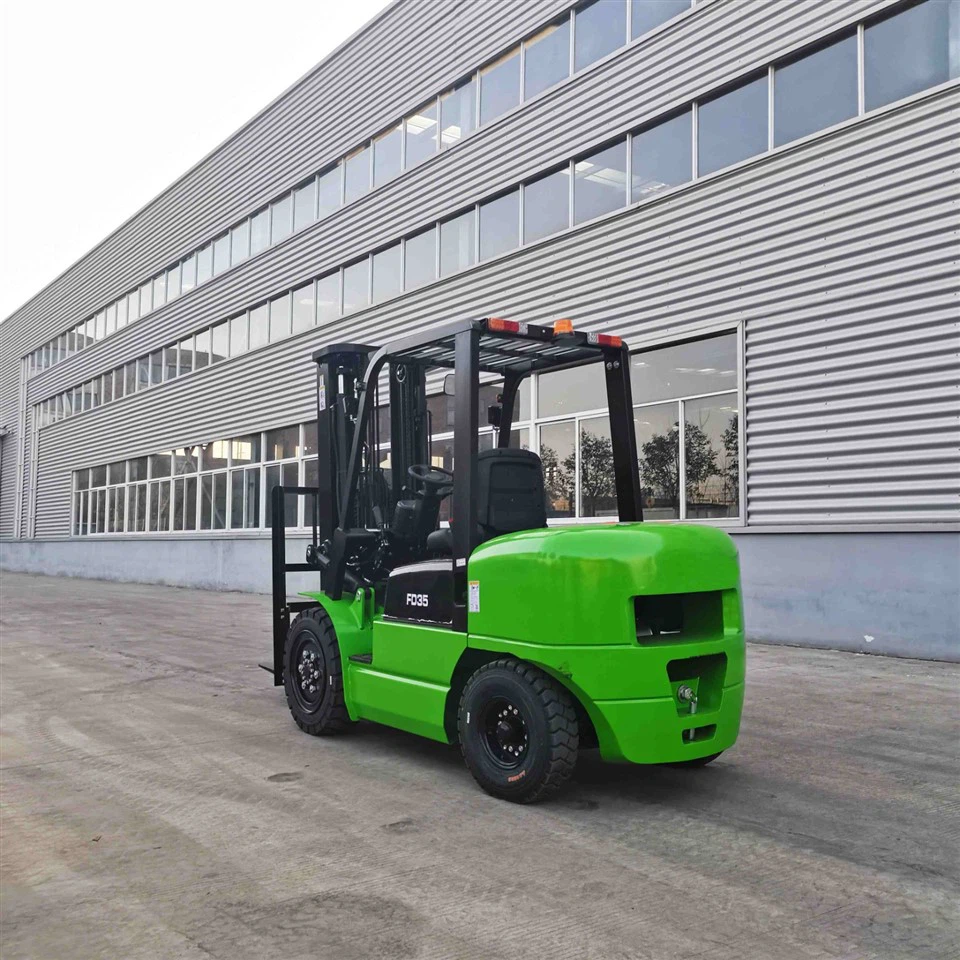
In contrast, a Forklift 4 Ton Diesel falls in between the 2 - ton and 10 - ton models. It has a larger turning radius than a 2 - ton forklift but smaller than a 10 - ton one. The turning space requirements of a 4 - ton diesel forklift depend on its specific design and configuration, but generally, it requires more space than a 2 - ton model to turn safely.
Conclusion
In conclusion, the minimum turning space required for a 2 - ton diesel forklift depends on multiple factors, including the forklift's design, load size and position, and tire type and condition. By calculating the turning radius and providing adequate turning space, businesses can ensure the safety and efficiency of their material handling operations.
If you're in the market for a 2 - ton diesel forklift or need more information about its turning space requirements, I'd be more than happy to assist you. We offer a wide range of high - quality 2 - ton diesel forklifts that are designed to meet the diverse needs of different industries. Contact us to start a procurement discussion and find the perfect forklift solution for your business.
References
- Forklift Operator's Manuals from various manufacturers
- Industry standards and guidelines for material handling equipment


