

What is the maintenance cost of a wheel excavator?
As a wheel excavator supplier, I often get asked about the maintenance costs associated with these powerful machines. Understanding the maintenance cost of a wheel excavator is crucial for both potential buyers and current owners. It helps in budgeting and making informed decisions about the long - term viability of using these machines in various construction and excavation projects.
Factors Affecting Maintenance Cost
1. Machine Age
Newer wheel excavators generally have lower maintenance costs in the initial years. They come with the latest technology and components that are less likely to break down. However, as the machine ages, wear and tear become more prominent. Older machines may require more frequent replacement of parts such as hydraulic hoses, filters, and seals. For example, a 5 - year - old wheel excavator might need its hydraulic hoses replaced every 2 - 3 years, while a brand - new one may not need this replacement for at least 5 years.
2. Usage Intensity
The more a wheel excavator is used, the higher the maintenance cost. Machines that are used for long hours in heavy - duty applications, such as large - scale construction sites or mining operations, will experience more stress on their components. For instance, if a wheel excavator is used for 8 - 10 hours a day, 6 days a week, it will require more frequent oil changes, filter replacements, and inspections compared to a machine that is used only for a few hours a week in light - duty tasks like landscaping.
3. Operating Environment
The environment in which the wheel excavator operates also plays a significant role in maintenance costs. In dusty or dirty environments, air filters need to be changed more frequently to prevent engine damage. If the machine is used near water or in corrosive environments, the metal parts are more likely to rust, which requires additional maintenance to prevent structural damage. For example, a wheel excavator used in a desert construction site will need its air filters changed every 100 - 200 hours of operation, while one used in a clean, indoor environment may only need filter changes every 500 - 600 hours.
4. Quality of Components
The quality of the components used in the wheel excavator affects maintenance costs. Higher - quality components may have a higher upfront cost but are likely to last longer and require less frequent replacement. For example, a high - quality hydraulic pump may cost more initially but can reduce the risk of breakdowns and the need for costly repairs. On the other hand, using low - quality components may lead to more frequent failures and higher overall maintenance costs in the long run.
Breakdown of Maintenance Costs
1. Routine Maintenance
Routine maintenance includes tasks such as oil changes, filter replacements, and lubrication. These are essential to keep the machine running smoothly. The cost of routine maintenance can vary depending on the size and type of the wheel excavator. For a medium - sized wheel excavator, an oil change can cost between $100 - $300, depending on the type of oil used. Filter replacements, including air, fuel, and hydraulic filters, can add another $200 - $500 per service. Lubrication, which is necessary to reduce friction between moving parts, may cost around $50 - $100 per service.
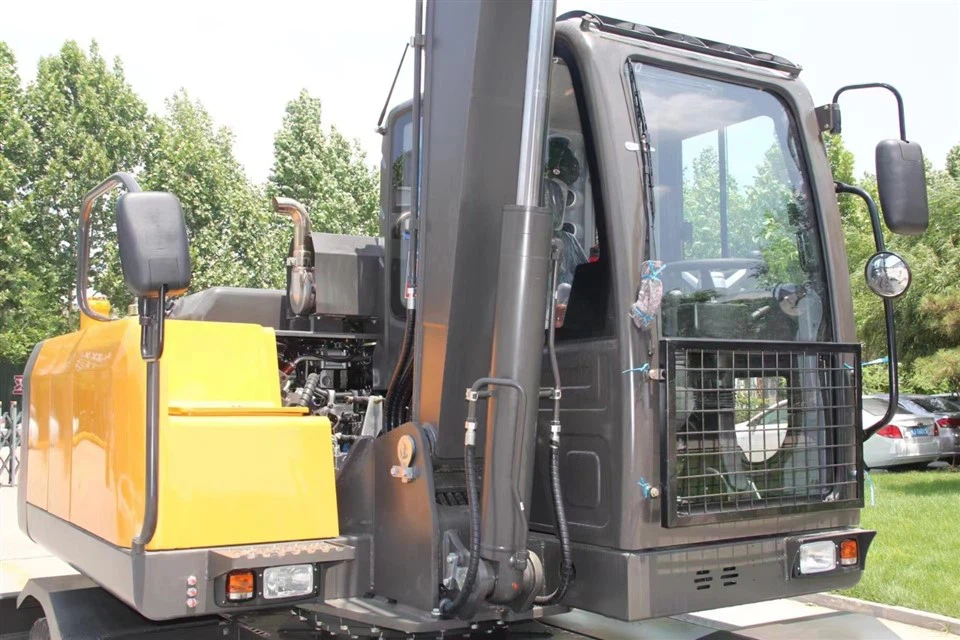

2. Component Replacement
Over time, certain components of the wheel excavator will need to be replaced. Hydraulic cylinders, for example, may need to be replaced after 5000 - 10,000 hours of operation. The cost of a hydraulic cylinder can range from $1000 - $5000, depending on the size and complexity of the cylinder. Other components such as tracks (if applicable), engines, and transmissions can also be expensive to replace. An engine replacement can cost upwards of $10,000, while a transmission replacement may cost between $5000 - $15,000.
3. Repair and Labor Costs
When a component fails or there is a problem with the machine, repair and labor costs come into play. Labor costs can vary depending on the location and the expertise of the technician. On average, labor costs for wheel excavator repairs can range from $50 - $150 per hour. If a major repair is required, such as a hydraulic system overhaul, the labor cost alone can be several thousand dollars.
Cost Comparison of Different Models
We offer a range of wheel excavators, each with its own maintenance cost profile. For example, our 20 Ton 21.5 Ton Wheel Excavator is a heavy - duty machine designed for large - scale projects. Due to its size and power, it may have higher maintenance costs compared to smaller models. However, its robust construction and high - quality components can also lead to fewer breakdowns in the long run.
Our Excavator with Multiple Attachments 7.5 Ton is a more versatile and compact machine. It is suitable for a variety of tasks, from landscaping to small - scale construction. The maintenance cost of this model is generally lower due to its smaller size and less complex components.
The 12 Ton Wheel Excavator strikes a balance between power and size. It offers a good combination of performance and relatively reasonable maintenance costs. It is a popular choice for medium - sized construction projects.
Strategies to Reduce Maintenance Costs
1. Regular Inspections
Conducting regular inspections can help identify potential problems before they become major issues. This can include daily visual inspections, as well as more in - depth inspections at regular intervals. By catching problems early, you can avoid costly breakdowns and repairs.
2. Operator Training
Proper operator training is essential to reduce maintenance costs. Well - trained operators are more likely to operate the machine correctly, which can reduce wear and tear on components. They are also more likely to notice any unusual noises or vibrations that may indicate a problem.
3. Use of Genuine Parts
Using genuine parts for replacement and maintenance can ensure the longevity and performance of the wheel excavator. Genuine parts are designed specifically for the machine and are of higher quality compared to aftermarket parts. While they may be more expensive initially, they can save money in the long run by reducing the frequency of repairs.
Conclusion
In conclusion, the maintenance cost of a wheel excavator is influenced by several factors, including machine age, usage intensity, operating environment, and the quality of components. By understanding these factors and implementing strategies to reduce maintenance costs, owners can ensure the long - term profitability and reliability of their wheel excavators.
If you are considering purchasing a wheel excavator or need more information about maintenance costs, we are here to help. Our team of experts can provide you with detailed information about the specific maintenance requirements and costs of our different models. Contact us to start a discussion about your excavation needs and how our wheel excavators can meet them.
References
- Construction Equipment Magazine: Articles on wheel excavator maintenance and cost analysis.
- Manufacturer's manuals for wheel excavators: Provide detailed information on maintenance schedules and costs.


