

As a supplier of Long Arm Excavators, I've witnessed firsthand the importance of anti - rust performance in the components of these powerful machines. Long Arm Excavators, which you can learn more about Long Arm Excavator, are often used in harsh environments, including construction sites near water bodies, mines, and areas with high humidity. In such conditions, the risk of rust and corrosion to the excavator's components is significantly elevated.
Understanding Rust and Its Impact on Long Arm Excavator Components
Rust is a form of corrosion that occurs when iron or steel reacts with oxygen in the presence of water or moisture. For long arm excavators, components such as the boom, arm, bucket, and undercarriage are particularly vulnerable. The boom and arm, which are made of high - strength steel, are constantly exposed to the elements during operation. Even a small amount of rust can compromise the structural integrity of these components over time.
The undercarriage, including the tracks, rollers, and sprockets, is in direct contact with the ground. It can come into contact with water, mud, and chemicals, making it highly susceptible to rust. Rust on the undercarriage can lead to increased friction, reduced mobility, and premature wear of the components. The bucket, which is used to dig and carry various materials, may also be exposed to corrosive substances, further increasing the risk of rust.
Factors Affecting the Anti - Rust Performance of Long Arm Excavator Components
Material Quality
The quality of the materials used in manufacturing long arm excavator components plays a crucial role in their anti - rust performance. High - grade steel with a low carbon content and appropriate alloying elements is more resistant to rust. For example, stainless steel, which contains chromium, forms a passive oxide layer on its surface that protects it from further oxidation. However, due to cost considerations, not all components of a long arm excavator are made of stainless steel. Instead, manufacturers often use high - strength carbon steel and apply protective coatings to enhance its anti - rust properties.
Surface Treatment
Surface treatment is another important factor in improving the anti - rust performance of excavator components. One common surface treatment method is painting. A high - quality paint coating acts as a barrier between the metal surface and the environment, preventing oxygen and moisture from reaching the metal. The paint should be resistant to abrasion, impact, and chemicals to ensure long - term protection.
Galvanization is also a widely used surface treatment technique. In galvanization, a layer of zinc is applied to the steel surface. Zinc is more reactive than iron, so it corrodes preferentially, sacrificing itself to protect the underlying steel. Galvanized components have excellent anti - rust performance, especially in outdoor and marine environments.
Environmental Conditions
The operating environment of a long arm excavator has a significant impact on the anti - rust performance of its components. In coastal areas, the high salt content in the air and water accelerates the corrosion process. Similarly, in industrial areas, pollutants such as sulfur dioxide and nitrogen oxides can react with moisture to form acidic substances, which are highly corrosive to metal. In addition, high humidity and temperature fluctuations can also increase the risk of rust.
Testing the Anti - Rust Performance of Long Arm Excavator Components
To ensure the anti - rust performance of long arm excavator components, manufacturers conduct various tests. One of the most common tests is the salt spray test. In this test, the components are placed in a chamber where a fine mist of saltwater is sprayed onto the surface. The test is usually carried out for a specified period, and the degree of rust formation is evaluated at regular intervals.
Another test method is the immersion test, where the components are immersed in a corrosive solution for a certain period. This test simulates the conditions where the components may come into contact with water or chemicals during operation. After the immersion test, the components are inspected for signs of rust and corrosion.
Maintaining the Anti - Rust Performance of Long Arm Excavator Components
Proper maintenance is essential for maintaining the anti - rust performance of long arm excavator components. Regular cleaning is the first step. After each use, the excavator should be washed to remove dirt, mud, and other contaminants. Special attention should be paid to the undercarriage and areas where water can accumulate.

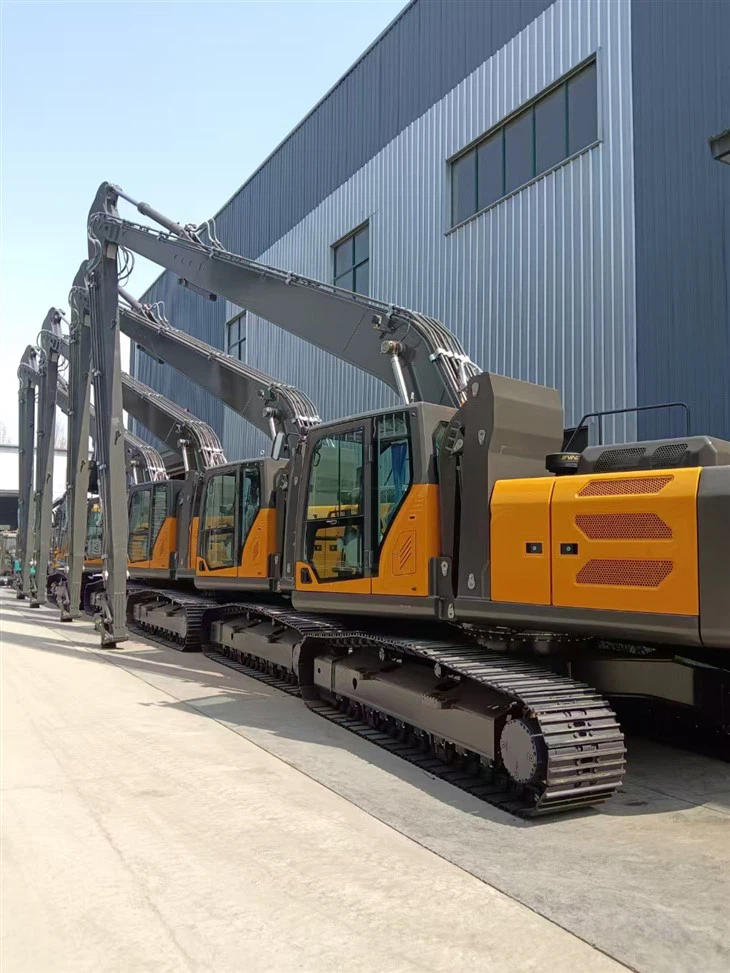
Inspection of the paint coating and galvanized layer is also important. Any signs of damage, such as scratches or chips, should be repaired immediately. Touch - up paint can be used to cover small scratches, while larger areas of damage may require more extensive repair work.
In addition, lubrication of moving parts can also help prevent rust. Lubricants form a protective film on the metal surface, reducing friction and preventing moisture from reaching the metal.
The Economic and Operational Benefits of Good Anti - Rust Performance
Investing in long arm excavators with good anti - rust performance can bring significant economic and operational benefits. From an economic perspective, components with high anti - rust performance have a longer service life, reducing the need for frequent replacements. This can save a substantial amount of money in the long run, especially for large - scale construction projects.
Operationally, rust - free components ensure the smooth operation of the excavator. There is less downtime due to component failures, and the excavator can maintain its performance and efficiency over a longer period. This leads to increased productivity and a more reliable construction process.
Conclusion
In conclusion, the anti - rust performance of long arm excavator components is of utmost importance. It is affected by factors such as material quality, surface treatment, and environmental conditions. By using high - quality materials, applying appropriate surface treatments, and conducting regular maintenance, the anti - rust performance of long arm excavator components can be significantly improved.
As a supplier of Long Arm Excavators, we are committed to providing our customers with excavators that have excellent anti - rust performance. Our products are designed and manufactured to withstand the harshest environments, ensuring long - term reliability and productivity. If you are interested in our Long Arm Excavators or have any questions about their anti - rust performance, please feel free to contact us for further discussion and potential procurement.
References
- Jones, R. (2018). Corrosion Prevention in Heavy Machinery. Industrial Engineering Journal, 25(3), 123 - 135.
- Smith, A. (2019). Surface Treatments for Steel Components in Construction Equipment. Materials Science Review, 32(2), 89 - 102.
- Brown, C. (2020). The Impact of Environmental Conditions on Equipment Corrosion. Environmental Engineering Magazine, 45(4), 56 - 67.


