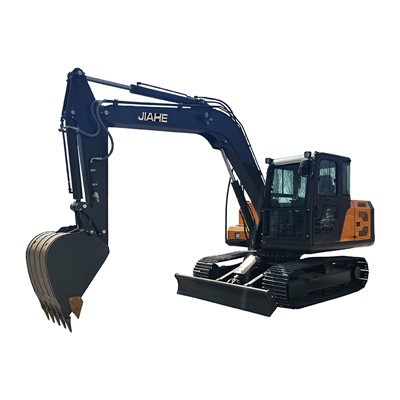
A crawler excavator is a powerful and versatile piece of heavy equipment widely used in construction, mining, and various other industries. As a crawler excavator supplier, I have in - depth knowledge of its main components. Understanding these components is crucial for operators, maintenance personnel, and potential buyers. In this blog, I will take you through the key parts that make up a crawler excavator.
Undercarriage
The undercarriage is the base of the crawler excavator and plays a fundamental role in its mobility and stability. It consists of several sub - components.
Tracks
Tracks are one of the most visible parts of the undercarriage. They are made of steel links that are connected together. The design of the tracks provides a large contact area with the ground, which distributes the weight of the excavator evenly. This helps the excavator to operate on various terrains, including soft soil, mud, and uneven surfaces. Our 9 Ton Crawler Excavator Mini Diggers are equipped with high - quality tracks that are durable and can withstand heavy - duty use.
Track Rollers
Track rollers are responsible for supporting the weight of the excavator on the tracks. They are mounted on the undercarriage frame and roll along the track links. High - quality track rollers reduce friction and wear, ensuring smooth movement of the tracks. The track rollers on our excavators are designed with precision to provide long - lasting performance.
Idlers
Idlers are located at the front of the undercarriage. They help to keep the tracks properly tensioned. By adjusting the position of the idlers, the tension of the tracks can be maintained, which is essential for the efficient operation of the excavator. If the tracks are too loose, they may slip, while if they are too tight, it can cause excessive wear on the tracks and other components.
Final Drives
The final drives are the components that transfer power from the engine to the tracks. They contain a series of gears and bearings that reduce the speed and increase the torque of the power output from the engine. This allows the tracks to move with sufficient force to drive the excavator forward or backward. Our final drives are engineered to be reliable and efficient, providing smooth power transmission.
Upper Structure
The upper structure of the crawler excavator houses many important components and is connected to the undercarriage through a turntable.
Cab
The cab is the operator's workspace. It is designed to provide a comfortable and safe environment for the operator. Modern cabs are equipped with air - conditioning, ergonomic seats, and a clear view of the working area. The controls in the cab are easy to reach and operate, allowing the operator to handle the excavator with precision. For example, in our 60 Ton Excavator with Different Attachments, the cab is spacious and well - equipped to ensure operator comfort during long - hours of operation.
Engine
The engine is the power source of the crawler excavator. It provides the energy needed to operate the hydraulic system, move the tracks, and power the attachments. Most crawler excavators use diesel engines due to their high power output and fuel efficiency. Our engines are carefully selected and tuned to meet the performance requirements of different models. They are also designed to be environmentally friendly, meeting the latest emission standards.
Hydraulic System
The hydraulic system is the heart of the crawler excavator. It consists of hydraulic pumps, cylinders, valves, and hoses. The hydraulic pumps convert the mechanical power from the engine into hydraulic power. The cylinders use this hydraulic power to move the boom, arm, and bucket. Valves control the flow and pressure of the hydraulic fluid, allowing the operator to precisely control the movement of the excavator's working components. Our hydraulic systems are known for their high - performance and reliability, ensuring smooth and efficient operation.
Counterweight
The counterweight is located at the rear of the upper structure. Its main function is to balance the weight of the boom, arm, and bucket when the excavator is in operation. This helps to prevent the excavator from tipping forward, especially when lifting heavy loads. The size and weight of the counterweight are carefully calculated based on the model and specifications of the excavator.

Working Equipment
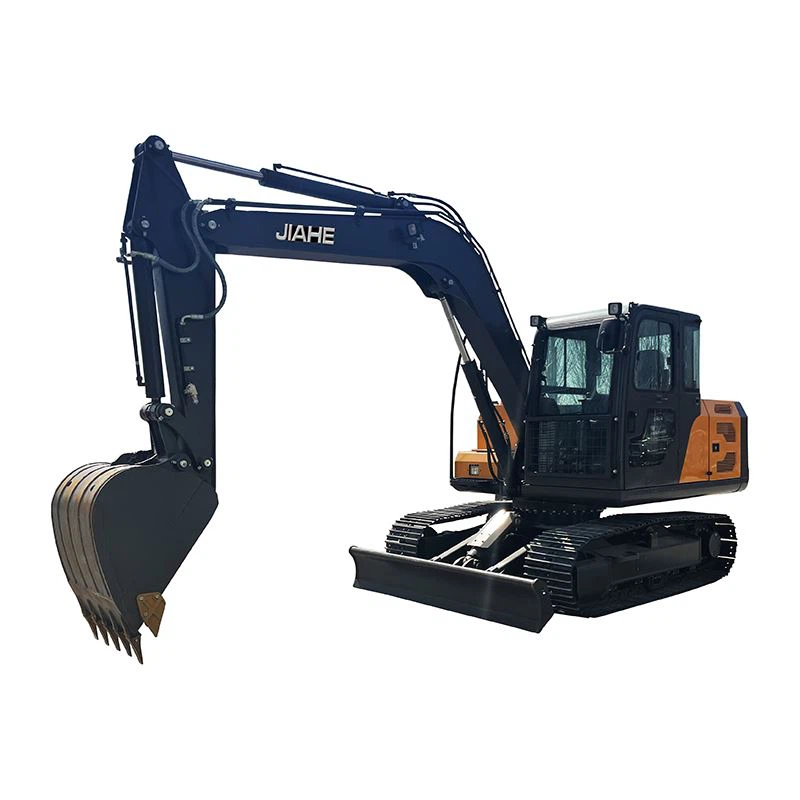
The working equipment of the crawler excavator is what allows it to perform various tasks.
Boom
The boom is the long, vertical arm of the excavator. It is connected to the upper structure and can be raised and lowered. The boom provides the reach and height required for digging and lifting operations. Different models of excavators have booms of different lengths and configurations to suit different applications.
Arm
The arm is attached to the end of the boom. It can be extended and retracted, further increasing the reach of the excavator. The arm is also used to control the position of the bucket during digging. Our Mini Excavator Digger 2.7 Ton has a well - designed arm that provides excellent maneuverability in tight spaces.
Bucket
The bucket is the tool at the end of the arm. It comes in different shapes and sizes, depending on the type of work to be done. For example, a general - purpose bucket is used for digging and loading soil, while a rock bucket is designed for more heavy - duty tasks such as breaking and moving rocks. Our excavators can be equipped with a variety of buckets to meet different customer needs.
Attachments
In addition to the standard working equipment, crawler excavators can be equipped with various attachments to enhance their functionality.
Hydraulic Breakers
Hydraulic breakers are used for breaking rocks, concrete, and other hard materials. They are attached to the end of the arm in place of the bucket. The hydraulic power from the excavator's system drives the breaker, allowing it to deliver powerful blows.
Grapples
Grapples are used for handling and moving objects such as logs, scrap metal, and debris. They can be opened and closed to grip the objects securely. Our 3.5 ton 4 ton excavator can be fitted with grapples for more versatile operations.
Augers
Augers are used for drilling holes in the ground. They are commonly used in construction and landscaping projects for tasks such as installing fence posts or planting trees.
Compactors
Compactors are used for compacting soil, gravel, and other materials. They help to create a stable base for construction projects. Our 6.5 Ton Excavator New Model can be equipped with compactors to perform soil - compacting tasks efficiently.
Conclusion
In conclusion, a crawler excavator is a complex machine made up of many components. Each component plays a vital role in the overall performance and functionality of the excavator. As a crawler excavator supplier, we are committed to providing high - quality products with reliable components. Whether you are looking for a small - scale mini - excavator or a large - capacity heavy - duty excavator, we have the right model for you.
If you are interested in purchasing a crawler excavator or have any questions about our products, please feel free to contact us. We are more than happy to discuss your requirements and provide you with detailed information. Let's work together to find the best crawler excavator solution for your project.
References
- Construction Equipment Handbook.
- Crawler Excavator Technical Manuals.