

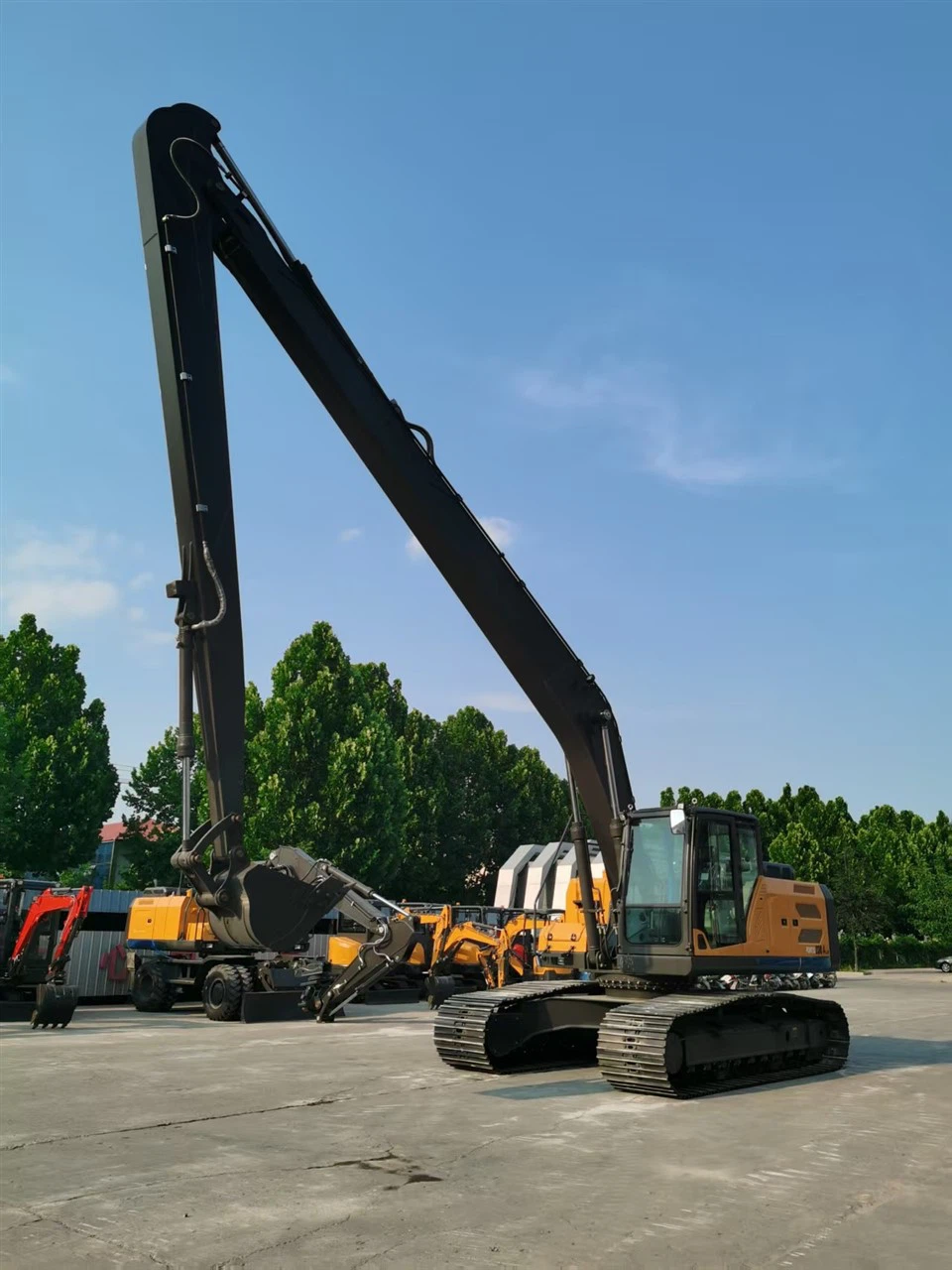
Hey there! I'm a supplier of Long Arm Excavators, and today I want to dig deep into the environmental impacts of using these powerful machines. Let's start by getting a basic understanding of what a Long Arm Excavator is. A Long Arm Excavator, as the name suggests, has an extended arm compared to regular excavators. You can learn more about them Long Arm Excavator.
Positive Environmental Impacts
Land Reclamation and Restoration
One of the big upsides of using a Long Arm Excavator is in land reclamation and restoration projects. These machines can reach areas that are difficult to access with standard equipment. For example, in wetland restoration, a Long Arm Excavator can gently reshape the terrain without causing too much damage to the existing ecosystem. It can dig channels to improve water flow, which is crucial for maintaining a healthy wetland environment. This helps in enhancing biodiversity as it provides habitats for various species of plants and animals.

Demolition with Precision
When it comes to demolition work, Long Arm Excavators offer a more precise approach. Instead of using large - scale explosive methods that can cause a lot of dust and debris to be dispersed into the air, a Long Arm Excavator can carefully take down structures. This reduces the amount of airborne pollutants, such as particulate matter, that are released during the demolition process. It also allows for better separation of materials, which makes recycling easier. For instance, concrete and steel can be sorted and sent to recycling facilities more efficiently, reducing the need for new raw materials extraction.
Flood Control and Drainage
Long Arm Excavators play a vital role in flood control and drainage projects. They can be used to deepen and widen rivers and canals, which helps in increasing the water - carrying capacity. By doing so, they can prevent flooding in nearby areas. This is not only beneficial for human settlements but also for the natural environment. It protects the habitats of aquatic species that are often affected by flooding. Moreover, proper drainage can prevent waterlogging, which can lead to the growth of harmful bacteria and fungi in the soil.
Negative Environmental Impacts
Fuel Consumption and Emissions
One of the major drawbacks of using a Long Arm Excavator is its high fuel consumption. These machines are large and powerful, and they require a significant amount of diesel fuel to operate. The burning of diesel releases greenhouse gases, such as carbon dioxide (CO₂), into the atmosphere. CO₂ is a major contributor to global warming. In addition to CO₂, diesel engines also emit nitrogen oxides (NOₓ) and particulate matter. NOₓ can contribute to the formation of smog and acid rain, which can have harmful effects on plants, animals, and human health.
Noise Pollution
Long Arm Excavators are quite noisy when they are in operation. The noise can have a negative impact on the surrounding environment, especially in areas where there are sensitive wildlife habitats. For example, in forests or near lakes, the loud noise from the excavator can disrupt the normal behavior of animals. Birds may be scared away from their nests, and mammals may be forced to move to other areas. This can lead to a decrease in the population of certain species in the affected area.
Soil Disturbance
During excavation work, Long Arm Excavators can cause significant soil disturbance. The large - scale digging and moving of soil can disrupt the soil structure. This can lead to soil erosion, as the top layer of soil, which is rich in nutrients, may be washed away by rain or wind. Soil erosion can have a cascading effect on the ecosystem. It can reduce the fertility of the soil, making it difficult for plants to grow. This, in turn, can affect the food chain, as herbivores may have less food available, and predators may be affected as well.
Mitigating the Negative Impacts
Fuel - Efficient Technologies
To reduce fuel consumption and emissions, many manufacturers are now developing fuel - efficient technologies for Long Arm Excavators. For example, some excavators are equipped with hybrid engines that combine a diesel engine with an electric motor. This allows the machine to use less fuel, especially during periods of low - load operation. Additionally, advanced engine management systems can optimize the fuel injection process, ensuring that the engine runs more efficiently.
Noise - Reduction Measures
To address the issue of noise pollution, manufacturers are also implementing noise - reduction measures. These can include the use of sound - absorbing materials in the construction of the excavator. For example, the engine compartment can be lined with materials that reduce the noise generated by the engine. Some excavators are also designed with quieter hydraulic systems, which can significantly reduce the overall noise level during operation.
Soil Conservation Practices
When using a Long Arm Excavator, it's important to implement soil conservation practices. This can involve techniques such as contour plowing, where the excavator follows the natural contours of the land. This helps to prevent soil erosion by reducing the speed at which water runs off the land. Additionally, after the excavation work is completed, the soil can be re - vegetated. Planting grass or other ground - cover plants helps to hold the soil in place and prevent further erosion.
Conclusion
As a supplier of Long Arm Excavators, I understand that these machines have both positive and negative environmental impacts. On one hand, they are incredibly useful in land reclamation, demolition, and flood control projects. On the other hand, they contribute to fuel consumption, noise pollution, and soil disturbance. However, with the development of new technologies and the implementation of proper mitigation measures, we can minimize the negative impacts and make the most of the positive ones.
If you're in the market for a Long Arm Excavator and want to learn more about how these machines can fit into your projects while being environmentally responsible, I'd love to have a chat with you. We can discuss the different models available, their features, and how they can be used to achieve your goals while minimizing the environmental footprint.
References
- "Environmental Impact of Construction Equipment" - Journal of Environmental Engineering
- "Advances in Fuel - Efficient Technologies for Heavy Machinery" - International Journal of Machinery and Equipment Engineering


