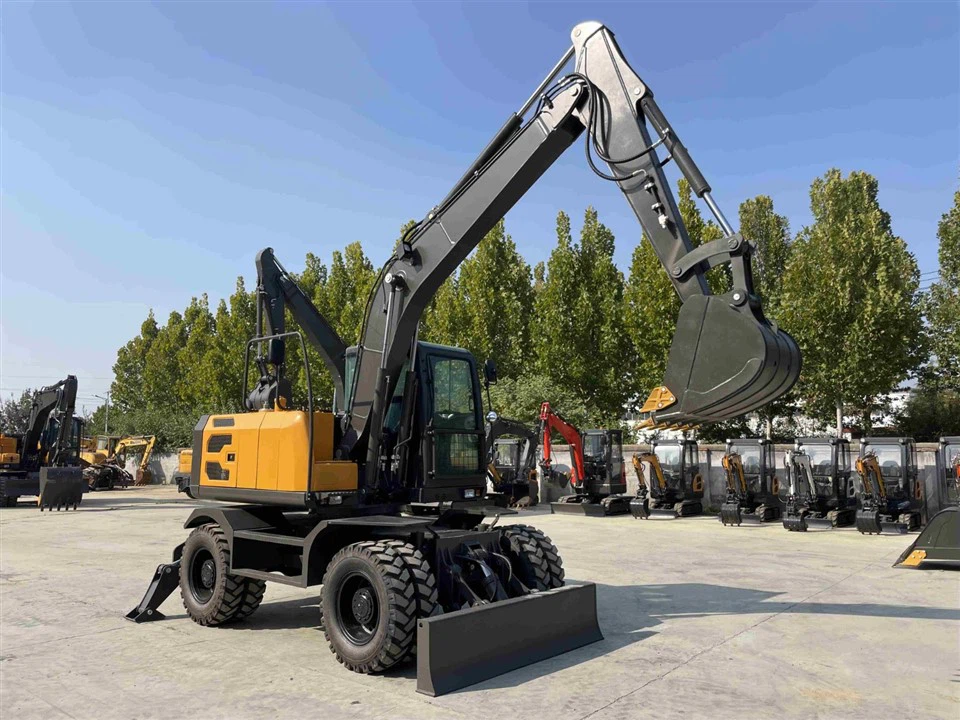
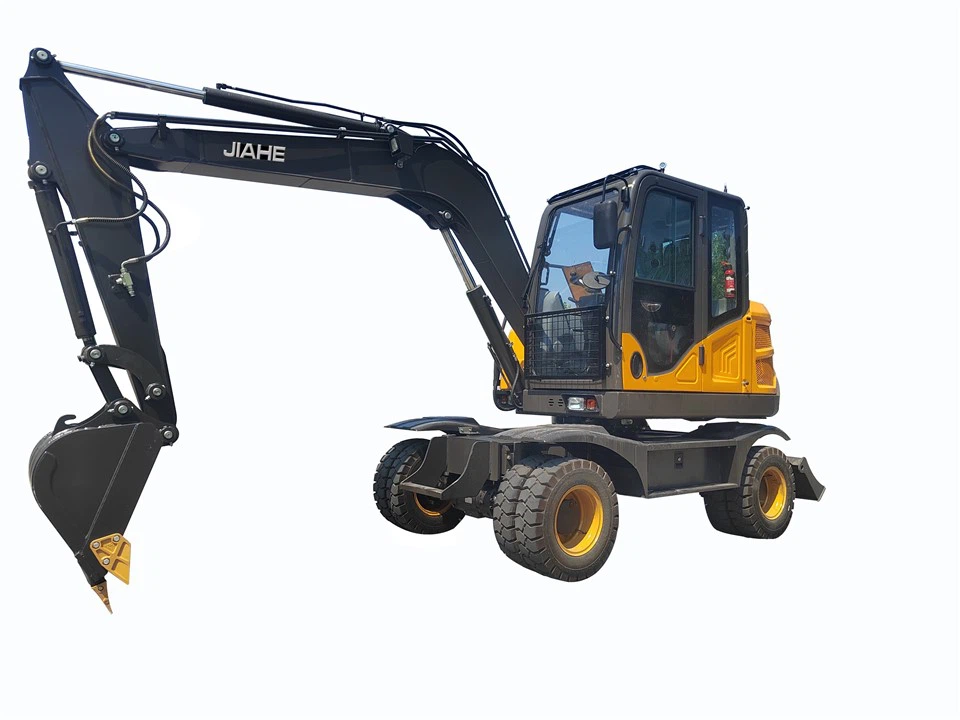
Hey there! I'm a supplier of wheel excavators, and today I want to chat about how a wheel excavator's speed stacks up against other earth - moving equipment.
The Basics of Speed in Earth - moving Equipment
Before we start comparing, let's understand what we mean by speed in the context of earth - moving machinery. There are two main types of speed we're interested in: traveling speed and working speed. Traveling speed is how fast the equipment can get from one place to another on a jobsite or even on the road (in some cases). Working speed, on the other hand, refers to how quickly it can perform its actual earth - moving tasks like digging, loading, and dumping.
Wheel Excavators: A Quick Overview
Wheel excavators are a popular choice in the construction and earth - moving industry. They're mounted on wheels, which gives them some unique advantages. One of the big perks is their mobility. They can travel relatively quickly on paved surfaces compared to some other earth - moving equipment, which is a huge plus when you need to move around a large jobsite or transfer between different locations.
For instance, take a look at our Mini Digger 6.5 Ton. This compact wheel excavator has a decent traveling speed, making it very agile on the site. It can zip around, getting to different work areas in no time. And it's not just about getting there; it can also start working right away because of its quick setup time.
Comparing Traveling Speeds
Let's start with traveling speed. Tracked excavators, for example, are great for digging in rough terrains, but they're not the fastest on the move. Their tracks have more friction with the ground, so they move slower, usually in the range of 2 - 5 miles per hour. In contrast, wheel excavators can travel at speeds ranging from 15 - 35 miles per hour, depending on the model. Our 12 Ton Wheel Excavator can reach a pretty good speed on the road, which means it can be transported to different sites more efficiently.
Bulldozers are another type of earth - moving equipment. They're built for pushing large amounts of earth and debris, but their traveling speed is quite limited. They typically move at speeds around 3 - 7 miles per hour. This slow speed is due to their heavy build and the nature of their tracks, which are designed for stability and power rather than speed.
Skid - steer loaders are smaller and more maneuverable, but their traveling speed also lags behind wheel excavators. They usually top out at around 6 - 12 miles per hour. So, if you need to cover a lot of ground quickly, a wheel excavator is a clear winner in this category.
Looking at Working Speeds
When it comes to working speed, things get a bit more complex. Each piece of equipment has its own strengths and weaknesses. For example, a wheel excavator might not be as fast as a skid - steer loader when it comes to small, quick - turnaround jobs in tight spaces. Skid - steers can pivot in place and move in and out of small areas very rapidly.
However, in larger - scale digging and loading operations, wheel excavators really shine. They have a larger reach and can handle bigger buckets compared to skid - steers. Our Wheel Excavator 20 Ton 21.5 Ton can dig and load material at a high rate. It can quickly fill up a large truck, which saves a lot of time on the job.
Tracked excavators are also very efficient at digging, but they might be slower in terms of repositioning themselves. Wheel excavators can easily drive to a new spot, lower the stabilizers, and start working again, which can speed up the overall operation.
Factors Affecting Speed
There are several factors that can affect the speed of a wheel excavator and other earth - moving equipment. The terrain is a big one. Rough, uneven ground will slow down any machine, but wheel excavators can still maintain a relatively good speed on semi - flat and paved surfaces.
The load capacity also plays a role. A heavier load means the equipment has to work harder, which can reduce both traveling and working speeds. But wheel excavators are designed to handle different load sizes efficiently, so they can still operate at a decent pace even when fully loaded.
Maintenance is another crucial factor. Well - maintained equipment will always perform better in terms of speed. Regular checks on the engine, transmission, and hydraulic systems of a wheel excavator ensure that it runs smoothly and at its optimal speed.
Why Speed Matters
Speed is not just about getting the job done faster. It also has significant cost implications. The faster a piece of equipment can complete a task, the more jobs it can take on in a given time frame. This means more revenue for the contractor. Additionally, less time on the job site often translates to lower labor costs.
For example, if a wheel excavator can reach a new work area faster and start digging sooner than a tracked excavator, it can potentially save hours on a large project. Over the course of multiple projects, these time savings can add up to a substantial amount of money.
Another aspect is project deadlines. In the construction industry, meeting deadlines is crucial. With a wheel excavator's speed advantages, contractors can be more confident in delivering projects on time, which can lead to better client relationships and more business in the long run.
Making the Right Choice
If you're in the market for earth - moving equipment, speed is just one factor to consider. You also need to think about the nature of your projects, the terrain you'll be working on, and your budget. But if you need a machine that can travel quickly between job sites and perform well in a variety of earth - moving tasks, a wheel excavator is definitely worth considering.
We offer a wide range of wheel excavators, from our compact Mini Digger 6.5 Ton to our heavy - duty Wheel Excavator 20 Ton 21.5 Ton. Each model is designed to provide a balance of speed, power, and efficiency.
If you're interested in learning more about how our wheel excavators can meet your needs or if you want to discuss a potential purchase, I'd love to talk to you. Whether you're a small contractor or a large construction company, we can help you find the right wheel excavator for your projects.
References
- Construction Equipment Handbook
- Earth - moving Machinery Technical Manuals
So, don't hesitate to reach out and start the conversation about how our wheel excavators can boost the efficiency of your operations.