

When it comes to operating a food - processing facility, safety and hygiene are of utmost importance. One question that often arises is whether a diesel forklift can be used in such an environment. As a diesel forklift supplier, I'm here to provide a comprehensive analysis of this issue.
Understanding Diesel Forklifts
Diesel forklifts are known for their power and durability. They are commonly used in industrial settings where heavy lifting and long - term operation are required. Diesel engines offer high torque, which allows forklifts to handle heavy loads with relative ease. For instance, our 3.5 Ton Diesel Forklift is designed to lift substantial weights, making it suitable for a variety of industrial applications.
However, diesel engines work by burning diesel fuel, which produces exhaust gases. These exhaust gases contain pollutants such as carbon monoxide (CO), nitrogen oxides (NOx), particulate matter (PM), and sulfur dioxide (SO₂). In an enclosed or semi - enclosed space, these pollutants can accumulate and pose significant health risks to workers.
Challenges in Food - Processing Facilities
Food - processing facilities have strict regulations regarding air quality and hygiene. The presence of diesel exhaust pollutants can contaminate food products, leading to potential health hazards for consumers. For example, particulate matter can settle on food items, and toxic gases like carbon monoxide can be absorbed by food, making it unsafe for consumption.
Moreover, food - processing areas are often required to maintain a clean and dust - free environment. Diesel forklifts can generate dust from the exhaust and the movement of the vehicle, which can also compromise the quality of the food being processed.
Potential Solutions and Mitigations
Despite the challenges, there are ways to use diesel forklifts in food - processing facilities if proper precautions are taken.
Ventilation
One of the most effective ways to mitigate the impact of diesel exhaust is to ensure proper ventilation. Adequate ventilation systems can remove the exhaust gases from the facility, reducing the concentration of pollutants in the air. This can be achieved through the installation of exhaust fans, air ducts, and other ventilation equipment. However, the ventilation system must be designed to handle the volume of exhaust produced by the diesel forklifts.
Regular Maintenance
Regular maintenance of diesel forklifts is crucial. This includes servicing the engine, checking the exhaust system for leaks, and replacing air filters regularly. A well - maintained forklift will produce fewer pollutants and operate more efficiently. For example, a properly tuned engine will burn fuel more completely, reducing the emission of harmful gases.
Use in Specific Areas
Diesel forklifts can be used in areas of the food - processing facility that are separated from the actual food - processing areas. For example, they can be used in loading docks or storage areas where food is not directly handled. This way, the risk of food contamination is minimized.
Comparing with Other Forklift Types
It's also important to consider other types of forklifts when evaluating the suitability for a food - processing facility. Electric forklifts, for example, are a popular alternative. They produce zero emissions at the point of use, which makes them ideal for food - processing environments. Our Forklift Diesel 2 Tons offers a certain level of power, but an electric forklift of a similar capacity would have a cleaner operation.
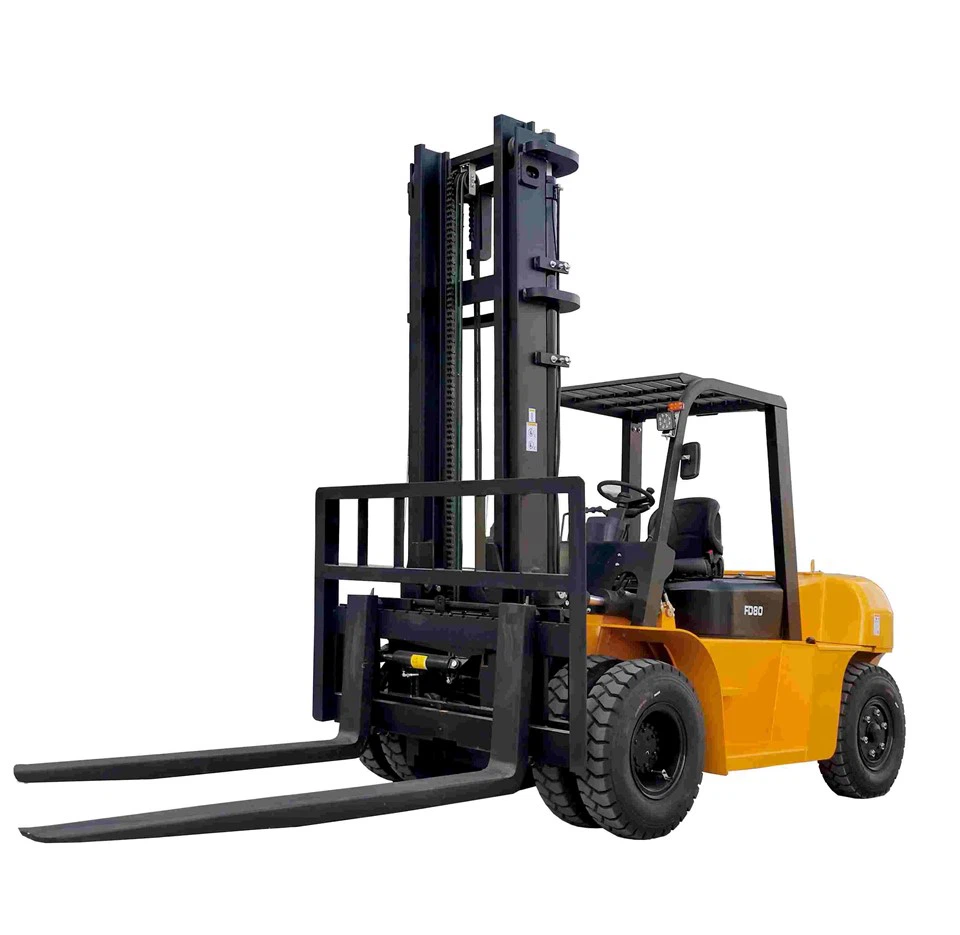
However, electric forklifts may have limitations in terms of power and runtime compared to diesel forklifts. Diesel forklifts are better suited for heavy - duty applications and long - term continuous operation. For extremely heavy loads, our 8 Ton Forklift Heavy Duty provides the necessary power, but an electric alternative may not be able to match its performance.
Regulatory Considerations
Food - processing facilities are subject to various regulations at local, national, and international levels. These regulations often specify the acceptable levels of pollutants in the air and the requirements for equipment used in the facility. When considering using diesel forklifts, it's essential to ensure compliance with these regulations.
Some regions may have strict limits on the emission of pollutants from diesel engines. In such cases, it may be necessary to install emission - control devices on the forklifts or switch to a more environmentally friendly alternative.
Conclusion
In conclusion, while diesel forklifts offer significant power and durability, their use in food - processing facilities presents challenges due to the potential for air pollution and food contamination. However, with proper ventilation, regular maintenance, and strategic use in non - food - handling areas, it is possible to use diesel forklifts in these facilities.
If you are in the food - processing industry and are considering the use of diesel forklifts, I encourage you to reach out to us for more information. We can provide detailed guidance on the best forklift options for your specific needs, taking into account factors such as load capacity, operating environment, and regulatory requirements. Our team of experts is ready to assist you in making an informed decision.

References
- Occupational Safety and Health Administration (OSHA) guidelines on air quality in industrial settings.
- Food and Drug Administration (FDA) regulations on food safety and processing facilities.
- Industry reports on forklift usage in different industrial sectors.


