

Well, let me tell you, I'm a supplier of 5 - ton diesel forklifts. And a common question I get a lot is: "Can a 5 - ton diesel forklift be used in a rubber - manufacturing plant?" In this blog, I'm gonna share my thoughts on this topic.
Advantages of Using a 5 - Ton Diesel Forklift in a Rubber - Manufacturing Plant
First off, let's talk about the advantages. A 5 - ton diesel forklift packs a lot of power. In a rubber - manufacturing plant, there are often heavy loads to move around. You got raw rubber materials, large rubber rolls, and finished rubber products that need to be transported from one place to another. The 5 - ton capacity of our forklift is perfect for these hefty tasks. Whether it's shifting stacks of rubber sheets in the storage area or loading finished tires onto trucks, it can handle it with ease.
Diesel engines are known for their durability and long - lasting performance. In a manufacturing environment like a rubber plant, where the forklift is gonna be used for long hours on a daily basis, you need a machine that can stand up to the wear and tear. Diesel forklifts have fewer moving parts compared to some other types, which means less chance of breakdowns. And if there are any issues, they're generally easier and cheaper to repair.
Another plus is the refueling situation. Diesel is widely available, and it doesn't take long to fill up the tank. In a busy rubber plant, downtime for refueling or recharging should be kept to a minimum. With a diesel forklift, you can quickly top up the fuel and get back to work.
Challenges and Considerations
However, it's not all sunshine and roses. There are some challenges to using a 5 - ton diesel forklift in a rubber - manufacturing plant. One of the big issues is emissions. Diesel engines emit pollutants such as nitrogen oxides, particulate matter, and carbon monoxide. In a closed - in factory environment like a rubber plant, these emissions can build up and pose a health risk to the workers. And let's not forget about the strict environmental regulations. Many regions have rules about air quality inside industrial facilities, so you need to make sure the use of a diesel forklift complies with these regulations.
Noise is another factor. Diesel forklifts can be quite noisy when they're running. In a rubber plant, where there might already be some background noise from the manufacturing processes, the additional noise from the forklift can be a problem. It can cause hearing damage to the workers over time and also make communication more difficult on the factory floor.
The floor conditions in a rubber - manufacturing plant need to be taken into account too. Rubber can be sticky, and there might be spills of rubber materials on the floor. A 5 - ton diesel forklift needs good traction to operate safely. If the floor is too slippery due to rubber residues, it could lead to accidents, like the forklift slipping or losing control when carrying a heavy load.

Alternatives and Compromises
If the emissions and noise are a major concern in the rubber - manufacturing plant, you might want to consider some alternatives or compromises. For example, if some of the loads are on the lighter side, you might look into a 2.5 Ton Diesel Forklift. It has a smaller engine, so it'll emit less pollution and make less noise compared to the 5 - ton model.
Or, if you need a bit more capacity than the 2.5 - ton but still want to reduce the environmental impact, a 3t Diesel Forklift Equipment could be an option. These mid - sized forklifts often strike a good balance between power and emissions.
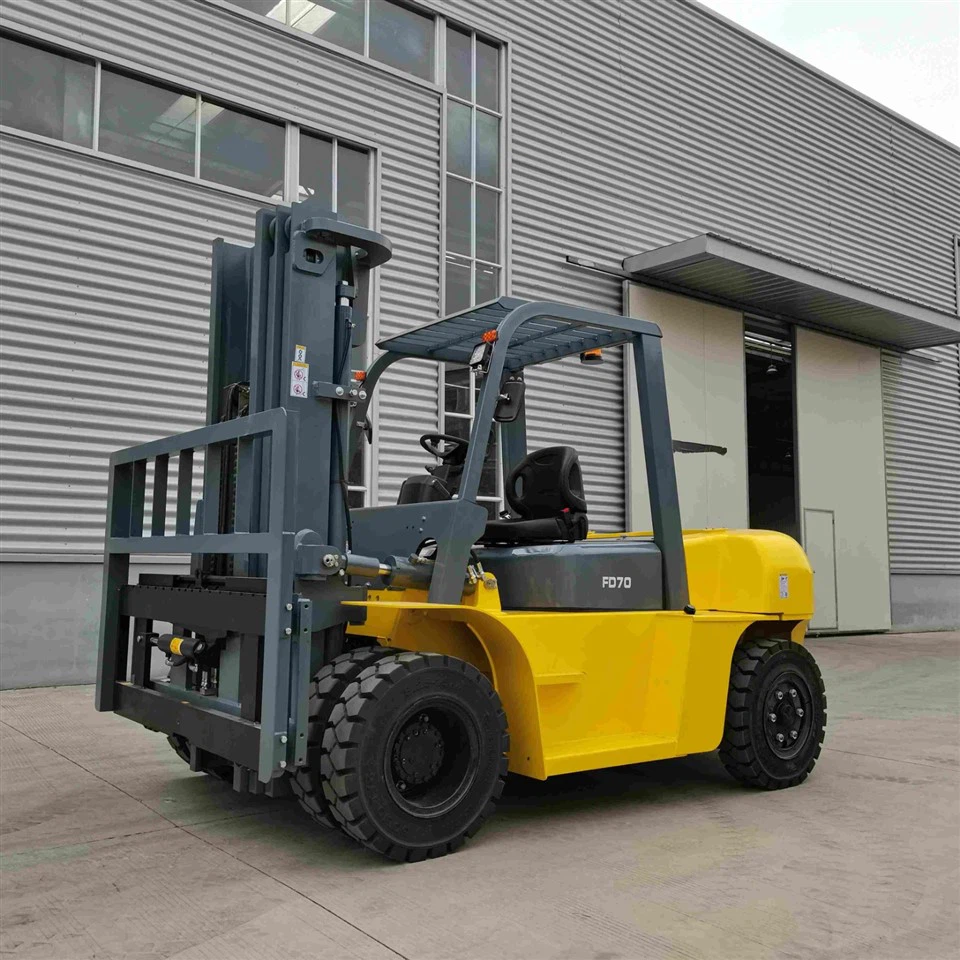
On the other hand, if your plant has extremely strict environmental requirements and you have some really heavy loads to move, you could think about a Forklift Diesel 7 Tons. It has the power to handle large loads, and with the latest emission - control technologies, it can be made more environmentally friendly than older diesel models.
Making the Right Decision
So, can a 5 - ton diesel forklift be used in a rubber - manufacturing plant? The answer is, it depends. You need to weigh the pros and cons based on your specific plant conditions. If your plant has good ventilation systems to deal with the emissions, and you can manage the noise issue, then a 5 - ton diesel forklift can be a great asset.
But if the environmental and noise regulations are super strict, you might need to look at other options or find ways to mitigate the problems associated with diesel forklifts. You could install air - filtration systems to reduce the emissions inside the plant or use noise - reducing materials to dampen the sound of the forklift.
Let's Talk About Your Needs
If you're in the process of deciding what kind of forklift is right for your rubber - manufacturing plant, don't hesitate to reach out. As a 5 - ton diesel forklift supplier, I've got years of experience in the industry. I can help you understand all the factors involved and find the best solution for your business. Whether it's a 5 - ton diesel forklift or one of our other models, we can work together to figure out what'll work best for your specific needs. So, start a conversation about your procurement requirements and let's make the right choice together.
References
- Occupational Safety and Health Administration (OSHA) guidelines on industrial forklift use and environmental control in factories.
- Industry reports on the performance of diesel forklifts in different manufacturing settings.
- Technical manuals of 5 - ton diesel forklifts for information on power, emissions, and maintenance.


