

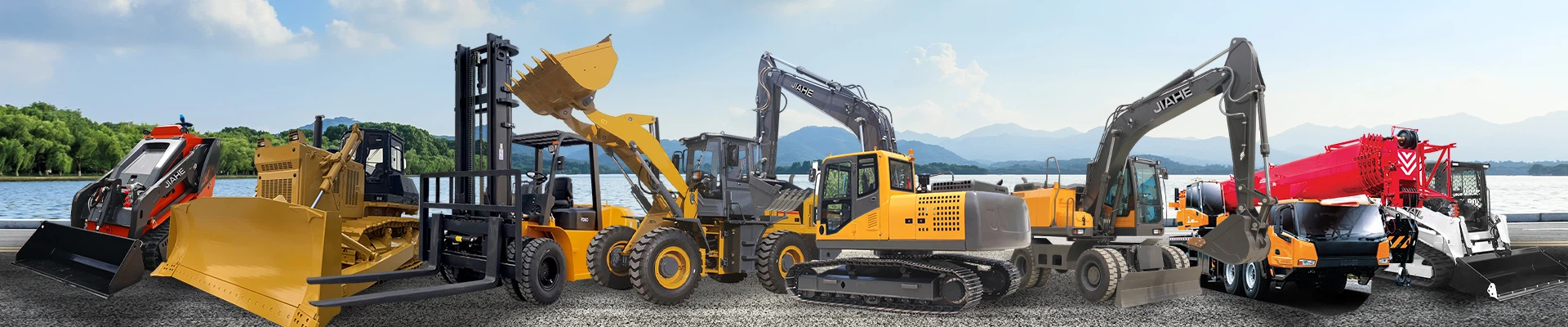
Against the backdrop of the continued deepening of global trade, logistics efficiency has become one of the core elements of corporate competitiveness. As the core equipment for material handling, forklifts play an irreplaceable role in warehousing, transportation and distribution. Its technological innovation and functional expansion are profoundly affecting the operation mode of the modern logistics system.
Forklift technology promotes intelligent warehousing
Traditional forklifts are mainly fuel-powered, while the popularity of electric forklifts in recent years has significantly reduced carbon emissions, which is in line with the development trend of green logistics. What is more noteworthy is that the emergence of smart forklifts integrates automation technology into warehouse management. Equipped with sensors and IoT modules, such equipment can achieve autonomous navigation, cargo identification and path optimization, greatly reducing manual intervention. For example, in large distribution centers, smart forklifts can operate 24 hours a day, increasing cargo storage and retrieval efficiency by more than 40%. This technological upgrade not only optimizes space utilization, but also reduces long-term operating costs for enterprises.
Multi-scenario applications adapt to logistics diversity
The design of forklifts is moving towards multifunctionality. In response to the needs of different industries, the market has seen the emergence of anti-condensation forklifts designed for cold chain logistics, stacker models suitable for high-altitude operations, and lightweight equipment that meets the high-frequency handling of e-commerce. This segmentation trend enables forklifts to adapt to the full-scenario needs from manufacturing factories to retail terminals. Taking cross-border e-commerce as an example, compact electric forklifts can quickly complete order sorting in limited warehouse space, helping companies cope with the skyrocketing logistics pressure during the peak season.
Synergy value in the logistics chain
The core value of forklifts is not only reflected in the performance of a single machine, but also in its synergy with technologies such as WMS (warehouse management system) and AGV (automatic guided vehicle). Through data interconnection, forklifts can receive inventory change instructions in real time and achieve precise control of the entire process from warehousing to outbound delivery. This seamless connection significantly improves the speed of logistics turnover and becomes an important tool for companies to reduce costs and increase efficiency. In the future, with the deep integration of 5G communication and artificial intelligence technologies, forklifts will undertake more complex tasks in the smart logistics network, further consolidating their position as a supply chain hub.
The iteration of forklift technology is redefining the efficiency standards of the logistics industry. Whether it is to cope with the challenge of labor shortage or to meet consumers' expectations for ultra-fast delivery, forklifts will continue to be a key tool to drive the logistics industry towards intelligence and sustainability.


