

Hey there! As a supplier of diesel forklifts, I've been getting a lot of questions about the role of the muffler in these machines. So, I thought I'd take a moment to break it down for you.
Let's start with the basics. A muffler, also known as a silencer, is an essential component of a diesel forklift's exhaust system. Its primary function is to reduce the noise produced by the engine as it expels exhaust gases. Diesel engines are known for being quite noisy, and without a muffler, the sound can be not only annoying but also a safety hazard in a work environment.
When the engine burns fuel, it creates a series of high-pressure pulses in the exhaust system. These pulses travel through the exhaust pipes and create a loud, distinctive noise. The muffler is designed to dampen these pulses and reduce the overall noise level. It does this through a combination of chambers, baffles, and sound-absorbing materials.
The chambers in the muffler are designed to reflect and redirect the exhaust gases, causing them to collide with each other and lose energy. This process helps to reduce the intensity of the sound waves. The baffles, which are essentially partitions inside the muffler, further disrupt the flow of the exhaust gases, creating additional noise reduction.

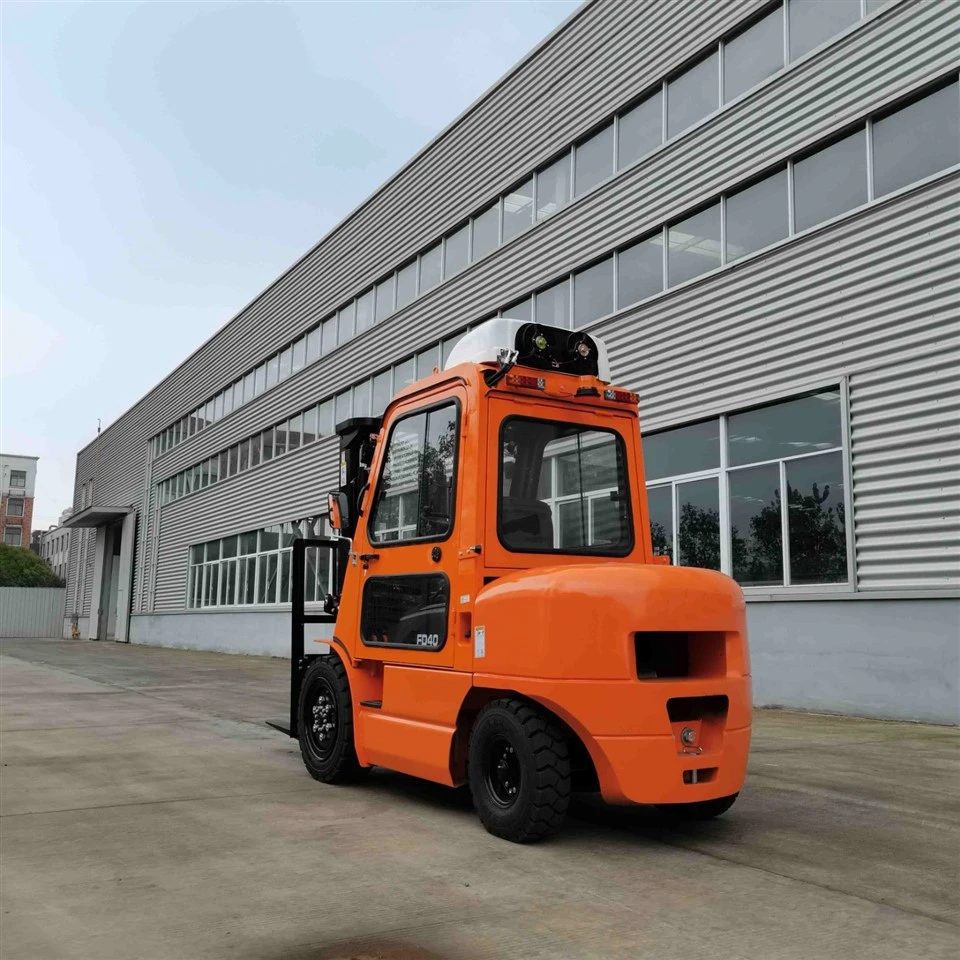
Sound-absorbing materials, such as fiberglass or steel wool, are also used inside the muffler to absorb the sound waves. These materials help to convert the sound energy into heat energy, which is then dissipated into the surrounding environment.
But the role of the muffler isn't just about reducing noise. It also plays an important role in the overall performance of the diesel forklift. A well-designed muffler can help to improve the engine's efficiency by reducing backpressure in the exhaust system. Backpressure is the resistance that the exhaust gases encounter as they flow through the exhaust pipes. If the backpressure is too high, it can cause the engine to work harder, which can lead to decreased fuel efficiency and increased wear and tear on the engine.
By reducing backpressure, the muffler allows the exhaust gases to flow more freely, which in turn allows the engine to breathe more easily. This can result in improved power output, better fuel economy, and a longer lifespan for the engine.
Another important function of the muffler is to reduce emissions. Diesel engines produce a variety of pollutants, including nitrogen oxides (NOx), particulate matter (PM), and carbon monoxide (CO). The muffler can help to reduce these emissions by incorporating a catalytic converter. A catalytic converter is a device that uses a catalyst to convert harmful pollutants into less harmful substances.
The catalytic converter in the muffler works by promoting a chemical reaction between the exhaust gases and the catalyst. This reaction converts the nitrogen oxides into nitrogen and oxygen, the particulate matter into carbon dioxide and water, and the carbon monoxide into carbon dioxide. By reducing emissions, the muffler helps to protect the environment and comply with environmental regulations.
Now that you understand the role of the muffler in a diesel forklift, let's take a look at some of the different types of mufflers available. There are several different designs of mufflers, each with its own advantages and disadvantages.
One of the most common types of mufflers is the straight-through muffler. This type of muffler has a simple design that allows the exhaust gases to flow straight through the muffler without any significant restrictions. Straight-through mufflers are known for their high performance and low backpressure, but they can also be quite noisy.
Another type of muffler is the chambered muffler. Chambered mufflers have a series of chambers and baffles that are designed to reflect and redirect the exhaust gases. This design helps to reduce noise while still maintaining good performance. Chambered mufflers are a popular choice for diesel forklifts because they offer a good balance between noise reduction and performance.
A third type of muffler is the turbo muffler. Turbo mufflers are designed to work in conjunction with a turbocharger. The turbocharger increases the pressure of the exhaust gases, which can cause the muffler to become less effective. Turbo mufflers are designed to handle the increased pressure and reduce the noise produced by the turbocharger.
When choosing a muffler for your diesel forklift, it's important to consider your specific needs and requirements. If you're looking for maximum performance, a straight-through muffler may be the best choice. If you're more concerned about noise reduction, a chambered muffler or a turbo muffler may be a better option.
At our company, we offer a wide range of diesel forklifts, including the 10 Ton Diesel Forklift - FD100, the Forklift 4 Ton Diesel, and the 5 Ton Diesel Forklift. All of our forklifts are equipped with high-quality mufflers that are designed to provide excellent noise reduction and performance.
If you're in the market for a diesel forklift, or if you have any questions about the role of the muffler, please don't hesitate to contact us. We'd be happy to help you find the right forklift for your needs and answer any questions you may have.
In conclusion, the muffler is an essential component of a diesel forklift's exhaust system. It plays a crucial role in reducing noise, improving performance, and reducing emissions. By understanding the role of the muffler and choosing the right one for your forklift, you can ensure that your forklift operates efficiently and safely.
References:
- Automotive Exhaust Systems: Principles and Design by John Heywood
- Diesel Engine Emissions Control by David Crolla


