

Hey there! As a supplier of Long Arm Excavators, I've got a ton of knowledge about these amazing machines, especially their electrical systems. So, let's dive right in and take a look at what the electrical system of a long arm excavator is like.
First off, the electrical system in a long arm excavator is super important. It's like the nervous system of the machine, controlling and coordinating all sorts of functions. Without a properly working electrical system, the excavator just wouldn't be able to do its job.
One of the key components of the electrical system is the battery. The battery is like the power source for the whole thing. It stores electrical energy and provides the initial power to start the engine. Most long arm excavators use large, heavy - duty batteries that can handle the high demands of the machine. These batteries need to be well - maintained, like keeping the terminals clean and making sure they're properly charged. If the battery goes bad, it can cause all sorts of problems, from not being able to start the engine to issues with other electrical components.
The alternator is another crucial part. Once the engine is running, the alternator kicks in. Its job is to generate electricity and recharge the battery while also powering the electrical components of the excavator. It converts mechanical energy from the engine into electrical energy. A good alternator is essential for keeping the battery charged and ensuring that all the electrical systems have a steady supply of power. If the alternator fails, the battery will quickly drain, and the excavator will start to experience electrical failures.
Now, let's talk about the wiring harness. This is like the network of roads that the electrical signals travel on. The wiring harness connects all the different electrical components in the excavator, such as the battery, alternator, lights, sensors, and control modules. It's made up of a bunch of wires bundled together, and each wire has a specific job. The wiring harness needs to be well - protected from damage, like abrasion, moisture, and heat. If the wiring gets damaged, it can lead to short circuits, electrical malfunctions, or even fires in extreme cases.
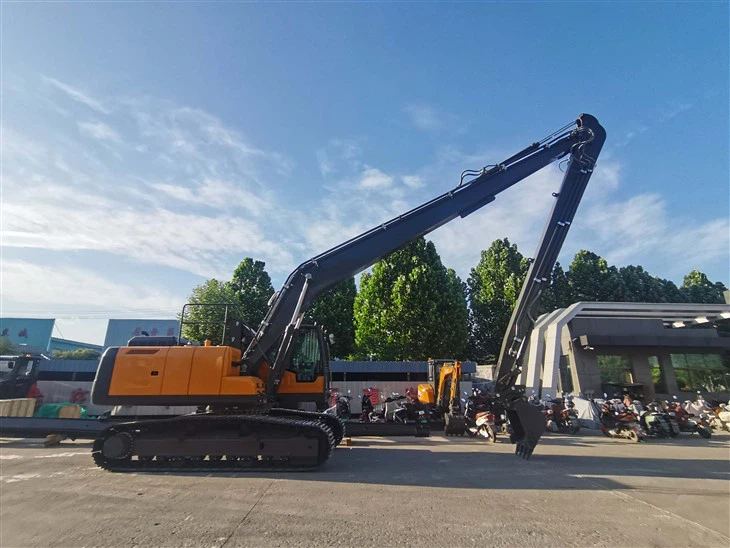

Control modules are also a big part of the electrical system. These are like the little brains that control different functions of the excavator. For example, there are control modules for the engine, the hydraulic system, and the cabin controls. They receive input from sensors around the machine, process that information, and then send out signals to control various components. For instance, if a sensor detects that the engine is overheating, the control module will take action, like adjusting the cooling system or warning the operator.
The lighting system is another aspect of the electrical setup. Long arm excavators need good lighting, especially when working at night or in low - light conditions. There are usually headlights, work lights, and signal lights. The headlights help the operator see where they're going, while the work lights illuminate the area where the excavator is working. Signal lights are important for safety, indicating to other workers on the site what the excavator is doing. All these lights are powered by the electrical system, and they need to be in good working order to ensure safe and efficient operation.
Sensors are everywhere in a long arm excavator's electrical system. They're like the eyes and ears of the machine. There are sensors for things like engine temperature, oil pressure, hydraulic fluid level, and the position of different parts of the excavator. These sensors constantly monitor the conditions of the machine and send that information to the control modules. For example, an oil pressure sensor will let the control module know if the oil pressure in the engine is too low, which could indicate a serious problem.
The electrical system also includes the starter motor. This is what gets the engine going. When you turn the key or press the start button, an electrical signal is sent to the starter motor. The starter motor then engages with the engine's flywheel and cranks the engine until it starts. A faulty starter motor can prevent the engine from starting, leaving the excavator useless.
As a supplier of Long Arm Excavators, I know how important it is to have a reliable electrical system in these machines. We make sure that all the electrical components we use are of high quality and are properly installed. Our long arm excavators are designed to be tough and durable, and that includes the electrical system.
If you're in the market for a long arm excavator, you want to make sure that the electrical system is in top - notch condition. A well - maintained electrical system means less downtime, fewer repairs, and more efficient operation. And that's where we come in. We're here to provide you with a long arm excavator that has a reliable electrical system and all the other features you need for your construction or excavation projects.
Whether you're working on a small - scale job or a large - scale infrastructure project, our long arm excavators are up for the task. With our high - quality electrical systems, you can trust that your excavator will perform well day in and day out.
So, if you're interested in learning more about our Long Arm Excavators or have any questions about their electrical systems or other features, don't hesitate to reach out. We're always happy to have a chat and discuss how our machines can meet your needs. Let's start a conversation about how we can work together to get you the right long arm excavator for your project.
References:
- General knowledge of long arm excavator technology and electrical systems from industry experience.


