

Hey there! As a bulldozer supplier, I've seen all sorts of bulldozers, from the small, nimble ones to the big, heavy - duty beasts. And let me tell you, there are some significant differences between small and large bulldozers.
Size and Physical Dimensions
First off, the most obvious difference is the size. Small bulldozers are, well, small. They're usually more compact, with a shorter length, width, and height. This makes them super maneuverable. You can easily navigate them in tight spaces, like small construction sites in urban areas, or around obstacles in a backyard renovation project.
On the flip side, large bulldozers are massive. They have a much larger footprint, which gives them more stability when dealing with heavy loads. But this also means they need a lot of space to operate. You won't see them working in a small alleyway; they're more suited for large - scale projects like mining operations, large construction sites for building big commercial complexes, or highway construction.
Power and Performance
Power is another major difference. Small bulldozers typically have less horsepower. They're designed for lighter tasks, like moving small amounts of soil, gravel, or debris. For example, a small bulldozer might have around 60 - 100 horsepower. This is enough to handle basic landscaping jobs or small - scale earthmoving on a residential property.
Large bulldozers, on the other hand, pack a serious punch. They can have horsepower ratings well over 200, sometimes even reaching 500 or more. With all that power, they can push huge piles of dirt, rocks, and even large boulders. They're essential for heavy - duty earthmoving, such as clearing large areas of land for a new housing development or moving large quantities of material in a quarry.
If you're interested in a mid - range power bulldozer, we have the 160hp Bulldozer Mini Crawler Bulldozer. It offers a good balance between power and maneuverability, suitable for a variety of medium - sized projects.

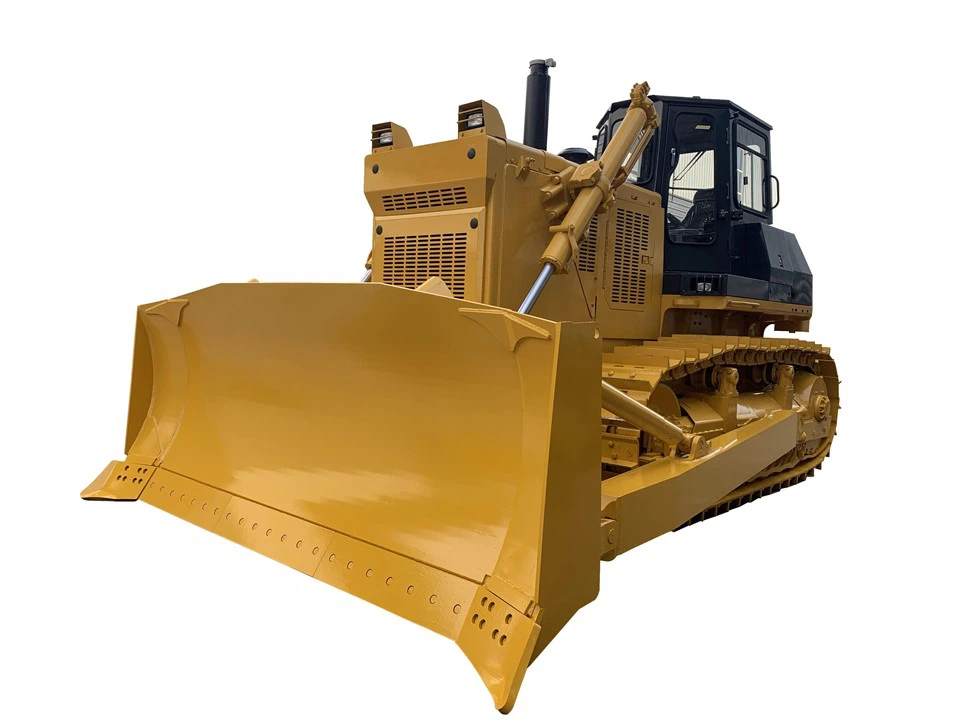
Blade Size and Capacity
The blade on a bulldozer is what does the actual pushing work, and there's a big difference in blade size between small and large bulldozers. Small bulldozers usually have smaller blades. These blades are typically narrower and shorter, which limits the amount of material they can move in one pass. But this also allows for more precise work, like grading a small area for a patio or a garden bed.
Large bulldozers come with large blades. These blades can be several meters wide and can hold a large volume of material. They're great for quickly moving large amounts of earth over a wide area. For instance, when building a large dam, a large bulldozer can use its big blade to push huge amounts of soil and rock into place in a short time.
Fuel Consumption
Fuel consumption is an important factor to consider, especially for long - term projects. Small bulldozers are generally more fuel - efficient. Since they have smaller engines and are used for lighter tasks, they don't burn as much fuel. This can save you a significant amount of money on fuel costs, especially if you're working on a project with a tight budget.
Large bulldozers, due to their powerful engines and heavy - duty work, consume a lot more fuel. However, the increased productivity they offer on large - scale projects often justifies the higher fuel cost. If you're working on a large project where time is of the essence, the extra fuel cost might be worth it to get the job done faster.
Operating Cost
In addition to fuel consumption, there are other operating costs to consider. Small bulldozers are generally cheaper to maintain. They have fewer parts, and the parts are usually less expensive. Maintenance tasks like oil changes, filter replacements, and general servicing are also less complicated and time - consuming.
Large bulldozers, on the other hand, have higher maintenance costs. Their complex engines, hydraulic systems, and large components require more specialized maintenance. You might need to hire trained technicians to work on them, and the replacement parts can be quite expensive.
Mobility and Transport
Moving a bulldozer from one site to another is an important consideration. Small bulldozers are much easier to transport. They can often be loaded onto a small trailer and towed by a pickup truck or a light - duty vehicle. This makes them a great choice for contractors who need to move between different small sites.
Large bulldozers require special transportation equipment. You'll need a large flatbed trailer and a heavy - duty truck to move them. The transportation process can be more complicated and expensive, especially if you need to move the bulldozer over long distances.
Applications
The applications of small and large bulldozers are quite different. Small bulldozers are perfect for residential and small - commercial projects. They're used for tasks like grading a small lot for a new house, clearing snow from a small parking lot, or doing light excavation work in a garden.
Large bulldozers are mainly used for large - scale industrial and infrastructure projects. They're essential in mining, where they're used to move large amounts of overburden and ore. They're also used in large construction projects, such as building airports, dams, and highways.
If you're looking for a powerful large - scale bulldozer, check out our Hydraulic Tracked Tractor Bulldozer 254hp. It's designed for heavy - duty work and can handle the toughest jobs.
Operator Skill Requirements
Operating a bulldozer requires skill, and the skill level needed varies between small and large bulldozers. Small bulldozers are generally easier to operate. They're more forgiving, and the controls are often simpler. A less - experienced operator can learn to operate a small bulldozer relatively quickly.
Large bulldozers, on the other hand, require a high level of skill and experience. The powerful engines and large blades can be dangerous if not operated correctly. Operators need to be trained to handle the machine's power, maneuverability, and the specific tasks it's used for.
Cost of Purchase
When it comes to buying a bulldozer, the price difference between small and large ones is significant. Small bulldozers are much more affordable. They're a great option for small businesses or contractors on a budget. You can get a decent small bulldozer for a relatively low price, which makes it easier to get started in the earthmoving business.
Large bulldozers are very expensive. The high - end models can cost hundreds of thousands of dollars. However, if you're involved in large - scale projects, the investment in a large bulldozer can pay off in terms of increased productivity and the ability to take on bigger jobs.
We also have the Dozers Crawler Bulldozer 160HP, which offers a good combination of features at a reasonable price, suitable for many medium - sized projects.
Conclusion
So, as you can see, there are many differences between small and large bulldozers. The choice between them depends on your specific needs. If you're working on small - scale projects, a small bulldozer might be the way to go. It's more maneuverable, fuel - efficient, and affordable. But if you're involved in large - scale industrial or infrastructure projects, a large bulldozer is essential for getting the job done quickly and efficiently.
If you're in the market for a bulldozer, whether it's a small one for a residential project or a large one for a big - scale job, we're here to help. We have a wide range of bulldozers to meet your needs. Contact us to start a purchase negotiation and find the perfect bulldozer for your project.
References
- Construction Equipment Guide: Information on bulldozer specifications and applications.
- Equipment World: Articles on the latest trends in bulldozer technology and performance.


