Evaluating the return on investment (ROI) of specialized equipment is a crucial process for businesses across various industries. As a specialized equipment supplier, I understand the significance of helping our clients make informed decisions when it comes to purchasing specialized machinery. In this blog post, I will share some key factors and methods to evaluate the ROI of specialized equipment, drawing from my experience in the industry.
Understanding the Basics of ROI
Before delving into the evaluation process, it's essential to understand what ROI means. ROI is a performance measure used to evaluate the efficiency or profitability of an investment. It is calculated by dividing the net profit from an investment by the cost of the investment and then multiplying the result by 100 to get a percentage. The formula for ROI is as follows:
[ROI = \frac{Net\ Profit}{Cost\ of\ Investment} \times 100%]
In the context of specialized equipment, the net profit is the additional revenue generated or cost savings achieved as a result of using the equipment, minus the total cost of owning and operating it. The cost of investment includes the purchase price of the equipment, installation costs, training costs, and any other associated expenses.
Factors Affecting the ROI of Specialized Equipment
Several factors can influence the ROI of specialized equipment. Understanding these factors is crucial for accurate evaluation.
1. Equipment Cost
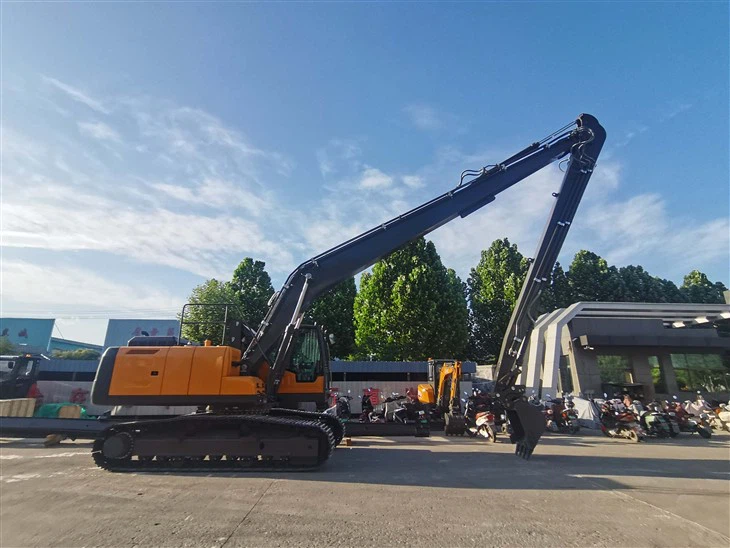
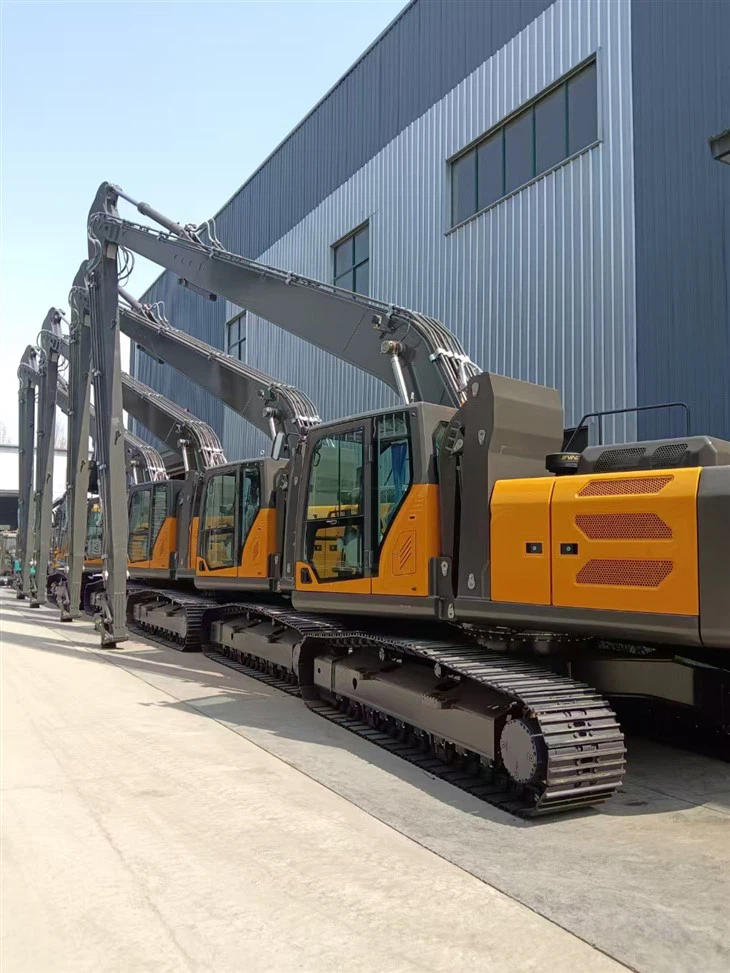
The initial purchase price of the specialized equipment is a significant factor. Higher - cost equipment may offer more advanced features and capabilities, but it also requires a larger upfront investment. It's important to balance the features and performance of the equipment with its cost. For example, a Long Arm Excavator may have a higher price tag compared to a standard excavator, but its extended reach can enable more efficient excavation in certain applications, potentially justifying the higher cost.
2. Operational Costs
Operational costs include fuel, maintenance, repairs, and labor. Specialized equipment may have unique maintenance requirements or consume more fuel than standard equipment. For instance, high - tech specialized manufacturing equipment may require specialized technicians for maintenance, which can increase labor costs. Regular maintenance is essential to keep the equipment in good working condition and avoid costly breakdowns, but it also adds to the overall cost of ownership.
3. Productivity and Efficiency
One of the primary reasons for investing in specialized equipment is to increase productivity and efficiency. Specialized equipment can often perform tasks faster, more accurately, or with less waste than traditional methods or standard equipment. For example, a specialized packaging machine can package products at a much higher speed than manual labor, reducing production time and increasing output. Measuring the increase in productivity and efficiency is crucial for calculating the potential revenue increase or cost savings.
4. Market Demand and Application
The market demand for the products or services produced using the specialized equipment is another important factor. If there is a high demand for the output of the equipment, it is more likely to generate significant revenue. Additionally, the versatility of the equipment in different applications can also affect its ROI. Equipment that can be used in multiple projects or industries has a higher potential for generating revenue over its lifespan.
5. Depreciation
Specialized equipment depreciates over time. The rate of depreciation can vary depending on the type of equipment, its usage, and technological advancements. Faster - depreciating equipment may have a lower ROI in the long run, as its resale value decreases more rapidly. It's important to consider the expected depreciation rate when evaluating the ROI of specialized equipment.
Methods for Evaluating ROI
1. Payback Period
The payback period is the time it takes for the investment in the equipment to be recovered through the net cash flows generated by the equipment. To calculate the payback period, divide the initial investment by the annual net cash flow. A shorter payback period indicates a faster return on investment. For example, if a specialized piece of equipment costs $100,000 and generates an annual net cash flow of $20,000, the payback period is 5 years ($100,000 / $20,000).
2. Net Present Value (NPV)
NPV takes into account the time value of money. It calculates the present value of all future cash flows generated by the equipment, minus the initial investment. A positive NPV indicates that the investment is expected to generate more value than the initial cost, while a negative NPV suggests that the investment may not be profitable. To calculate NPV, you need to estimate the future cash flows, determine the discount rate (which reflects the cost of capital or the required rate of return), and then use a financial formula or a financial calculator to calculate the present value of the cash flows.
3. Internal Rate of Return (IRR)
IRR is the discount rate at which the NPV of an investment is equal to zero. It represents the annualized rate of return that the investment is expected to generate. A higher IRR indicates a more profitable investment. Calculating IRR can be complex, often requiring the use of financial software or iterative methods. However, it provides a useful measure of the profitability of the investment in relation to the cost of capital.
Real - World Example
Let's consider a construction company that is considering purchasing a Long Arm Excavator. The excavator costs $500,000, including delivery and installation. The company estimates that the annual fuel and maintenance costs will be $50,000. With the long - arm excavator, the company can take on more complex excavation projects, which are expected to generate an additional annual revenue of $150,000.
The annual net cash flow is the additional revenue minus the operational costs, so $150,000 - $50,000 = $100,000. The payback period is $500,000 / $100,000 = 5 years.
Assuming a discount rate of 10%, we can calculate the NPV. The present value of the annual net cash flows over a 10 - year period can be calculated using the present value of an ordinary annuity formula. After calculating the present value of the cash flows and subtracting the initial investment, we can determine whether the NPV is positive or negative.
Conclusion
Evaluating the ROI of specialized equipment is a complex but essential process for businesses. By considering factors such as equipment cost, operational costs, productivity, market demand, and depreciation, and using methods like payback period, NPV, and IRR, businesses can make more informed decisions about their equipment investments.
As a specialized equipment supplier, we are committed to helping our clients understand the potential ROI of our products. We offer detailed information about the features, performance, and cost - effectiveness of our specialized equipment. If you are interested in learning more about our specialized equipment or need assistance in evaluating the ROI for your specific needs, we encourage you to contact us for a detailed consultation. Our team of experts is ready to work with you to ensure that you make the best investment decision for your business.
References
- Brealey, R. A., Myers, S. C., & Allen, F. (2020). Principles of Corporate Finance. McGraw - Hill Education.
- Horngren, C. T., Datar, S. M., & Rajan, M. V. (2018). Cost Accounting: A Managerial Emphasis. Pearson.
- Gitman, L. J., & Zutter, C. J. (2020). Principles of Managerial Finance. Pearson.