

Hey there! As an electric forklift supplier, I've seen firsthand how crucial it is for businesses to pick the right electric forklift. It's not just about getting a machine; it's about finding the perfect fit for your specific needs. In this blog, I'll share some tips on how you can choose the right electric forklift for your business.
1. Know Your Load Capacity Requirements
The very first thing you gotta think about is the weight of the loads you'll be moving. Electric forklifts come in a wide range of load capacities. If you're mostly dealing with light loads, say up to a couple of tons, a smaller capacity forklift will do the job just fine. But if you're moving heavy stuff, like large pallets of construction materials or industrial equipment, you'll need a forklift with a higher load capacity.
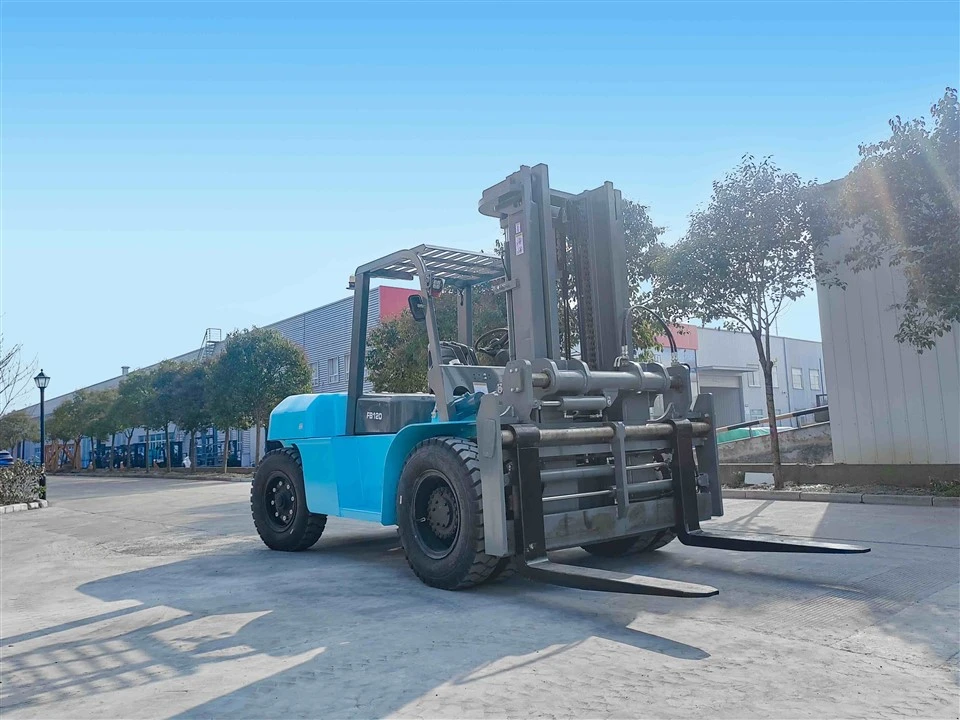
For instance, if you're in a business where you often handle loads around 3.5 tons, our Electric Forklift 3.5 Ton could be a great choice. It's designed to handle that kind of weight efficiently and safely. On the other hand, if you have really heavy loads, like those in a large shipping or manufacturing facility, you might want to consider our 6 Ton Electric Forklift or even the 12 Ton Electric Forklift. These heavy-duty forklifts are built to tackle the toughest jobs.
2. Consider the Working Environment
The place where the forklift will be used plays a big role in your decision. Is it an indoor warehouse with narrow aisles? Or an outdoor construction site? Different environments require different types of forklifts.
Indoor warehouses usually have limited space, so you'll need a forklift that's maneuverable. Electric forklifts are great for indoor use because they produce zero emissions, which is important for air quality in a closed space. They're also generally quieter than their diesel or gas counterparts, which is a plus in a work environment where noise can be a distraction.
Outdoor environments, on the other hand, might need a forklift with more ground clearance and better traction. Some electric forklifts are designed with features like larger tires and more robust suspension to handle rough terrain. If your work involves a lot of outdoor movement, make sure to choose a forklift that can handle the specific conditions of your site.
3. Evaluate the Lift Height
How high do you need to lift your loads? This is another important factor. Forklifts come with different maximum lift heights. If you have high racking in your warehouse and need to stack loads at a significant height, you'll need a forklift with a tall mast.
Think about your current storage setup and any future expansion plans. It's better to choose a forklift with a slightly higher lift height than you currently need, just in case you decide to add more levels to your racking or start handling taller loads in the future.
4. Battery Life and Charging Time
Since electric forklifts run on batteries, battery life and charging time are crucial considerations. You don't want your forklift to run out of power in the middle of a busy workday.

Look for a forklift with a battery that can last through your typical shift. Some forklifts come with advanced battery technologies that offer longer run times. Also, consider the charging time. Fast-charging batteries can be a big advantage, especially if you have limited downtime for charging.
5. Operator Comfort and Safety Features
Your operators will be spending a lot of time on the forklift, so their comfort and safety are important. A comfortable operator is a more productive operator.
Look for features like adjustable seats, easy-to-reach controls, and good visibility. Safety features are also a must. Things like anti-rollover protection, load backrests, and warning lights can help prevent accidents and keep your operators safe.
6. Maintenance and Support
Like any piece of equipment, electric forklifts need regular maintenance. Make sure to choose a forklift that's easy to maintain. Look for models with accessible parts and a good support network.
As a supplier, we offer comprehensive maintenance and support services. Our team of experts can help you with everything from routine maintenance to major repairs. We also stock a wide range of parts to ensure quick turnaround times if something goes wrong.
7. Cost and Total Cost of Ownership
Of course, cost is always a factor. But when choosing an electric forklift, it's important to look at the total cost of ownership, not just the upfront price.
The total cost of ownership includes things like the purchase price, battery replacement costs, maintenance costs, and energy costs. While a cheaper forklift might seem like a good deal at first, it could end up costing you more in the long run if it has high maintenance costs or short battery life.
8. Test Drive and Compare
Before making a final decision, it's a good idea to test drive different forklifts. This will give you a feel for how they operate and whether they meet your requirements.
Compare different models from different manufacturers. Look at the features, performance, and price. Don't be afraid to ask questions and get more information from the supplier.
Conclusion
Choosing the right electric forklift for your business is a big decision. It requires careful consideration of your load capacity, working environment, lift height, battery life, operator comfort, maintenance, and cost. By following these tips, you can make an informed decision and find the forklift that's perfect for your business.
If you're interested in learning more about our electric forklifts or have any questions, feel free to reach out. We're here to help you find the best solution for your needs. Let's start a conversation and see how we can work together to improve your material handling operations.
References
- Industry standards and best practices for electric forklifts
- Manufacturer specifications and product literature


